Custom Healthcare Software Development

Healthcare runs on software that has to be fast for patients, simple for staff and safe for the most personal data there is. We build telehealth apps, patient portals, clinic workflow tools and EHR integrations for clinics and digital health companies in the US, UK, Canada and Australia, with HIPAA and its equivalents designed in from the first release.

Urgent care website we ran for six years · Telemedicine platform for a Virginia clinic owner · 5.0 on Clutch

THE HEALTHCARE INDUSTRY

What the healthcare industry is, and what it runs on

The healthcare industry is every organisation that delivers, pays for or supports medical care: hospitals and clinics, health insurers, pharmaceutical and medical device companies, and a fast-growing group of digital health companies. It is one of the largest parts of every economy we serve, and one of the most regulated, because the data it runs on is the most personal data there is.

How care is paid for shapes the software. In the United States most care is billed to private insurers or government programmes such as Medicare and Medicaid, so scheduling, eligibility checks and claims sit at the centre of every clinic system. The UK's NHS, Canada's provincial health plans and Australia's Medicare are publicly funded, with private providers alongside them, so integration with national and regional systems matters more than billing.

Under all four sits the same stack: an electronic health record (EHR), scheduling, billing, patient communication and, more and more, telehealth. Custom healthcare software development fills the gaps between them, where staff still re-type, phone and fax.

$4.9 trillionUS health spending in 2023CMS National Health Expenditure Accounts
17.6%of US GDP spent on health in 2023CMS National Health Expenditure Accounts
~190 millionpeople affected by the 2024 Change Healthcare cyberattack, the largest US health data breach on recordUnitedHealth Group, January 2025

Providers

Hospitals, clinics, urgent care, physician groups, telehealth

  • EHR
  • Scheduling
  • Patient portals
  • Telehealth

Payers

Health insurers and government health plans

  • Claims
  • Member portals
  • Prior authorisation

Life sciences

Pharmaceutical, medical device and lab companies

  • Clinical trial systems
  • Lab systems
  • Device apps

Digital health

Start-ups and scale-ups selling software to the others

  • SaaS platforms
  • Remote monitoring
  • Mobile apps

Public bodies

NHS organisations, public health agencies, regulators

  • Registries
  • Reporting
  • Population data

CHALLENGES

The challenges the healthcare industry faces

Six pressures every provider and health-tech company we talk to is dealing with, and where software makes a real difference.

01

Staff shortages and burnout

What it looks like

Clinicians spend a large part of the day on notes, inboxes and forms instead of patients, and clinics struggle to hire and keep front-desk and nursing staff.

Where software helps

Fewer clicks per visit, self-service booking and intake, and AI that drafts notes for the clinician to check and sign.

02

Administrative load

What it looks like

Eligibility checks, prior authorisation, coding and billing take hours, and the same patient details are typed into the booking tool, the EHR and the billing system.

Where software helps

Integration so data is entered once, automated eligibility checks, and document intake that reads referrals and forms into the record.

03

Data that does not move

What it looks like

Records are split across EHRs, labs, pharmacies and payers, and fax is still common. In the US the 21st Century Cures Act now penalises blocking access to health information.

Where software helps

FHIR APIs, HL7 v2 interfaces and patient access to their own records, so data follows the patient.

04

Cyberattacks and breaches

What it looks like

Healthcare is a top target for ransomware because downtime puts patients at risk. One attack on a claims clearinghouse in 2024 disrupted payments for providers across the US for weeks.

Where software helps

Multi-factor sign-in, access by role, encryption, audit logs, tested backups and a review of every vendor that touches patient data.

05

Patients expect digital access

What it looks like

Patients want to book online, see results, pay and talk to a clinician by video, the way they handle every other service. Clinics that only answer the phone lose them.

Where software helps

Patient portals, online booking with reminders, and telehealth that fits the clinic's own care model.

06

Pressure on cost

What it looks like

Payers and governments push prices down while wages and supplies go up, so margins are thin and every hour of admin work counts.

Where software helps

Automating the repetitive work first, and measuring the hours it saves before building the next feature.

AI IN HEALTHCARE

How AI can help healthcare, and where it needs care

AI is most useful today where the admin load is high and the clinical risk is low. Each use below shows how much regulation applies and where a person stays in charge.

Low regulatory risk

Patient communication assistants

Answer questions about hours, services, insurance and booking from the clinic's own content, offer the next free slot and send reminders.

A person stays in charge: staff take over anything clinical, and urgent messages are pointed to emergency services.

Not clinical advice, so no device rules apply. Patients should be told they are talking to an assistant.

Low regulatory risk

Document and referral intake

Read faxes, referrals, forms and insurance cards into structured fields, so staff stop re-typing them.

A person stays in charge: staff confirm each result before it is saved to the record.

Patient data goes to the AI model, so the model provider needs a BAA or equivalent.

Needs clinical review

Ambient clinical documentation

Draft the visit note from the conversation between clinician and patient, with the patient's consent.

A person stays in charge: the clinician reviews, edits and signs every note.

Recording and consent rules vary by US state and by country. Check them before the first recording.

Needs clinical review

Coding and billing support

Suggest billing codes and flag missing documentation before a claim goes out.

A person stays in charge: a certified coder approves every claim.

A claim is a legal statement to the payer. AI suggests; people sign.

Needs clinical review

Prior authorisation preparation

Gather the documents a payer asks for and pre-fill the request, so staff do not hunt through the chart.

A person stays in charge: staff check and submit the request.

A 2024 CMS rule requires many US payers to offer prior authorisation APIs, mostly from January 2027.

May be a medical device

Diagnosis, imaging and triage support

Flag findings on images, suggest diagnoses or decide how urgent a case is.

A person stays in charge: a clinician makes every clinical decision.

Software that diagnoses or treats can be a medical device, regulated by the FDA, MHRA, Health Canada or TGA. It needs a regulatory route before it needs code.

Before any AI touches patient data

  • A BAA, or its local equivalent, with every AI model provider that sees patient data
  • Only the data the task needs in each prompt, de-identified where possible
  • A person reviews before anything reaches the record or the patient
  • Every AI output logged with who approved it
  • Testing with synthetic data, never real patient records
  • Patients told when they are dealing with AI

HIPAA

HIPAA requirements for healthcare software

HIPAA is the US law that protects health information. For software, it comes down to three rules, a set of safeguards and a contract with every vendor that touches patient data.

In force since 2003

Privacy Rule

Sets who may use and share protected health information (PHI), and gives patients rights over it, including the right to see and get a copy of their records.

What it means for software

  • Each role sees the minimum it needs
  • Patients can view and download their records
  • Disclosures are recorded so they can be reported
In force since 2005

Security Rule

Requires administrative, physical and technical safeguards for electronic PHI, based on a documented risk analysis.

What it means for software

  • A risk analysis before launch and after big changes
  • Access control, audit logs and encryption
  • Backups and a tested plan for outages
In force since 2009 (HITECH)

Breach Notification Rule

Requires notice to affected patients within 60 days of finding a breach, to HHS, and to the media when more than 500 residents of a state are affected.

What it means for software

  • Audit logs that show exactly which records were accessed
  • A way to identify and contact affected patients
  • An incident plan your team has practised

Security Rule safeguards, as a build checklist

The Security Rule groups its safeguards in three kinds. These are the ones software has to support.

Administrative

  • Risk analysis and risk management
  • Staff training
  • Access approval and removal
  • Incident procedures
  • Business Associate Agreements

Physical

  • Facility and server access
  • Workstation security
  • Device and media disposal
  • Hosting in audited data centres

Technical

  • Unique user IDs and MFA
  • Automatic logoff
  • Encryption at rest and in transit
  • Audit controls
  • Integrity checks

Nobody certifies HIPAA compliance

HHS does not certify software or vendors. A product described as “HIPAA certified” is a marketing claim. Compliance belongs to the organisation, through its policies, training, BAAs and how it uses the software.

Every vendor that touches PHI needs a BAA

Cloud hosting, video, SMS, email and AI model providers included. Since 2013, business associates are directly liable for protecting PHI, not only through their contract.

A Security Rule update was proposed in 2025

In January 2025 HHS proposed making encryption and multi-factor authentication required rather than “addressable”, and adding an asset inventory and network map. Build them in now either way.

OTHER MARKETS

Health data rules in the UK, Canada and Australia, next to HIPAA

Each market has its own law, but they ask software for the same things: know where the data is, let only the right people see it, record who did, and be ready to report a breach.

RequirementUSUnited StatesUKUnited KingdomCACanadaAUAustralia
Main lawHIPAA and HITECH, plus state laws such as California's CMIAUK GDPR, the Data Protection Act 2018 and the common law duty of confidentialityPIPEDA, plus provincial health laws such as PHIPA (Ontario) and the HIA (Alberta)Privacy Act 1988 and the Australian Privacy Principles, plus state laws such as Victoria's Health Records Act 2001
RegulatorHHS Office for Civil RightsInformation Commissioner's Office (ICO)Office of the Privacy Commissioner of Canada and provincial commissionersOffice of the Australian Information Commissioner (OAIC)
Health data isProtected health information (PHI)Special category dataPersonal health informationSensitive information
Vendor contractBusiness Associate AgreementA processor contract under Article 28Written agreements; PHIPA calls vendors “agents”Contracts, and APP 8 rules for sending data overseas
Breach reportingPatients within 60 days; HHS; the media if 500+ in one stateICO within 72 hours if there is a risk to people; tell them if the risk is highThe Commissioner and affected people as soon as feasible, if there is a real risk of significant harmOAIC and affected people as soon as practicable; assess suspected breaches within 30 days
Where data can liveNo federal residency rule; contracts and some state rules applyTransfers outside the UK need adequacy or safeguardsSome provinces restrict public-sector data leaving Canada, such as British Columbia and Nova ScotiaMy Health Record data must stay in Australia
Public systemsCMS rules for Medicare and Medicaid; ONC certification for EHRsNHS: Data Security and Protection Toolkit, DTAC, DCB0129 and DCB0160Each province's health system sets its own standardsMy Health Record conformance with the Australian Digital Health Agency
Medical device softwareFDAMHRAHealth CanadaTGA

A summary for planning, not legal advice. Confirm the details for your organisation with your privacy adviser.

That is the industry. Here is where Metwaves fits: clinics and digital health companies that need software built around their patient flow, with these safeguards in from day one.

Healthcare software we build

Six kinds of system, each linked to the service page that explains how we build it. Pick one to see what it does and who usually buys it.

Telemedicine apps

Telemedicine app development services for clinics that want video visits on their own terms: intake before the call, notes and e-prescribing during it, reminders and billing after it. Patient, clinician and admin apps share one record, so nobody re-types what the patient already told you.

Usually bought by
Clinic owners, physician-founders and digital health start-ups
  • Video consultations
  • Intake forms
  • Secure messaging
  • E-prescribing
  • Visit notes
  • Insurance and billing

Mobile app development >

OUR WORK

Healthcare software we have built

Reception desk of Epic Urgent and Family Care in Palatine, IllinoisCASE STUDY

Epic Urgent and Family Care · Palatine, Illinois · 2016 to 2022

A clinic website that booked patients from the day it opened

A walk-in clinic founded by an emergency medicine physician had a fixed opening date and no website. We built a responsive site with one-click booking, a plain list of treated conditions and a notices area the staff edit themselves, passed an ADA accessibility check before launch, and kept its local rankings up for six years. The founder rated the work 5.0 on Clutch.

  • 25%more online appointment requests
  • 70%of target keywords on page one in year one
  • 6years of support

Read the urgent care case study >

Telemeds+ admin dashboard, doctor profile and patient home screensCASE STUDY

Owner of two urgent care clinics · Richmond, Virginia

Telemeds+: a telemedicine platform for an urgent care owner

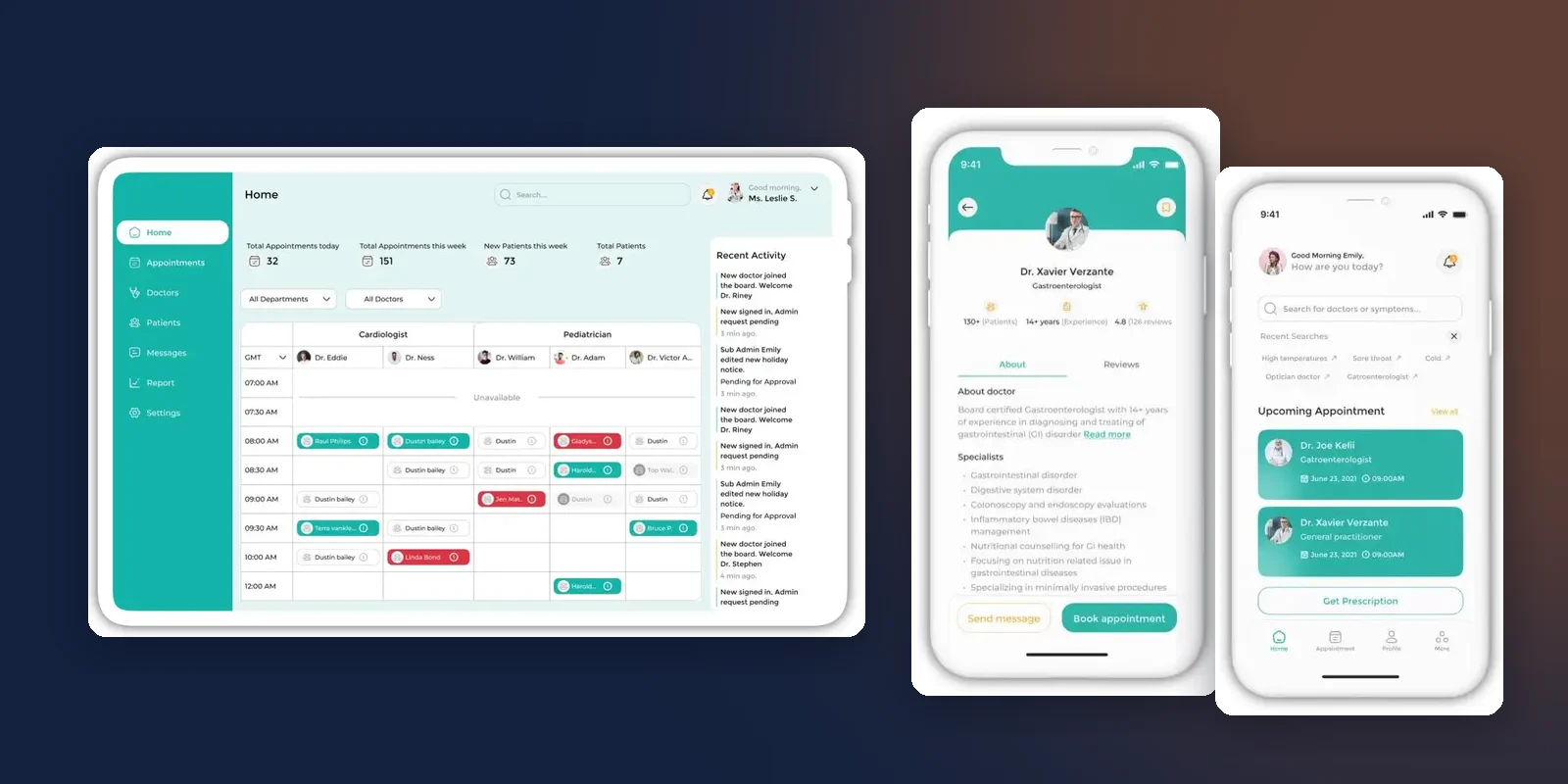
An emergency medicine physician came to us with an idea and no brief. Our business analyst and technical lead ran the research, user personas, information architecture and flow diagrams, then the team built patient, doctor and admin apps on .NET, Azure and SQL Server: booking, secure messaging, video consultations, e-prescribing, records access, insurance and billing.

  • 3apps sharing one record
  • 7features for patients
  • 8features for doctors

Read the Telemeds+ case study >

DEMOHealthcare assistantOur own demo: answers about services, hours and booking, on Google Cloud with Gemini

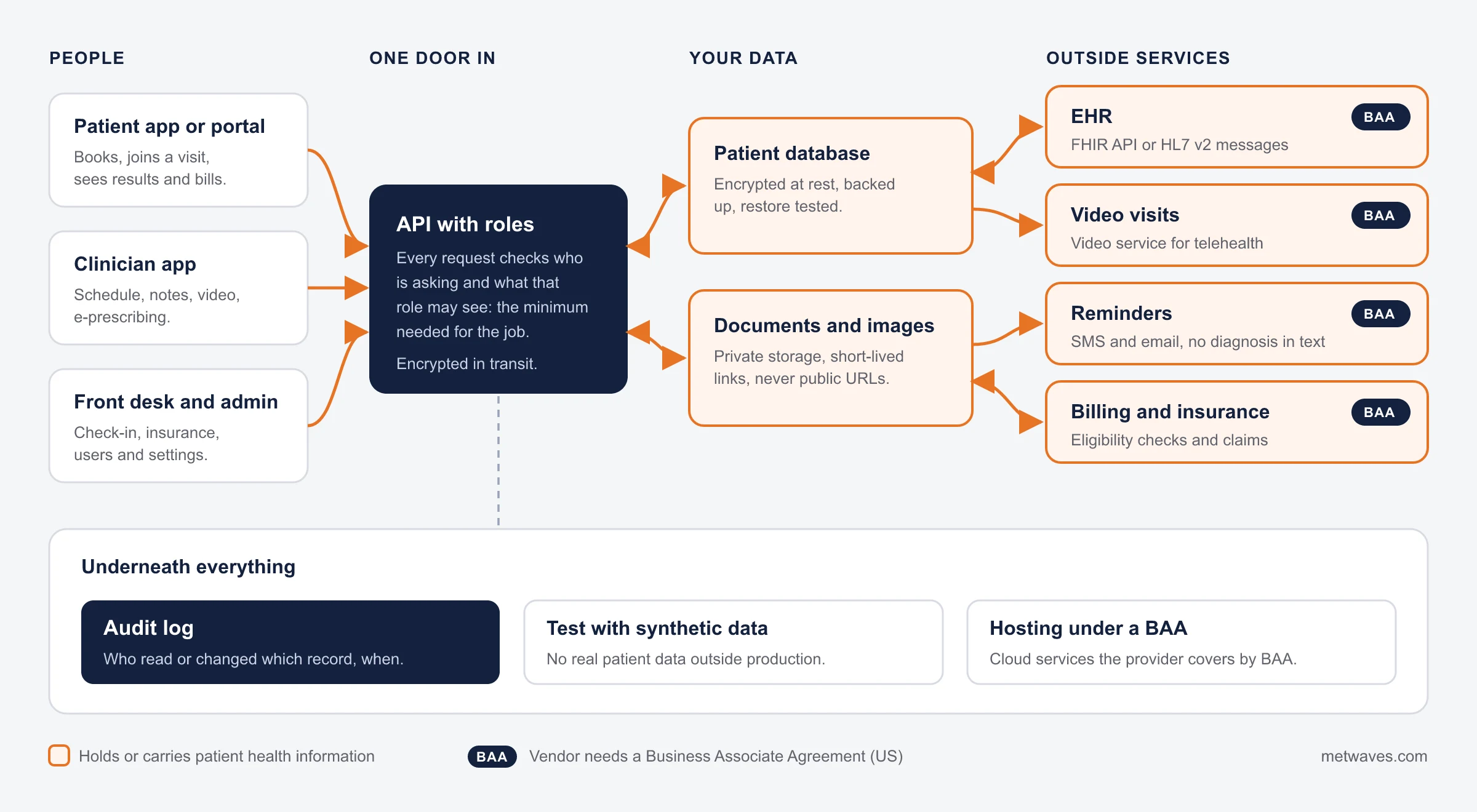
How patient data moves through the system

Before any screen is designed, we map where patient health information lives, who can see it and which outside services touch it. This is the map for a typical clinic app.

How patient data moves through clinic software: patient, clinician and admin apps reach one API that checks each role; the patient database and document storage hold health information encrypted; the EHR, video, reminder and billing services each need a Business Associate Agreement; an audit log, synthetic test data and BAA-covered hosting sit underneath
    Every orange box holds patient health information. Every vendor marked BAA signs one before it sees any.

    What stays with you

    The code, the cloud accounts, the audit logs and the documentation are yours from the first day, so you can show a regulator or a customer's security team exactly how patient data is protected. Compliance stays with your organisation; our part is software that makes the safeguards easy to follow and easy to prove.

    How we handled patient data on Telemeds+

    • The whole technical team took HIPAA training before work started
    • Written policies for how patient data is accessed, stored, sent and disposed of
    • Encryption for data at rest and in transit
    • Access limited by role, and audit trails of every action on patient data
    • We never call Metwaves or a product “HIPAA compliant”; nobody can certify that

    When custom healthcare software is worth it

    Custom software puts your care model in the software, keeps one record instead of re-keying, leaves you owning the data and the roadmap, and makes health-system security reviews easier. It also costs more to build and run than a subscription.

    Your situationWhat usually fitsWhy
    A standard video visit, with no link to your EHRAn off-the-shelf telehealth toolCheaper and faster. We will tell you so on the first call.
    Your care model or patient flow is what sets you apartCustom softwareThe software follows your intake, follow-up and staffing instead of forcing a generic visit.
    Staff re-key data between booking, the EHR and billingIntegrate before you rebuildConnecting what you have often removes the re-keying without replacing anything.
    You sell software to clinics or health systemsCustom, built for their security reviewsRole-based access, audit logs and written policies from the first release make the questionnaire easy.
    Clinicians should open your tool from inside the EHRA SMART on FHIR appIt launches in the EHR with the patient already selected, and the data stays where it is.

    EHR INTEGRATION

    EHR integration services: FHIR, HL7 and vendor programmes

    Most clinic software has to read from or write to the EHR. There are three routes, and the EHR decides which ones are open to you.

    FHIR APIs

    The modern route: your software reads and writes standard resources such as Patient, Appointment and Observation over a secured web API.

    Suits
    Portals, apps and SMART on FHIR tools that need current data on demand
    Who approves
    The EHR vendor's developer programme, then each customer site
    Typical data
    Patients, appointments, results, medications, documents

    HL7 v2 messages

    The workhorse inside most clinics and hospitals: event messages such as ADT for admissions and SIU for scheduling, usually through an interface engine.

    Suits
    Keeping systems in sync as events happen, especially in older setups
    Who approves
    The site's IT or integration team, who set up the interface
    Typical data
    Registrations, schedule changes, orders and results

    Vendor programmes

    Many EHRs offer their own APIs, app marketplaces or partner programmes, with their own review, fees and timelines.

    Suits
    Products sold to many sites on the same EHR
    Who approves
    The vendor's review, sometimes with a listing fee
    Typical data
    Whatever the programme exposes, often wider than FHIR alone

    We confirm the route with the EHR vendor and your site before we quote. Test with their sandbox first, then with the site's test system, then live.

    What healthcare software costs and how long it takes

    We quote after discovery, because two portals with the same screens can differ by an integration. This is what each type usually includes in its first release and what moves the price.

    SolutionFirst release usually includesWhat moves the costMonthly running costs
    Patient portal and bookingBooking, reminders, forms, results for one clinicNumber of user roles, payments, results feedsBAA-covered hosting, SMS and email
    Telehealth appVideo visits, intake, notes, prescriptions on web or mobileWeb only or native apps, e-prescribing, billingHosting, video minutes, SMS
    Clinic workflow toolScheduling, check-in and reports for the sites you nameNumber of sites and clinicians, insurance checksHosting and support
    EHR integrationOne route to one EHR, with the data you nameRoute (FHIR, HL7 v2 or vendor), vendor approval, data volumeInterface or vendor fees, if any
    Patient chatbotAnswers from your content, booking and staff handoverContent volume, booking integration, languagesModel usage and hosting

    How we work with healthcare teams

    Healthcare software only works if staff use it, so a pilot site, training and a site-by-site rollout are part of the plan. Nothing touches real patient data until the safeguards are in place and tested.

    1. 1

      Discovery call

      Thirty minutes on your patient flow, your systems and what wastes the most staff time.

    2. 2

      Discovery

      Workflow, patient data map, every outside service and a costed plan for the first release.

    3. 3

      Build in phases

      One workflow at a time, tested with synthetic data, never real patient records.

    4. 4

      Test with real interfaces

      Security, access and accessibility checks; EHR and billing tested end to end.

    5. 5

      Pilot and train

      Live at one site first. Staff feedback shapes the next release.

    6. 6

      Roll out and support

      Site by site, then hand over or keep it running and patched.

    How to choose a healthcare software development partner

    Ask these five questions of anyone you shortlist, us included. One thing we are not: a large health IT integrator for hospital-wide EHR replacements. For that, choose a firm that does nothing else.

    Question to askA good answerA warning sign
    Will you sign a Business Associate Agreement before you see any patient data?Yes, and here is the draft.“We'll sort that out later.”
    Which healthcare system have you built that you still support?A named project, with the client's own words.Screenshots only, or a list of logos.
    Can you certify our software as HIPAA compliant?No one can. Here are the safeguards we build and document.“Yes, we're HIPAA certified.”
    What data do your developers and testers use?Synthetic or de-identified data outside production.A copy of the live database.
    Who holds the cloud account, the code and the audit logs?You do, from day one.Hosting under the vendor's own account.

    Related services

    Engagement models and technology choices are on each service page.

    Web application developmentPortals, booking and admin tools in the browser.
    Mobile app developmentPatient and clinician apps for iOS and Android.
    AI chatbot developmentAssistants that answer from your own content.
    Software integrationEHR, billing and the systems around them.
    AI developmentDocument reading and other AI on your data.

    QUESTIONS & ANSWERS

    Healthcare software and HIPAA: frequently asked questions

    Straight answers on HIPAA, other markets, AI, cost and EHR integration. If you don't see an answer to your question, you can send us a message from our contact form.

    HIPAA is the US law that protects health information. It applies to covered entities (providers, health plans and clearinghouses) and to their business associates, the vendors that handle PHI for them. If your app stores or sends health data for a clinic or a health plan, it almost certainly applies. A consumer wellness app that patients use on their own may fall outside HIPAA but still under the FTC's Health Breach Notification Rule and state laws.

    The Security Rule asks for safeguards based on a documented risk analysis: unique user IDs, access by role, audit logs, encryption, automatic logoff, backups and a breach plan. The Privacy Rule asks that each role sees the minimum it needs and that patients can see their own records. The Breach Notification Rule needs logs good enough to tell who was affected.

    Nobody can certify software as HIPAA compliant; HHS does not certify vendors or products. We build the safeguards into the software and document them. Compliance also depends on your own policies, training and Business Associate Agreements.

    The UK treats health data as special category data under UK GDPR, and NHS systems add the Data Security and Protection Toolkit and clinical safety standards. Canada has PIPEDA plus provincial health laws such as PHIPA. Australia treats health information as sensitive information under the Privacy Act 1988. The table above compares them.

    Start where the risk is low and the admin load is high: patient questions, booking and document intake. Keep a person reviewing every output, sign a BAA with the AI provider, send only the data each task needs, and log every result. Software that diagnoses or treats is a medical device and needs a regulatory route first.

    It depends on the number of user roles, the integrations, native apps or web, and the compliance work around patient data. A patient portal for one clinic is smaller than a telehealth platform with video, prescribing and billing. We price after a short discovery, with running costs such as BAA-covered hosting listed separately.

    We scope it first: which data has to move, which route the EHR supports (FHIR APIs, HL7 v2 messages or the vendor's own programme) and who has to approve access. The EHR vendor and your site both sign off, and their approval often sets the schedule more than the build does.

    Buy if you need a standard video visit with no link to your other systems. Build when your care model is the product, when staff re-key data between systems every day, or when you sell to clinics and health systems that will review your security.

    INSIGHTS & NEWS

    Discover IT Industry Insights and Technology Trends

    Nikit Nandan    Nikit Nandan November 17, 2026
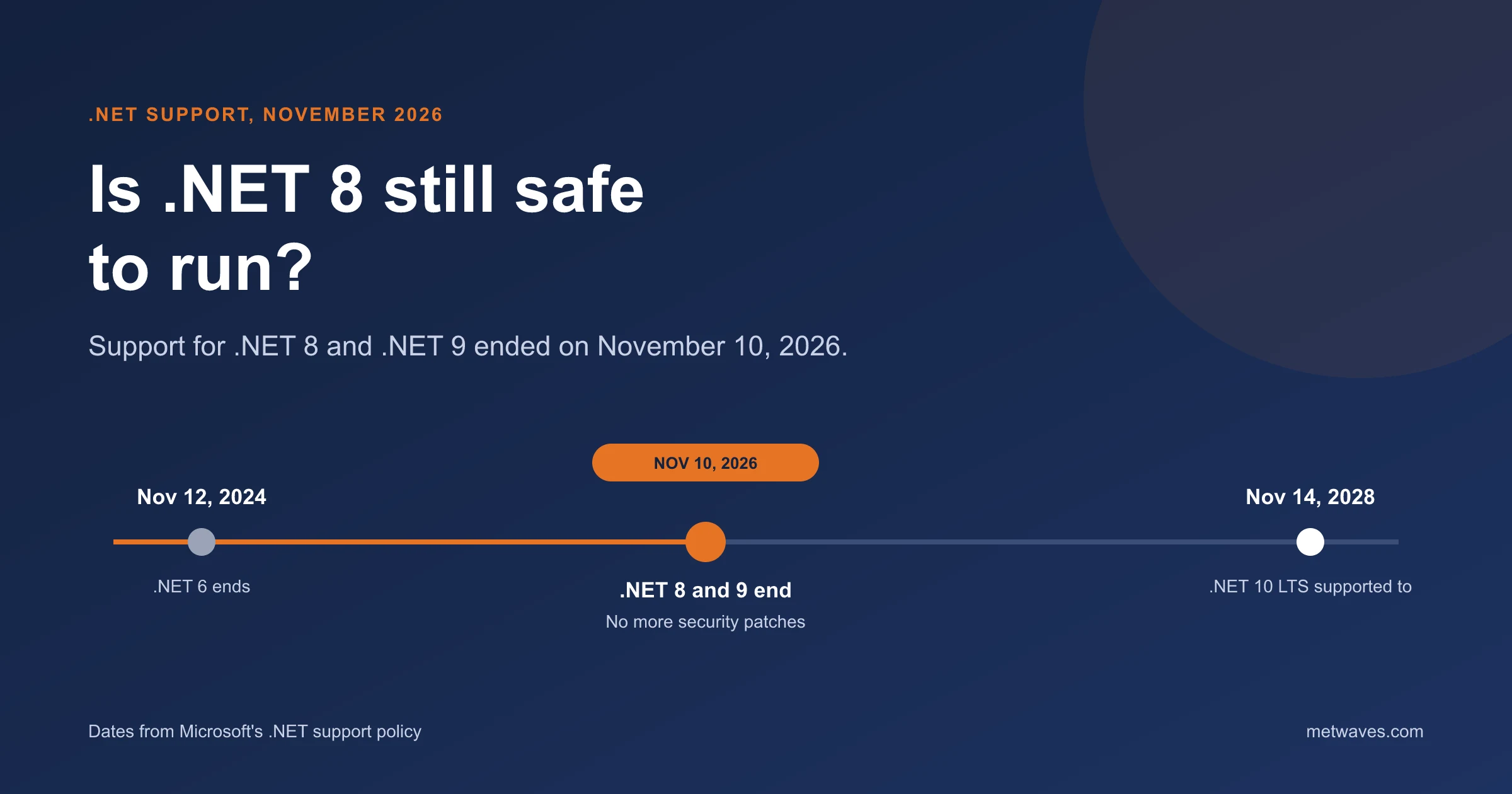
    Is .NET 8 Still Safe to Run After November 2026?

    Support for .NET 8 and .NET 9 ended on November 10, 2026. What that means for apps still on them, how risky it is, and how to plan the move to .NET 10.

    Learn More >
    Microsoft Technologies 5 min read
    Nikit Nandan    Nikit Nandan November 12, 2026
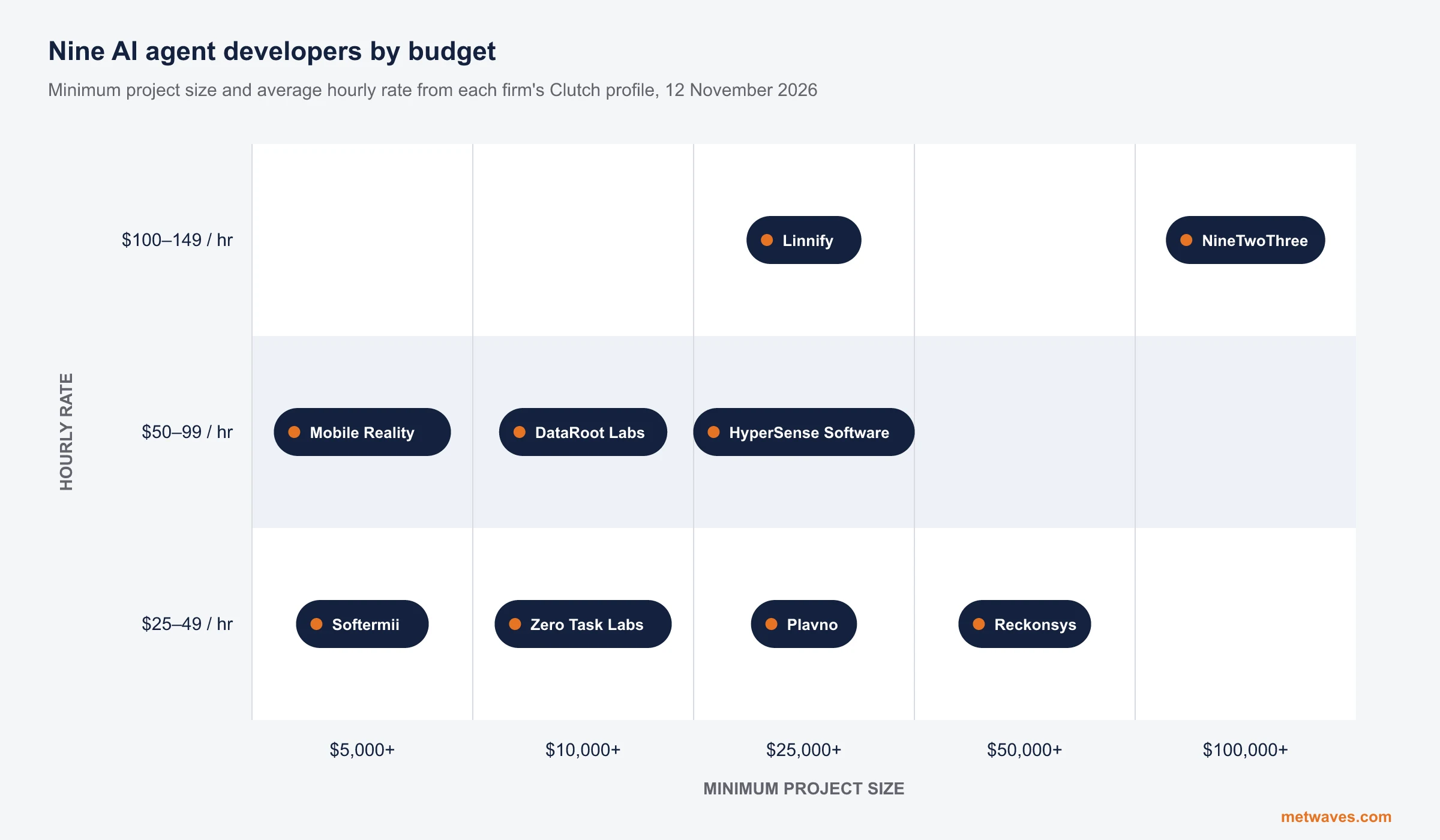
    Top AI agent development companies for small and mid-sized businesses (2026)

    Nine AI agent development firms a small or mid-sized business can shortlist, with Clutch figures, minimum budgets and the weaknesses their own clients name. Published by Metwaves, which is not ranked.

    Learn More >
    AI Development 9 min read
    Nikit Nandan    Nikit Nandan November 12, 2026
    Enterprise AI Agent Platforms Compared (2026)

    An architecture review of the four big enterprise AI agent platforms: where each one reasons, acts, finds its data and connects to outside agents, what it costs, and when a custom build is the better choice.

    Learn More >
    AI Development 9 min read

    Let’s build your idea!

    Let us help you with free analysis & estimate. Our product expert will contact you within 12 hours.

     All your information is kept confidential and protected by NDA.