
Custom iOS App Development Services for iPhone and iPad
Native Swift apps for iPhone and iPad, released through App Store review and kept current as Apple's rules change each year. Every build reaches your own iPhone through TestFlight before it reaches the App Store, and the code and the Apple Developer account are in your name from day one.

Trusted by businesses across the world

What Apple requires to ship an iOS app in 2026
To ship any update today, your app must be built with Xcode 26 and target iOS 13 or later. These are Apple's current rules, checked on 15 November 2026.
| Apple's rule | Date | What it means for your app |
|---|---|---|
| Build with Xcode 26 and the iOS 26 SDK | 28 April 2026 | Every upload to App Store Connect, including a one-line bug fix, must be built with Xcode 26 or later. |
| Target iOS 13 or later | 9 September 2026 | Apps can no longer be uploaded with an older minimum iOS version. |
| Build with the iOS 27 SDK and target iOS 15 or later | April 2027 | Apple has already announced the next rebuild. Plan it into next year's budget. |
| Answer Apple's updated age rating questions | 31 January 2026 | Unanswered questions interrupt the submission of app updates. |
| Give approved reasons for listed APIs | 1 May 2024 | Covers your code and every third-party SDK inside the app, so old libraries can block an upload. |
| Organisation account with a D-U-N-S Number | Ongoing | The account belongs to a legal entity, costs 99 USD per membership year, and should be in your name. |
Sources: Apple Developer upcoming requirements and submitting iOS apps.
iOS app development services we provide
Custom iOS app development services design, build, release and maintain apps for iPhone and iPad that are made for one business rather than bought off the shelf. A good iOS partner writes the app natively in Swift, tests every build on real devices through TestFlight, gets it through App Store review, and rebuilds it each year when Apple raises its SDK requirements. Metwaves builds native iOS apps, publishes them under your own Apple Developer account and keeps them shipping.
Every stage of an iPhone or iPad app: design, build, test, App Store release and the yearly upkeep Apple requires. It connects to our mobile app development, Android and UI and UX design work.

Native iPhone and iPad apps in Swift
Customer apps, staff and field apps, iPad tools and the iOS half of a two-platform product. Written in Swift with Apple's own frameworks, so the app looks and behaves like iOS and can use new Apple features as soon as they ship. Every build reaches your iPhone through TestFlight before it reaches the App Store.

App Store submission and rejections
Listing, screenshots, privacy details, age rating answers and review notes. When Apple rejects a build, we fix the guideline it cites or reply in App Store Connect, then resubmit.


Testing on real devices
TestFlight betas on the iPhones and iPads your users carry, including older iOS versions.

Rebuilds of older iOS apps
An app written in Objective-C or an old hybrid framework that can no longer be updated. We review the code, the build and the account first, then rebuild screen by screen in Swift.

Maintenance through Apple's yearly changes
Our iOS application development services include the rebuild and test cycle Apple's SDK rules force every year, plus fixes for whatever the new iOS version breaks.
Why an iOS app needs a budget every year
Apple's calendar sets the rhythm of iOS maintenance. Plan one rebuild-and-test cycle a year, even when you add no new features.
Apple releases betas of the next iOS and Xcode. We try your app on them before your users do.
Users start installing it. Layout bugs and crashes appear here if nobody tested over the summer.
Each release goes through TestFlight, App Store review and a phased rollout.
Uploads must use the newer Xcode and SDK. In 2026 that was Xcode 26 from 28 April.
An app with no new features still needs one rebuild-and-test cycle to keep shipping fixes.

Built with an old Xcode, or still on Xamarin? Since 28 April 2026 even a one-line fix needs Xcode 26.
Signs you need an iOS developer
If one of these sounds familiar, a short review of your app, code and account will show what it needs to keep shipping.






Apple features your iOS app can use
Native Swift gets every Apple feature as soon as Apple ships it. The last column shows which ones appear in our published work, so you know what you are buying.
| Apple feature | What it does for your business | In a Metwaves case study |
|---|---|---|
| Real-time voice and video calls | Clear, encrypted calls, even on low-bandwidth networks | Yes: Fiberpipe VoIP app, with SRTP and ZRTP encryption |
| Multimedia messaging | Media messages sent and received alongside calls | Yes: Fiberpipe VoIP app |
| Native Swift screens (SwiftUI or UIKit) | Screens that look and behave the way iPhone users expect | Yes: the VoIP app's iPhone client is written in Swift |
| Push notifications | Alerts and reminders that bring users back | None published yet |
| Apple Pay and in-app purchase | Payment without typing a card; in-app purchase for digital goods | None published yet |
| HealthKit | Read and write health data, with the user's permission | None published yet |
| Widgets and Live Activities | Information on the Home Screen and Lock Screen without opening the app | None published yet |
| Apple Watch | A companion app on the wrist | None published yet |
| Core ML and on-device AI | Models that run on the iPhone: private, and working offline | None published yet |
CASE STUDY
A native Swift calling app for a telecom provider
Fiberpipe, a telecommunications provider offering fibre internet and VoIP to businesses, had outgrown off-the-shelf VoIP software that it could not customise or scale.
We built a custom VoIP product with a native Swift app for iPhone, a Kotlin app for Android, and web and desktop versions. It carries high-definition voice and video calls encrypted with SRTP and ZRTP, multimedia messages, call transfer, forwarding, voicemail and history, and adjusts call settings to the network in real time. We tested it under varied network conditions before rollout.
- ClientFiberpipe, telecommunications provider
- Built withSwift, Kotlin, Angular, ASP.NET Core, PostgreSQL
- PlatformsiOS, Android, Windows, macOS and web
- SecurityVoice and video encrypted with SRTP and ZRTP
How we build your iOS app
Five steps from the first call to the yearly update.
You hold a working build on your own iPhone from the first sprint.
First call
We talk through the app, the users and the deadline. We sign an NDA first if you need one.
Scope and prototype
A clickable prototype you can tap through, and a written scope.
Sprints with TestFlight
A new build on your own iPhone every sprint, so you see progress on the device.
App Store release
Listing, privacy details, review notes, then a phased release you can pause.
Yearly updates
The SDK rebuild, testing on the new iOS, and fixes before your users find them.
Our iOS tech stack
Swift is the language of our VoIP app's iPhone client, whose backend runs on ASP.NET Core and PostgreSQL. Every build ships through TestFlight and App Store Connect, and we pick the backend to fit your systems.




When native iOS is the right choice, and when it isn't
Native Swift fits when iPhone users are most of your market or the app depends on Apple features. It is not the cheapest route to iPhone and Android at once.
| If you… | What usually fits | Why |
|---|---|---|
| Sell mostly to iPhone users, and the app relies on widgets, Apple Watch, HealthKit or Apple Pay | Native Swift | New Apple features arrive in Swift first. |
| Need real-time voice, video or heavy work with device hardware | Native | Native code controls audio, network changes and interruptions directly. Our VoIP app is native on both iPhone and Android. |
| Need the same app on iPhone and Android on one budget | Cross-platform | One codebase for both. See cross-platform apps. |
| Mostly show content and collect forms | A responsive web app | No App Store review, one release for every device. See web apps. |
| Already have an Android app in Kotlin | Native iOS in Swift | Matches the Android app's native feel. See Android. |
What an iOS app costs and how long it takes
Scope sets both the price and the timeline: screens, integrations and device features move them most. We quote a fixed price after scoping.
Screens and user roles
A customer app with one role is smaller than one with customers, staff and admins who each see different screens.
Backend and integrations
Your own API, payments, a CRM or ERP: each connection is built and tested on both ends.
Device features
Camera, Bluetooth, location, HealthKit or background audio each add work and extra App Store review questions.
Design and iPad layouts
A custom design and separate iPad layouts cost more than standard iOS screens.
Testing range
Supporting older iPhones and iOS versions widens the test matrix.
Apple's own fees are separate: 99 USD per membership year for the Apple Developer Program, and a commission on paid apps and in-app purchases (15% under the App Store Small Business Program up to 1 million USD in proceeds). Budget one rebuild a year too.
Five questions to ask any iOS partner
How to choose an iOS app development company

Can I download apps the people on my project built?
Ask for App Store links, and ask which of those people will work on your app. Our own answer: our published iOS work is a business VoIP app, not a consumer app with large download numbers. Ask us what we can show you.

Whose Apple Developer account will the app live in?
It should be yours, enrolled as an organisation, with the vendor invited as developers.

What happens when Apple rejects a build?
Ask how they read the cited guideline, and how long a resubmission usually takes.

What does the yearly SDK update cost?
If they cannot answer, the cost will arrive as a surprise next spring.

How do you test on real devices and older iOS versions?
Simulators miss problems with memory, cameras, Bluetooth and poor networks.

Need iOS hands on your own team? Add one Swift developer, or a team that owns the app.
Ways to work with us on iOS
Pick the model by how settled the app is. A first version with a clear scope suits a fixed price; a product that keeps growing suits a dedicated team.

Fixed-scope app
A first version with a clear scope. Fixed price after scoping.

Dedicated iOS developer or team
A product that will keep growing. Monthly per person.

Maintenance
A live app that must keep up with Apple's yearly changes. Time and materials, billed monthly.

iOS developers in your team
Your team owns the app and needs more Swift hands.
Where iOS work connects to the rest of your product
Send us your App Store link or your idea. We will tell you what the app needs to keep shipping, and what a build or rebuild would cost.
| Service | What it covers |
|---|---|
| Mobile app development | Our mobile practice across iOS, Android and cross-platform. |
| Android app development | The Kotlin side of a two-platform product. |
| Cross-platform apps | One codebase for iPhone and Android when budget comes first. |
| UI and UX design | Screens and flows designed and tested before code is written. |
Frequently asked questions
Straight answers on cost, timelines, Apple's rules and who owns the app.
The price depends on the number of screens and user roles, the backend and integrations, the device features the app uses, and how much custom design it needs. We quote a fixed price after a scoping call and a prototype. Apple also charges 99 USD per membership year for the Apple Developer Program, and takes a commission on paid apps and in-app purchases: 15% under the App Store Small Business Program for developers with up to 1 million USD in proceeds, and the standard rate above that.
It depends on scope, so we start with a clickable prototype and a written plan with dates. You get a TestFlight build on your own iPhone every sprint, so you see the app take shape long before release.
Choose Swift when most of your users are on iPhone, or the app depends on Apple features, real-time media or device hardware. Choose cross-platform when you need the same app on iPhone and Android on one budget.
Apple raises the SDK an app must be built with almost every year. Since 28 April 2026 every upload must be built with Xcode 26, and from April 2027 the iOS 27 SDK is required. Without a rebuild you cannot ship even a bug fix.
Yes. We prepare the listing, privacy details and review notes, submit the build, and handle any rejection by fixing the cited guideline or replying to Apple in App Store Connect before resubmitting.
Yes, after a review of the code, the build setup and the Apple account. Microsoft ended Xamarin support on 1 May 2024, and its final SDKs target Xcode 15, older than Apple now accepts, so a Xamarin app needs a new home before its next update. We built Telemeds+ on Xamarin, so we know how these apps are put together.
You do. The app is published under your organisation's Apple Developer account, and the source code, signing certificates and App Store listing belong to you. We sign an NDA before you share your idea.
The best one for you can show App Store apps built by the people on your project, publishes under your account, explains how it handles rejections and tells you the yearly SDK cost up front. Our published iOS work is a business VoIP app, not a consumer app with large download numbers, so ask what we can show you.
Yes. Core ML and Apple's on-device models run on the iPhone itself, so data stays private and features work offline. We have not yet published a case study with on-device AI.
INSIGHTS & NEWS
Discover IT Industry Insights and Technology Trends
 Nikit Nandan
November 12, 2026
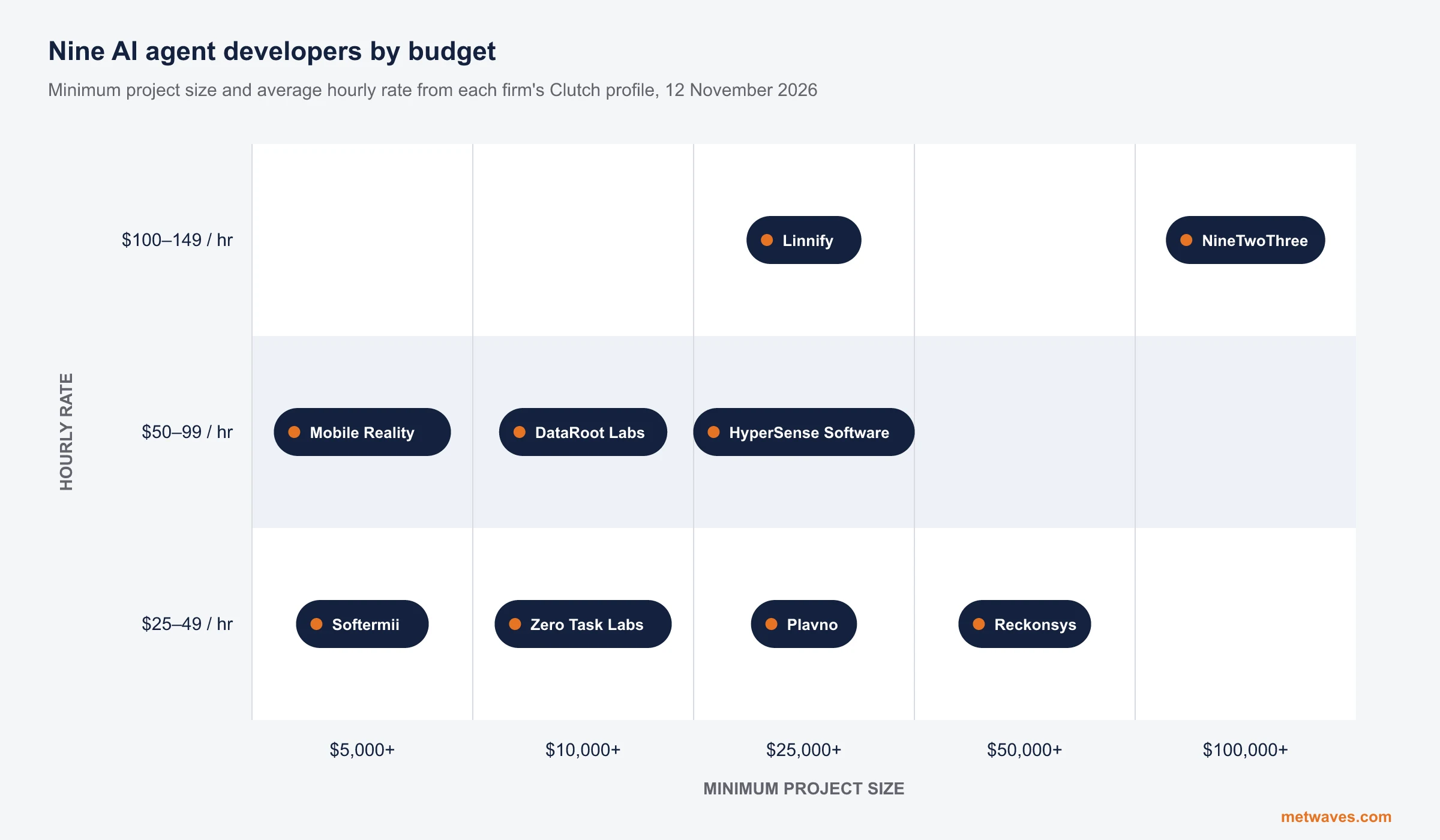
Top AI agent development companies for small and mid-sized businesses (2026)
Nine AI agent development firms a small or mid-sized business can shortlist, with Clutch figures, minimum budgets and the weaknesses their own clients name. Published by Metwaves, which is not ranked.
Learn More >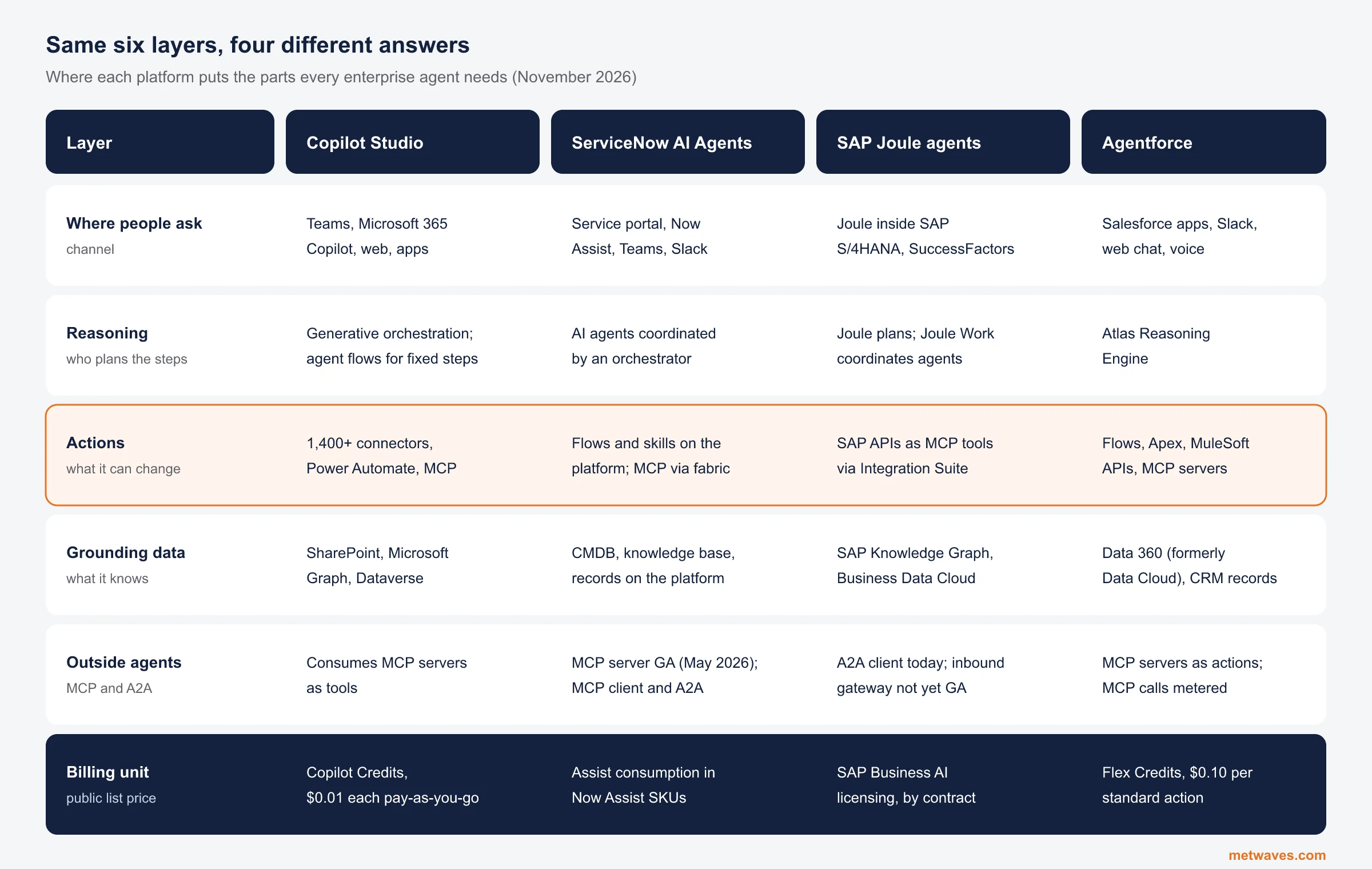 Nikit Nandan
November 12, 2026
Enterprise AI Agent Platforms Compared (2026)
An architecture review of the four big enterprise AI agent platforms: where each one reasons, acts, finds its data and connects to outside agents, what it costs, and when a custom build is the better choice.
Learn More > Nikit Nandan
November 01, 2026
Top custom software development companies for small and mid-sized businesses (2026)
Ten custom software firms a small or mid-sized business can shortlist, with Clutch figures, minimum budgets and the weaknesses their own clients name. Published by Metwaves, which is not ranked.
Learn More >Let’s build your idea!
Let us help you with free analysis & estimate.
Our product expert will contact you within 12 hours.