
.NET Development Services
New .NET applications and APIs, and older ones moved to a supported version before they become a security problem. We build on ASP.NET Core and .NET 10 for businesses in the US, UK, Canada and Australia, and you keep the code and the hosting in your own name.

Trusted by businesses across the world

.NET support dates that decide what you do next
.NET 8 and .NET 9 left Microsoft support on 10 November 2026. If your app runs on one of them, or on anything older, it no longer gets security patches. Dates are from Microsoft's .NET support policy.
- 1 May 2024
Xamarin support ended
Its last SDKs target Android API 34 and Xcode 15, older than both app stores now accept for updates.
- 14 May 2024
.NET 7 support ended
A short-term release. Apps still on it have had no patches since.
- 12 November 2024
.NET 6 support ended
The last LTS release before .NET 8. Upgrade straight to .NET 10.
- 10 November 2026
.NET 8 and .NET 9 ended
No security patches since this date. This is the largest group of apps to move now.
- 12 January 2027
.NET Framework 4.6.2 ends
Move to 4.8.1 as a stopgap, or plan the move to .NET 10.
- 14 November 2028
.NET 10 and .NET 11 end
.NET 10 is the long-term release to build on today. .NET 11 is supported for the same period.
When .NET is the right choice
Choose .NET for business systems that have to run for years. Skip it when your team, your product or your budget points elsewhere.
.NET. Sign-in with Entra ID, SQL Server tooling and Azure hosting all fit without glue code.
.NET. Strong typing, a long-term support cycle and mature tooling suit software that changes slowly and must be right.
Node.js. One language across front end and back end. See our Node.js page.
Python. The libraries live there. A .NET app can still call a Python service, as our BIM integration does.
WordPress or another CMS. Not a custom .NET build. See CMS development.
Flutter or React Native. Not .NET MAUI, which suits teams that already write C#. See cross-platform app development.
Keep it. Both run on .NET 10. Move to the web only if users need browser or mobile access.
.NET software development services we provide
.NET development services cover building, upgrading and supporting software on Microsoft's .NET platform: web apps and APIs on ASP.NET Core, integrations with ERP and CRM systems, and internal business tools. Today they mostly mean two jobs: new work on .NET 10, which Microsoft supports to 14 November 2028, and moving older apps off .NET Framework or off .NET 6, 7, 8 and 9, which no longer get security patches.
Most of our .NET work is one of six jobs: a new build, an upgrade, an integration, Azure hosting, taking over an app someone else built, or keeping one patched every month.

ASP.NET Core web apps and APIs
Our ASP.NET development services cover customer portals, internal tools and the APIs behind web and mobile apps, written in C# on ASP.NET Core. Our VoIP platform for Fiberpipe runs on an ASP.NET Core back end behind Angular and native apps.

.NET upgrades and migration
We move apps from .NET Framework 4.x or .NET 6, 7, 8 and 9 to .NET 10. Code that ports is upgraded in place; Web Forms pages and WCF services are rebuilt in stages while the app stays live.

Integrations with ERP, CRM and business systems
Services that move data between your systems through their APIs, and list what they cannot map instead of dropping it. Our BIM integration loads quantities from building models into estimating and ERP systems.

Hosting and deployment on Azure
We deploy .NET apps to Azure App Service, containers or your own servers, or to AWS if you already run there, with a pipeline so a release is a button, not a risk. See our Azure consulting page.

Takeover of a .NET app someone else built
When the original developer or agency has gone, we review the code, hosting and deployment first. You get a written plan before anything changes.

Support and maintenance
Monthly .NET servicing updates, security fixes and small changes, so the app stays on a supported version. See application support and maintenance.

Still on .NET 6, 7, 8 or 9? Plan the move to .NET 10 before the next security fix you cannot get.
Which .NET version you should be on
Long-term support (LTS) releases get three years of patches; short-term (STS) releases get two.
| Version | Release type | End of Microsoft support | What to do |
|---|---|---|---|
| .NET 10 | LTS, released 11 November 2025 | 14 November 2028 | Build new work on it, and upgrade to it |
| .NET 11 | STS, released 10 November 2026 | 14 November 2028 | Fine if you upgrade every year; otherwise choose .NET 10 |
| .NET 8 and .NET 9 | LTS and STS | 10 November 2026 | Out of support. Upgrade to .NET 10 now |
| .NET 6 and .NET 7 | LTS and STS | 12 November 2024 and 14 May 2024 | Out of support since 2024. Upgrade to .NET 10 |
| .NET Core 3.1 and earlier | LTS and STS | 13 December 2022 or earlier | Review first: some code ports, some is rewritten |
| .NET Framework 4.8 and 4.8.1 | Part of Windows | Follows the Windows version it runs on | Keep for now if it works. Plan a move if you need new features, Linux hosting or containers |
| .NET Framework 4.6.2 | Part of Windows | 12 January 2027 | Move to 4.8.1 as a stopgap, or to .NET 10 |
What we build with .NET
Business systems that have to run for years: integrations, APIs behind apps, healthcare platforms and clinic websites. Each card is a project you can read in full.




CASE STUDY
Quantity takeoff from days to hours with a .NET integration
A construction-technology company in the United States priced projects from building models by hand: an estimator measured walls, slabs and doors, then typed the quantities into the estimating system.
We built .NET and Python services that read the IFC building model, map each element to the right cost code and load the quantities into the estimating and ERP systems through their APIs. Elements that do not map cleanly are listed for the estimator instead of guessed.
- ClientConstruction-technology company, United States
- Built with.NET, Python, IFC, REST APIs
- ResultQuantity takeoff went from days to hours
Our .NET tech stack
Everything below appears in the .NET projects on this page. We pick per project and extend what you already run before replacing it.



Need .NET hands on your own team? Add one engineer, or a team that owns the whole upgrade.
Five questions to ask any .NET partner
How to choose a .NET development company

Which .NET version would you start a new project on?
Today the answer is .NET 10, the long-term release supported to 14 November 2028. .NET 11 makes sense only if you will upgrade every year.

How will you test the upgrade before it goes live?
Automated tests where they exist, new tests around the risky parts where they do not, and a run of the old and new versions side by side on the same inputs.

What will you do with our Web Forms pages and WCF services?
A specific answer: Web Forms rebuilt page by page in Razor Pages, Blazor or a JavaScript front end; WCF moved to CoreWCF or gRPC. A vague "we migrate it" is a warning sign.

Who owns the code, the cloud account and the deployment pipeline?
You do. The repository, the Azure or AWS subscription and the pipeline should be in your name from day one.

Can we see .NET work you have shipped?
Named projects with the stack and a measured result, not a wall of logos. Ours are on this page.

What .NET development costs, and what moves the price
We quote after a code review, because the same number of screens can mean a week or a quarter. These are the factors that move the quote most.
Size of the codebase
The number of projects, lines of code and screens sets the base effort for any build or upgrade.
Web Forms pages and WCF services
These do not port to modern .NET. Every Web Forms page is rebuilt and every WCF service moves to CoreWCF or gRPC, so their count moves the price more than anything else in an upgrade.
Packages with no modern version
An old reporting, PDF or payment library with no .NET 10 version has to be replaced, and the code around it changed.
Tests you have today
With automated tests we can prove an upgrade quickly. Without them, we first write tests around the risky parts.
Integrations
Each connection to an ERP, CRM, payment or identity system needs its own testing, often with the other vendor.
Hosting change
Staying on the same servers is simplest. Moving to Azure App Service, containers or Linux adds setup and a deployment pipeline.
We do not publish prices. The review ends with a fixed quote for a defined job, or a team proposal for ongoing work.
Flexible hiring models
Pick the model by how clear the scope is. A defined upgrade suits a fixed quote; a product that keeps changing suits a dedicated team.

Fixed scope
A .NET upgrade or a defined build with a clear end. Fixed quote after the code review.

Dedicated .NET developer or team
A product or system that needs steady work over months. Monthly, per person.

Time and material
Support, small changes and work whose scope will move. By the hours used.

Hire .NET developers into your team
Your team leads, and needs more C# hands for a period. Monthly, per person.
How to start a .NET project with us
Five steps, and you see working software from the fourth one.
Every engagement starts with a look at the code, so the quote reflects your app, not a package.
First call, NDA if you want one
You tell us what the app does, which .NET version it runs on and how it is hosted. We sign an NDA before you share code.
Code and hosting review
We read the repository, packages and deployment, and list every blocker with the effort to clear it.
Written plan and quote
Upgrade, rebuild or leave it, with a fixed quote for a defined job or a team proposal for ongoing work.
Build or upgrade in sprints
Work lands in short sprints, each with a test build you can use, and runs side by side with the old version.
Release and support
We release with a rollback ready, hand over the code and pipeline, and stay on for support if you want us to.
Frequently asked questions
Straight answers on .NET versions, upgrades, cost and ownership.
.NET 8 left Microsoft support on 10 November 2026, so it gets no more security patches. The app still runs, but each vulnerability found from now on stays open in your copy. For most apps the move from .NET 8 to .NET 10 is one of the smaller upgrades; plan it now rather than after a security questionnaire asks.
It depends on where you start. Moving from .NET 6 or .NET 8 to .NET 10 is usually the smaller job. Moving from .NET Framework depends on how many Web Forms pages, WCF services and old packages the app has. The code review gives you a real figure for your app before you commit.
Yes, but Web Forms pages are rebuilt, not converted, because ASP.NET Core has no Web Forms. We usually move the business logic first, then replace pages in stages with Razor Pages, Blazor or a JavaScript front end, so the app stays live throughout.
We quote after a code review, because the price depends on the size of the codebase, how many Web Forms pages and WCF services need rebuilding, the tests you already have, your integrations and any hosting change. A defined upgrade or build gets a fixed quote; ongoing work is priced monthly.
Choose .NET if your business runs on Microsoft 365, SQL Server or Azure, or the system has complex rules and a long life. Choose Node.js if your team writes only JavaScript or the product is built around real-time features. See our Node.js page.
Yes. We start with a review of the code, hosting and deployment, then give you a written plan. Who holds the source code and the cloud account matters more than the state of the code, so we check that first.
Xamarin support ended on 1 May 2024, and its last SDKs target Android API 34 and Xcode 15, which are older than the app stores now accept for updates. The options are .NET MAUI (closest for a C# team), a rewrite in Flutter or React Native, or native apps. Our Telemeds+ apps were built on Xamarin; that is past work, and we would not choose Xamarin for a new app today.
Yes, we sign an NDA before you share code or data. You own the code we write, and it lives in your repository and your cloud account.
They are the building, upgrading and support of web apps, APIs, integrations and internal systems on .NET. The services and the projects on this page show what that covers in practice.
The best one for you can answer the questions in our checklist above with specifics: which version they would start on, how they test an upgrade, what they do with Web Forms and WCF, and who owns the code and the cloud account.
INSIGHTS & NEWS
Discover IT Industry Insights and Technology Trends
 Nikit Nandan
November 12, 2026
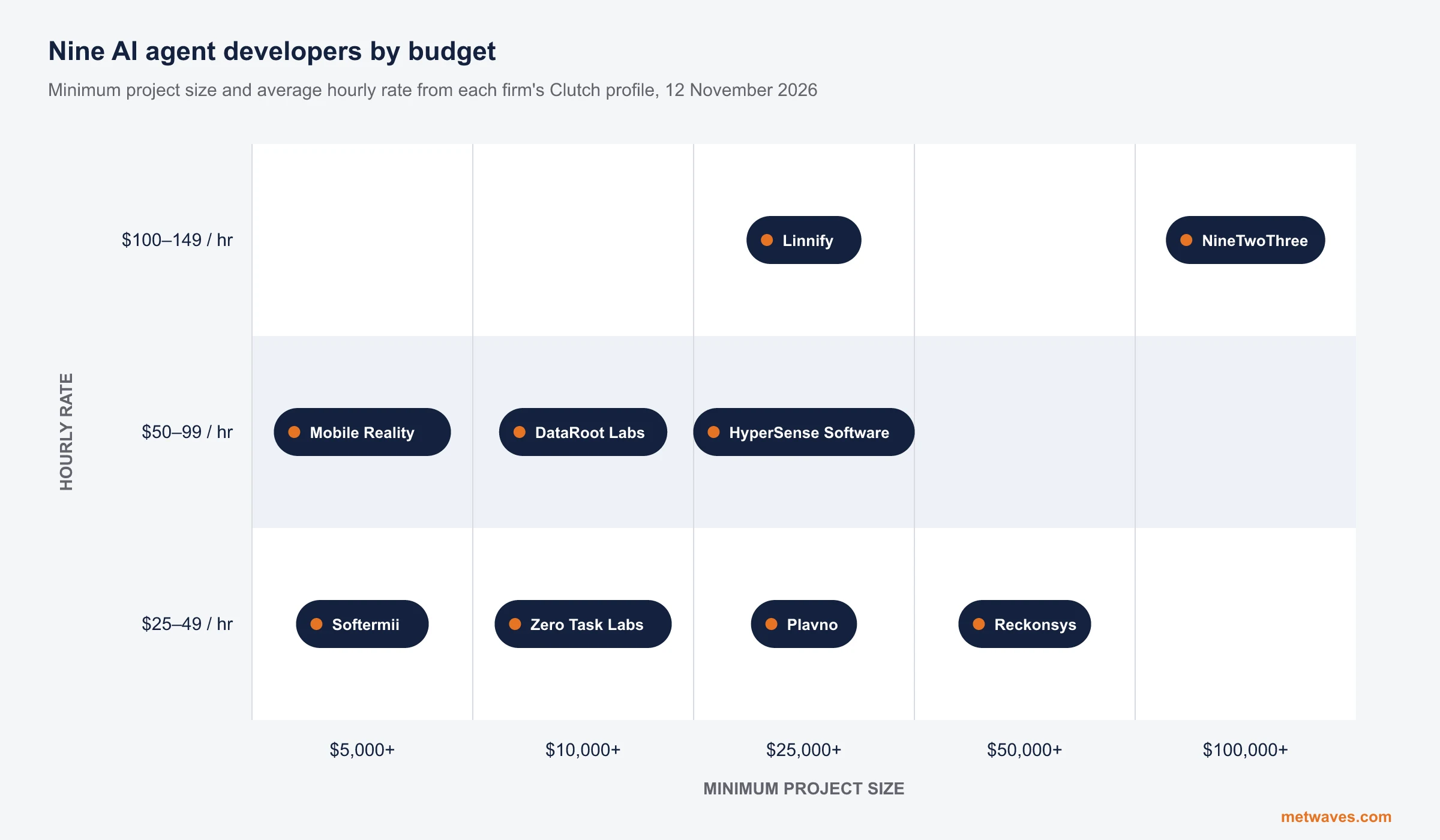
Top AI agent development companies for small and mid-sized businesses (2026)
Nine AI agent development firms a small or mid-sized business can shortlist, with Clutch figures, minimum budgets and the weaknesses their own clients name. Published by Metwaves, which is not ranked.
Learn More >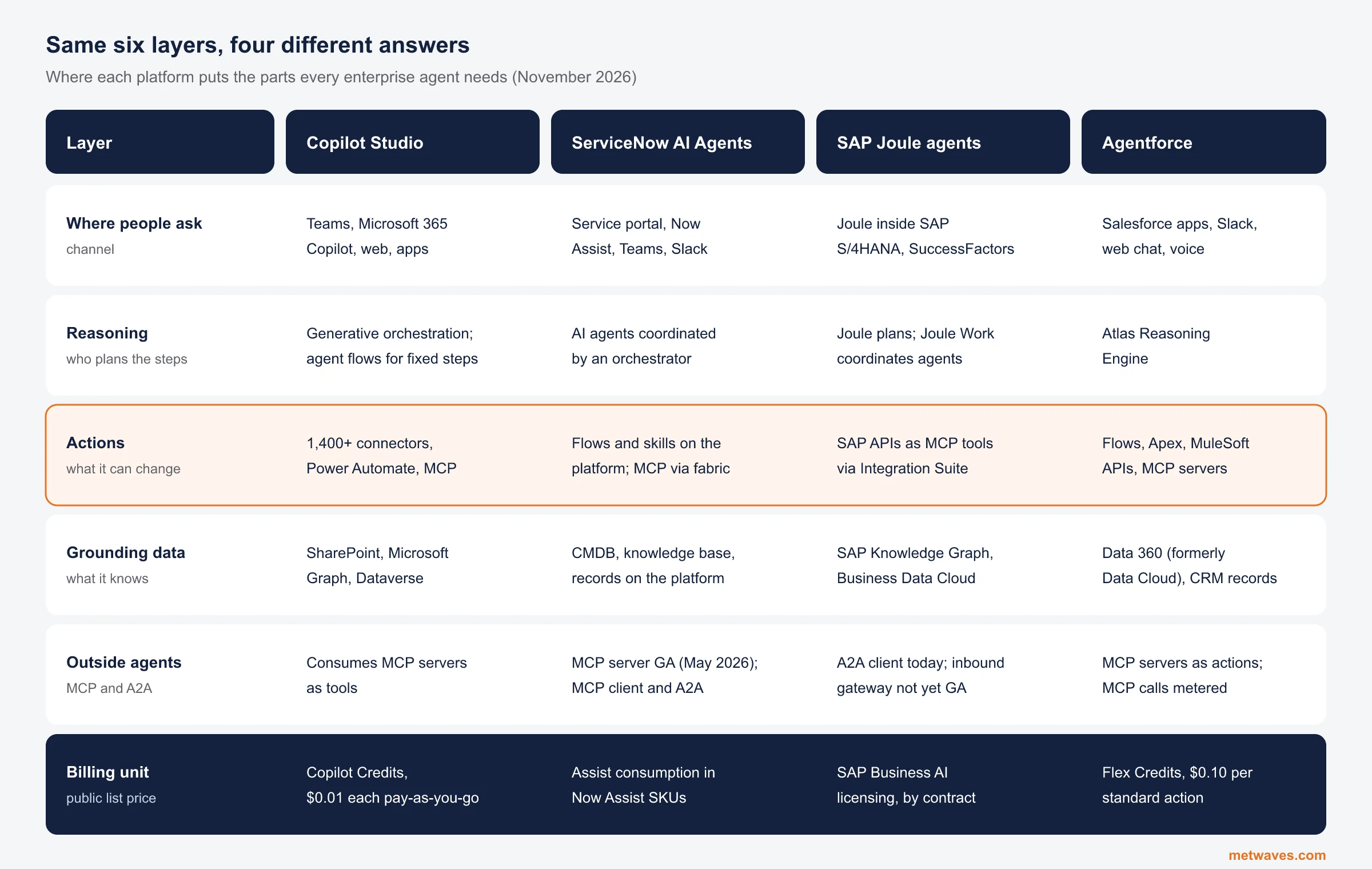 Nikit Nandan
November 12, 2026
Enterprise AI Agent Platforms Compared (2026)
An architecture review of the four big enterprise AI agent platforms: where each one reasons, acts, finds its data and connects to outside agents, what it costs, and when a custom build is the better choice.
Learn More > Nikit Nandan
November 01, 2026
Top custom software development companies for small and mid-sized businesses (2026)
Ten custom software firms a small or mid-sized business can shortlist, with Clutch figures, minimum budgets and the weaknesses their own clients name. Published by Metwaves, which is not ranked.
Learn More >Let’s build your idea!
Let us help you with free analysis & estimate.
Our product expert will contact you within 12 hours.