
Cross-Platform App Development Services
Our cross-platform app development services build one app for iOS and Android from a single codebase, and for the web or desktop where the framework fits. We pick the framework from your team, your app's device needs and how long it must last, and we tell you when native is the better choice.

For founders and product owners in the US, UK, Canada and Australia · An exit plan if the framework ages
THE SHORT ANSWER
What cross-platform app development is
Cross-platform app development means building one app that runs on both iOS and Android from a single codebase, using a framework such as React Native, Flutter or .NET MAUI, instead of writing two separate native apps. Most of the screens and logic are written once; store submission, device testing and some device features are still handled per platform. It suits business apps built mostly from forms, lists, bookings and payments; native fits better for real-time media and heavy device hardware.
So cross platform mobile app development saves most on the build and less on everything after it. The framework choice matters less than keeping the business logic in your API, where it survives the next framework.
1×Written once
- Screens and navigation, apart from small platform differences such as back buttons and date pickers.
- Business logic and API calls, written and tested once.
- The design system, so both apps look and behave alike.
- One backend API, shared with your web app.
2×Still done for iOS and for Android
- Store listing, privacy forms and review, under each store's own rules.
- Testing on real iPhones and Android phones before every release.
- Native code for device features the framework does not cover.
- A yearly update when Apple and Google raise their build requirements.
WHEN TO CALL US
Signs a cross-platform app fits
If one of these sounds like your situation, a shared codebase is worth a serious look.
“We need iOS and Android, but we have budget for one team.”
Two native apps mean two codebases, two teams and two release trains. One codebase puts both stores on one budget and one release schedule.
“Our two native apps have drifted apart.”
Features land on one platform months before the other, and support answers every question twice. A shared codebase ships each feature to both stores in the same release.
“Our Xamarin app can no longer ship updates.”
Xamarin support ended on May 1, 2024, and both stores now require newer build tools than it supports. The app needs a new framework before its next update.
“Customers keep asking for an app, and our web app is React.”
React Native lets your web team share people, patterns and some logic with the mobile app, so the app is not a separate world.
“The app is mostly forms, lists, bookings and payments.”
That is where cross-platform frameworks are strongest. Heavy animation, real-time media and deep device features are where native earns its cost.
“We want one release schedule for both stores.”
One codebase, one pipeline and one set of release notes, with each store's review handled side by side.
Cross platform mobile app development services
Six kinds of work, from a new app to rescuing one whose framework has ended. You own the code, the store accounts and the signing keys in every one.

A new app for iOS and Android
One codebase for both stores, chosen for your app rather than our habits. We start with the three things the app must do on a phone, pick the framework from those, then build in sprints with test builds on your phones.

Moving a Xamarin app
We assess the app and plan the move to .NET MAUI, Flutter, React Native or native, starting with what can be kept in the API so less has to be rewritten.

A mobile app for your web platform
Customers who use your web app get the same account and data on their phone, through one API shared by both.


Takeover of an existing cross-platform app
The agency or freelancer has gone. We read the code, check that the store accounts and signing keys are in your name, and tell you what it would take to keep shipping.

Device testing and maintenance after launch
Testing on real iPhones and Android phones before each release, and an update each year when Apple and Google raise their requirements. See QA and testing.
CHOOSING
Cross platform app development: which approach fits
There is no best framework, only the one that fits your app, your team and how long the app must last. This is how the main options compare.
React Native
JavaScript or TypeScriptUses each platform's own UI components.
- Best when
- Your web team works in React, so people and logic can be shared.
- Watch out for
- Device features come through native modules and third-party libraries.
Flutter
DartDraws its own UI, the same on every device.
- Best when
- You want one custom design that looks identical on both platforms.
- Watch out for
- Dart skills are less common, and screens do not follow platform conventions by default.
.NET MAUI
C# and .NETUses each platform's own controls.
- Best when
- Your team is on .NET, or you are moving off Xamarin. Microsoft points Xamarin.Forms projects here.
- Watch out for
- A smaller library ecosystem than React Native or Flutter.
Kotlin Multiplatform
KotlinShares the logic; screens usually stay native.
- Best when
- You want native screens with one shared core, and your Android team already writes Kotlin.
- Watch out for
- You still build two sets of screens.
Native
Swift and KotlinEach platform's own UI, in two codebases.
- Best when
- Real-time audio or video, heavy device hardware, or new OS features on day one.
- Watch out for
- Two teams, two release trains, roughly twice the build.
Our Fiberpipe VoIP apps, with real-time voice and video, were built native in Kotlin and Swift. Read the case study
Progressive web app
HTML, CSS, JavaScriptRuns in the browser and can be installed from it.
- Best when
- Your users do not need the app stores or deep device features.
- Watch out for
- No store listing, and device features vary from browser to browser.
Our own cross-platform work: Telemeds+, built on Xamarin before its support ended. We have not yet published a case study about a React Native or Flutter app.
NATIVE OR CROSS-PLATFORM
Should your app be native or cross-platform?
Answer three questions to see what usually fits. We give the same advice on the call, with reasons.
- Does the app handle real-time audio or video, or heavy device hardware?Calls, Bluetooth devices, AR, constant background tracking
- Is your team on C# and .NET, or moving off Xamarin?An existing .NET back end or Xamarin app
- Is your web app built in React?A React front end your team maintains
Native apps in Swift and Kotlin
Real-time media and heavy hardware are where a cross-platform layer adds risk. Our Fiberpipe VoIP apps, with real-time voice and video, were built native. Read the VoIP case study.
.NET MAUI
Keep your C# skills and code. Microsoft points Xamarin.Forms projects to .NET MAUI.
React Native
Share people, patterns and some logic with your React web app.
React Native or Flutter
Both fit a business app well. We compare them on your screens and your team, and tell you which before you commit.
How one codebase reaches both app stores
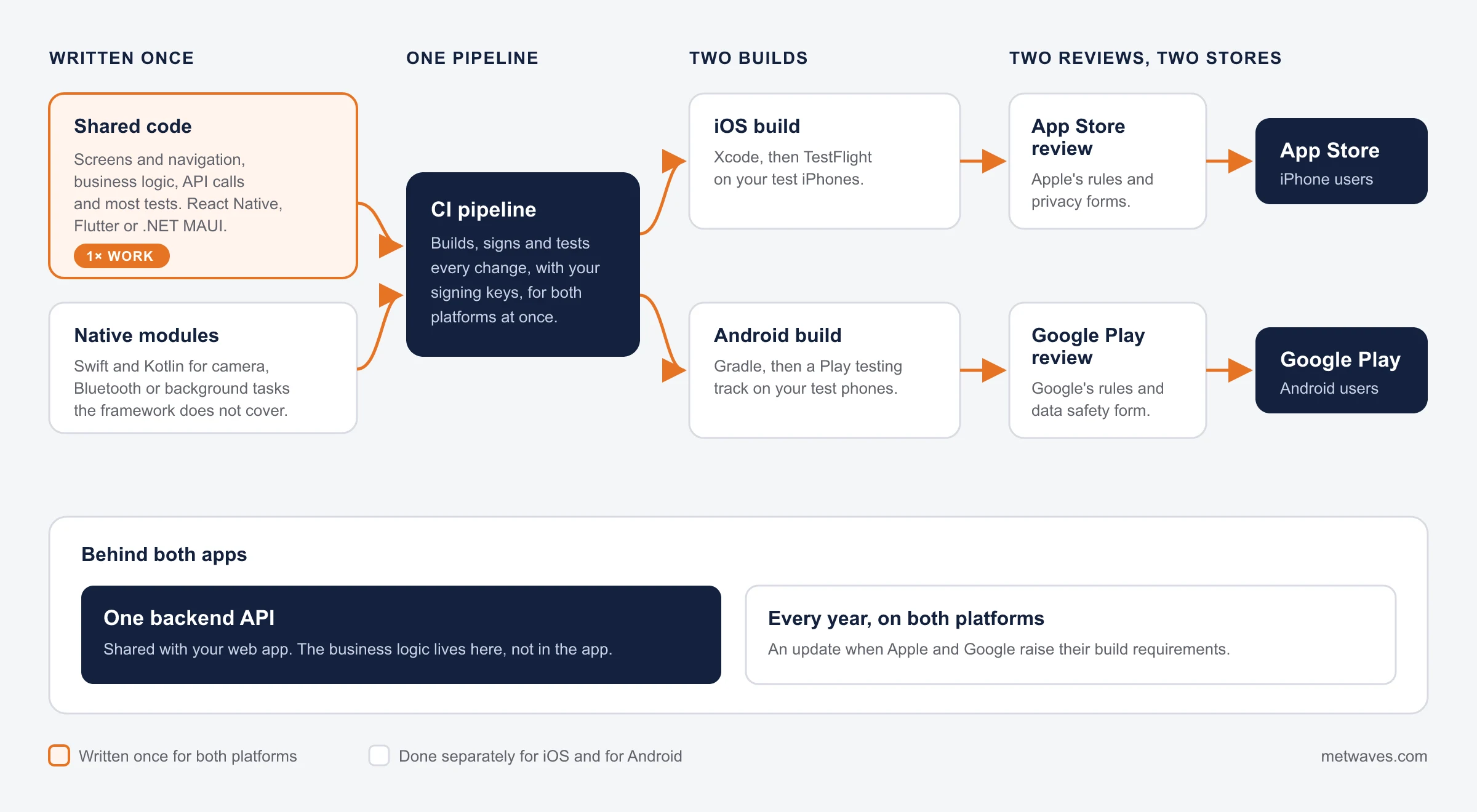
Shared screens and logic sit on top of small native modules for device features. One pipeline produces an iOS build and an Android build, each goes through its own testing and store review, and both talk to the same API as your web app.
What drives the cost of a cross-platform app
We quote after a call about your app, because these factors move the price more than the choice of framework does.
Screens and user roles
Telemeds+ had patient, doctor and administrator roles, each with its own screens. Every role multiplies the design, build and test work.
Device features
Video calls, Bluetooth devices, background location and payments each add native work and testing.
Integrations
Your booking, payment, CRM or health record systems each need a tested connection, usually through your API.
Offline use
An app that must work without signal needs local storage and a way to sync later.
Custom design
A fully custom look costs more than one that follows each platform's conventions.
Store and privacy rules
Health, finance and children's apps face extra review questions and privacy declarations.
There is also a yearly cost: Apple and Google raise their build requirements every year, so plan for at least one update a year even when nothing else changes.
When a framework ends: the Xamarin lesson
Every framework has a shelf life, and we have lived through one ending: Telemeds+, a telemedicine app we built, ran on Xamarin. This is what happened to Xamarin apps.
- May 1, 2024
Xamarin support ended
Microsoft ended support for all Xamarin SDKs, including Xamarin.Forms. Their final versions target Android API 34 and Xcode 15. Source: Microsoft.
- April 28, 2026
Apple raised its build rules
Apps uploaded to App Store Connect must be built with Xcode 26 and the iOS 26 SDK. Source: Apple.
- August 31, 2026
Google Play raised its target
New apps and app updates must target Android 16 (API level 36), with extensions available to November 1, 2026. Source: Google.
- Today
Xamarin apps cannot ship updates
A Xamarin app cannot be built to either store's current rules. Microsoft points Xamarin.Forms projects to .NET MAUI.
PAST WORK
Telemeds+: a cross-platform app built on Xamarin
A physician who owns two urgent care clinics in Virginia came to us with an idea rather than a brief: a telemedicine app for patients, doctors and clinic staff. We researched, wireframed and built it, with appointment scheduling, secure messaging, video consultations, prescriptions and billing.
It was built cross-platform on Xamarin, with .NET, SQL Server and Azure behind it. Manual scheduling and routine admin were automated, and the clinic's workload fell by 40%. Xamarin has since reached end of support, so we would not choose it today. It is why we plan the exit before the build: business logic in the API, a thin app layer, and a yearly check of the framework's support status.
- ClientOwner of two urgent care clinics, Virginia, US
- Built withXamarin, .NET, SQL Server, Azure
- UsersPatients, doctors and administrators
- ResultWorkload down 40% as scheduling and admin were automated
- TodayPast work: Xamarin support ended on May 1, 2024

Send us the three things your app must do on a phone. We will tell you cross-platform or native, which framework, and why.
How we build your cross-platform app
Five stages, each ending with something you can hold on your own phone or read before the next stage starts.
- 1
Framework decision and prototype
We agree the framework against your app's needs and click through a prototype before code is written.
- 2
Build in sprints
Test builds reach your own phones through TestFlight and a Google Play testing track.
- 3
Device testing
Each release is checked on a range of real iPhones and Android phones.
- 4
Store submission
Listings, privacy forms and review notes for both stores, and fixes if a review fails.
- 5
Updates and OS releases
Yearly updates when Apple and Google raise their requirements, and new features.
Ways to work with us
Pick the model by how clear the scope is. Most apps move from a fixed-price first release to monthly maintenance.
| Model | Best for | Read more |
|---|---|---|
| Fixed price | An app with a scope agreed after the prototype | Fixed-cost model |
| Dedicated developer or team | A product that keeps growing on both stores | Dedicated resources or a dedicated development team |
| Time and materials | A takeover or a Xamarin move where the code is still unknown | Time and materials |
| Hybrid | A fixed-price prototype and first release, then a monthly team | Hybrid model |
| Monthly maintenance | Yearly OS updates, store rule changes and fixes | Application support |
Technology in our mobile work
Logos show what our published mobile work used. We also compare React Native, Flutter, .NET MAUI, Kotlin Multiplatform and progressive web apps for every app; they carry no logo here because we have not yet published a case study about an app built with them.


How to choose a cross platform app development company
Five questions that show whether a firm will pick the framework for your app or for its own convenience. The first is where we do not win yet.
| Question to ask | A good answer | A warning sign |
|---|---|---|
| Can we download an app you built with the framework you recommend? | A store link, not a screenshot. Ours: Telemeds+ on Xamarin and the native VoIP apps. We have not yet published a case study about a React Native or Flutter app, and we say so | Screenshots only |
| Which framework would you not use for our app, and why? | A specific answer tied to your app's features | The same framework for every app |
| Who owns the store accounts and signing keys? | You, from the first upload. Losing a signing key can mean publishing a new app | Uploads from the agency's own account |
| How do you handle a feature the framework does not support? | The native code they would write, and who writes it | “There is a plugin for that” |
| What happens when the framework changes or ends? | An exit plan: logic in the API, a thin app layer, tests that would survive a rewrite | No plan, or a shrug |
Related services
Where cross-platform work connects to the rest of your product.
QUESTIONS & ANSWERS
Cross-platform app development: frequently asked questions
Straight answers on cost, frameworks, native features, Xamarin and ownership. If you don't see an answer to your question, you can send us a message from our contact form.
Usually for the build, because screens and logic are written once. Less so for testing, store submission and yearly updates, which still happen for each platform. The cost drivers above show what moves the price; we quote after a call about your app.
React Native suits a team that already works in React on the web, because people and logic can be shared. Flutter suits an app with one custom design that should look identical on both platforms. The framework cards above compare them with .NET MAUI, Kotlin Multiplatform and native.
For most business apps, such as forms, lists, bookings, content and payments, yes. Where it may not, for heavy animation, real-time audio or video or deep device features, we will tell you before you commit.
Yes, through native modules written in Swift and Kotlin where the framework has no ready-made support. The effort depends on the feature, and we list each one in the estimate.
Xamarin support ended on May 1, 2024, and both stores now require newer build tools than Xamarin supports. The options are .NET MAUI, Flutter, React Native or native. We assess the app, keep what can live in the API, and plan the move.
You do: the code repository, the Apple and Google developer accounts and the signing keys are in your name from the first release.
It depends on screens, roles, device features and integrations. We give a timeline after the framework decision and prototype, when the scope is clear enough to estimate honestly.
Yes, if your users do not need the app stores or deep device features. A progressive web app runs in the browser and can be installed from it, which avoids store reviews entirely.
INSIGHTS & NEWS
Discover IT Industry Insights and Technology Trends
 Nikit Nandan
November 17, 2026
Is .NET 8 Still Safe to Run After November 2026?
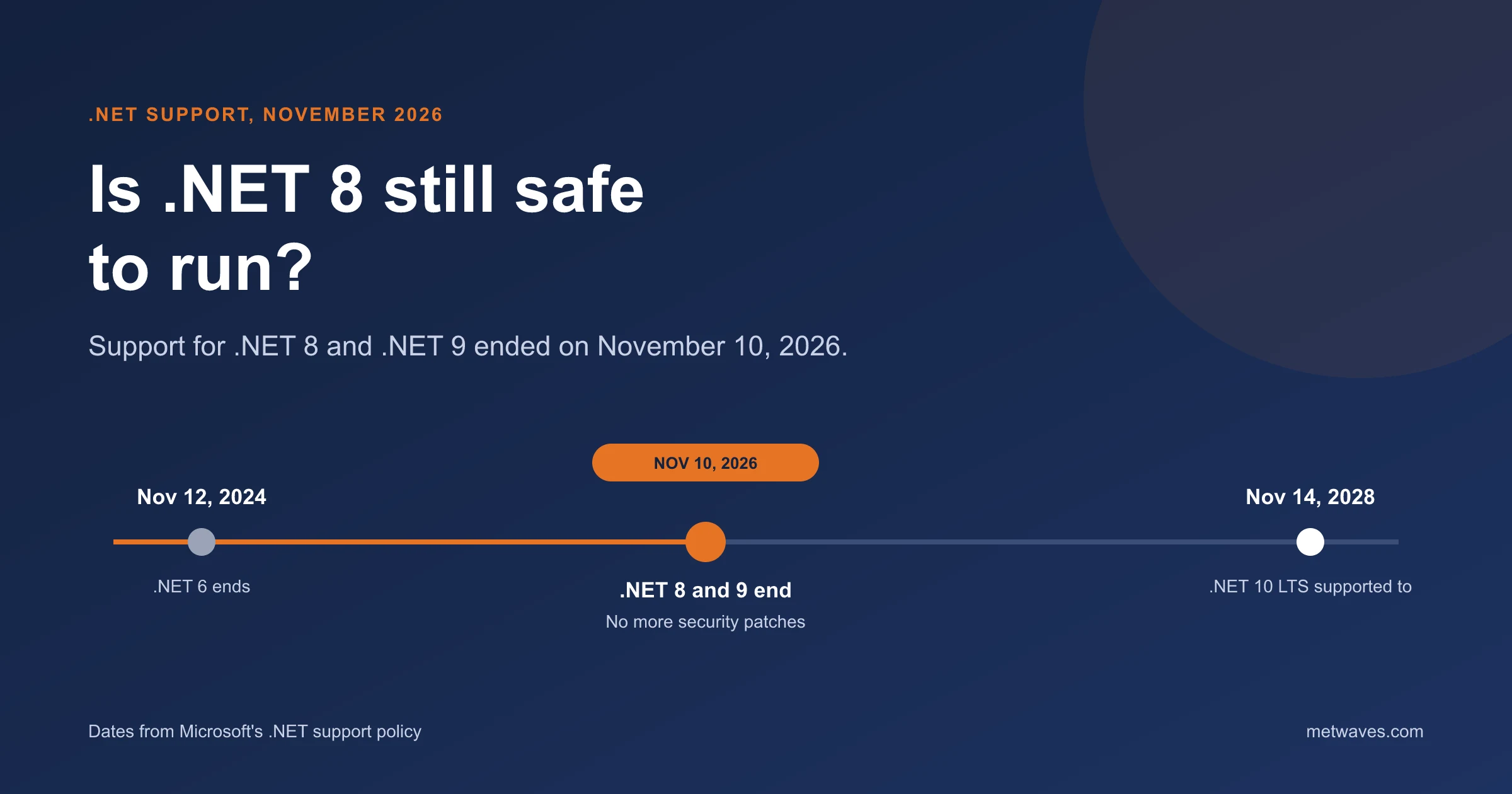
Support for .NET 8 and .NET 9 ended on November 10, 2026. What that means for apps still on them, how risky it is, and how to plan the move to .NET 10.
Learn More >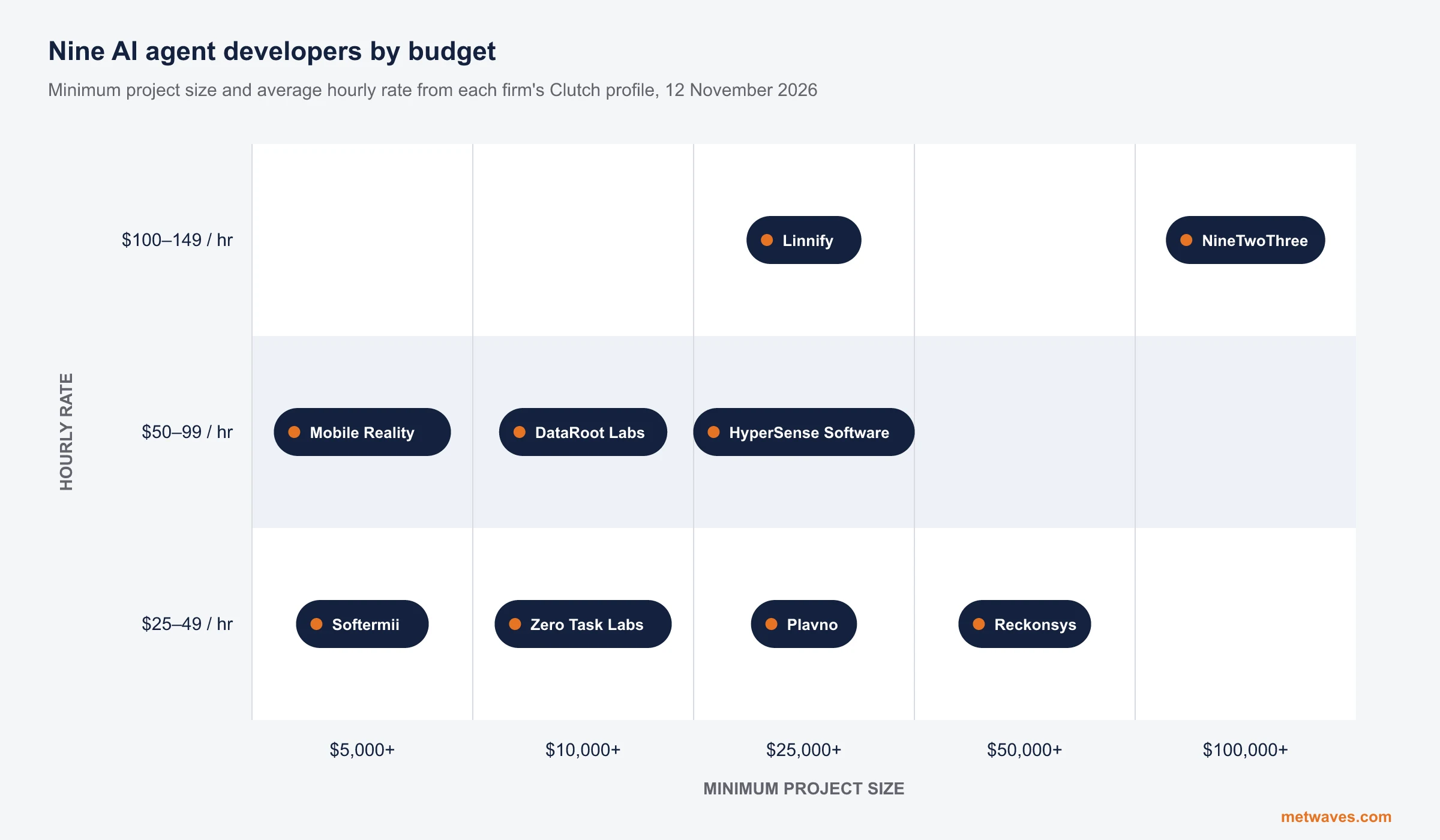 Nikit Nandan
November 12, 2026
Top AI agent development companies for small and mid-sized businesses (2026)
Nine AI agent development firms a small or mid-sized business can shortlist, with Clutch figures, minimum budgets and the weaknesses their own clients name. Published by Metwaves, which is not ranked.
Learn More >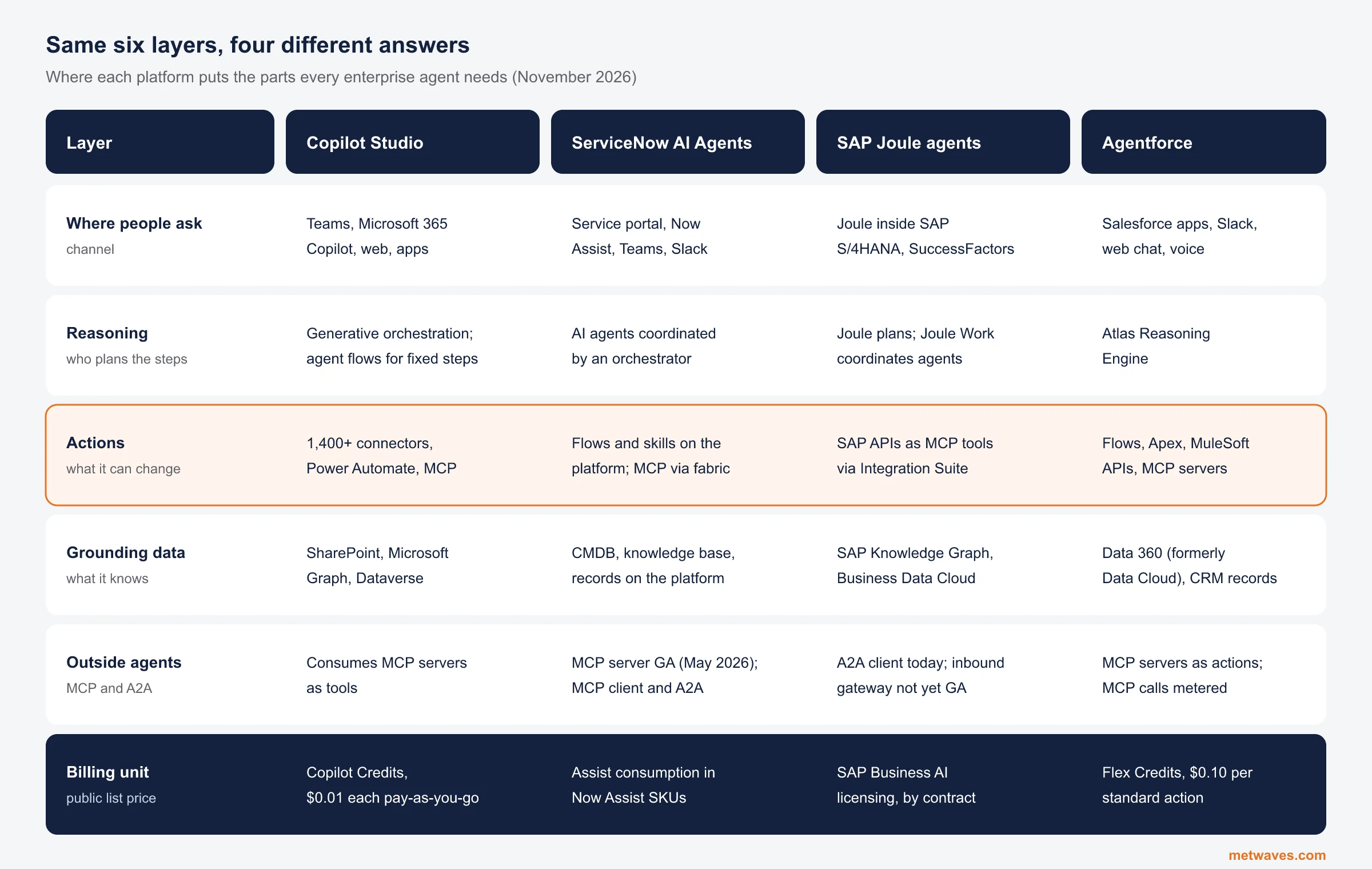 Nikit Nandan
November 12, 2026
Enterprise AI Agent Platforms Compared (2026)
An architecture review of the four big enterprise AI agent platforms: where each one reasons, acts, finds its data and connects to outside agents, what it costs, and when a custom build is the better choice.
Learn More >Let’s build your idea!
Let us help you with free analysis & estimate.
Our product expert will contact you within 12 hours.