Fintech App Development Company

A fintech development company for founders, trading businesses, lenders and finance teams in the US, UK, Canada and Australia. We build trading and alert platforms, customer apps, payment and bank-data integrations and finance back-office automation, with the controls your bank partner and regulator will ask about designed in from the first release.

Real-time stock and crypto alert platform for a trader · Invoice agent for an Australian finance team

THE FINTECH INDUSTRY

What the fintech industry is, and how it makes money

Fintech is financial services delivered through software: payments, lending, investing and trading, banking accounts and cards, insurance and digital assets, sold by start-ups, by the digital arms of banks and by software companies that add payments or credit to their own products. It also covers the finance teams inside every other business, whose invoices, payouts and reconciliations now run through software too.

Most fintechs do not hold every licence themselves. A payments app usually relies on a licensed processor, a card programme on an issuing bank, and a US neobank on a partner bank. Revenue comes from transaction and interchange fees, interest on loans, subscriptions, foreign exchange spreads and fees on assets. That model shapes the software: every product sits on top of partners, and each partner reviews your security before it lets you connect.

So a fintech app development company is judged twice: by customers on speed and simplicity, and by banks, regulators and auditors on controls.

236.6 billionnon-cash payments made in the US in 2024, three quarters of them by cardFederal Reserve Payments Study, July 2026
$15.9 billionreported lost to fraud by US consumers in 2025, from 3 million reportsFTC testimony to the Joint Economic Committee, March 2026
351 millionopen banking payments in the UK in 2025, up 57% on 2024Open Banking Limited, January 2026

Payments

Processors, wallets, payouts and cross-border transfers

  • Checkout
  • Payouts
  • Reconciliation

Lending

Consumer, small business and point-of-sale lenders

  • Onboarding
  • Credit data
  • Loan servicing

Wealth and trading

Brokers, advisers and market-data tools

  • Market data
  • Alerts
  • Portfolios

Banking and embedded finance

Digital banks and the platforms behind them

  • Accounts
  • Ledgers
  • Cards via an issuer

Finance operations

Finance teams inside any business

  • Invoice intake
  • Approvals
  • ERP posting

CHALLENGES

The challenges fintech companies face

Six pressures every fintech founder and finance team we talk to is dealing with, and where software makes a real difference.

01

Fraud and scams

What it looks like

US consumers reported losing $15.9 billion to fraud in 2025, and investment scams took the most. In the UK, payment firms have had to reimburse authorised push payment scam victims since October 2024, up to £85,000 per claim.

Where software helps

Risk checks at sign-in and at payment, holds on unusual transfers with a person releasing them, and clear warnings before a customer pays someone new.

02

Rules that keep moving

What it looks like

The US open banking rule was finalised in 2024 and blocked by a court in 2025. Canada's open banking regulations are still in draft.

Where software helps

Data access through standard APIs and providers, consent recorded per customer, and product rules kept in configuration so a rule change is a setting, not a rebuild.

03

Partner and investor due diligence

What it looks like

Before a bank, processor or investor signs, it sends a security questionnaire, and many ask for a SOC 2 report. Teams without written controls lose weeks.

Where software helps

Access by role, multi-factor sign-in, encryption and audit logs from the first release, with the documents that show how each one works.

04

Load when the market moves

What it looks like

Everyone opens a trading or alert app at the same moment: the market open, a rate decision, a crypto crash.

Where software helps

Caching, queues, automatic scaling and monitoring, load-tested at market-open volumes before launch.

05

Onboarding drop-off

What it looks like

Customers abandon sign-up at the identity check: a blurry photo, an unexplained rejection, a form that loses everything when they switch apps.

Where software helps

An identity provider with document and selfie checks, saved progress, plain reasons for every refusal and a person to review the edge cases.

06

A back office on spreadsheets

What it looks like

Invoices, statements and payouts are still keyed by hand between email, bank portals and the ERP, and errors surface weeks later as payment queries.

Where software helps

Document intake with checks, matching against purchase orders and bank lines, and posting to the ERP only when every check passes.

AI IN FINANCE

How AI can help fintech, rung by rung

The further AI moves from helping staff towards deciding on its own, the more rules apply. Each use below sits on the rung where it belongs today, with the point where a person stays in charge.

Rung 1

Assists staff

Privacy and security rules apply; financial regulation rarely does.

  • Document intake

    Reads invoices, statements and IDs into structured fields.

    Person in charge: staff review every exception before anything posts.

  • Customer service assistant

    Answers questions on fees, limits and how-to from your help content.

    Person in charge: staff take over anything about a customer's own money; it gives no investment advice.

Rung 2

Recommends, a person decides

You must be able to explain each recommendation.

  • Fraud and scam flags

    Scores logins and payments, and holds the unusual ones before money leaves.

    Person in charge: an analyst releases or blocks each held payment.

  • Reconciliation matching

    Suggests matches between bank lines, invoices and ledger entries.

    Person in charge: finance staff approve the matches before the books close.

Rung 3

Decides within set limits

Credit and advice rules apply in every market.

  • Credit decision support

    Scores applications from data the applicant agreed to share.

    Person in charge: credit staff set the policy and review declines. US lenders must give specific reasons for a decline under the Equal Credit Opportunity Act and Regulation B.

  • Trading signals

    Fires buy and sell alerts from rules the client or the trader defines.

    Person in charge: people set and review the rules. Personalised investment advice is licensed in all four markets.

Before any AI touches customer money or data

  • Only the data each task needs in a prompt, and never a card number
  • A person approves anything that moves money
  • Every AI output logged with its inputs and who approved it
  • A model provider contract that bars training on your data
  • Testing with synthetic accounts, never live customer data
  • Customers told when they are dealing with an assistant

US FINANCIAL RULES

What US regulators expect of fintech software

Regulators license and supervise the company, not the software. The software has to make the company's controls possible and easy to prove. These five rules shape most US fintech builds, and their status today differs.

In forceFTC · 16 CFR Part 314

GLBA Safeguards Rule

Applies to: non-bank financial institutions under the FTC, such as mortgage lenders and brokers, finance companies, wire transferors, check cashers, tax preparers and investment advisers not required to register with the SEC.

A written information security program run by a named Qualified Individual and based on a written risk assessment. Since May 2024, a breach of unencrypted data about 500 or more consumers must be reported to the FTC within 30 days of discovery.

What it means for the software

  • Multi-factor authentication for anyone who reaches customer information
  • Encryption in storage and in transit, and a data inventory
  • Activity logs, plus continuous monitoring or a yearly penetration test and scans every six months

Source: FTC, “FTC Safeguards Rule: What Your Business Needs to Know”

Contract standardPCI Security Standards Council

PCI DSS v4.0.1

Applies to: any business that stores, processes or transmits payment card data, through its card brand and acquirer contracts.

Version 4.0.1 was published in June 2024 and has been the only active version since 4.0 was retired on December 31, 2024. The requirements that were future-dated became mandatory on March 31, 2025.

What it means for the software

  • Card numbers taken by the provider's hosted fields and replaced by tokens
  • Less of your system in scope as a result, and less to assess
  • Access control, logging and testing for whatever stays in scope
  • A yearly self-assessment questionnaire or assessment, which you own

Source: PCI SSC, “Just Published: PCI DSS v4.0.1”, June 11, 2024

EnjoinedCFPB

Personal Financial Data Rights rule (Section 1033)

Applies to: banks, card issuers and other data providers, and the fintechs and aggregators that use their data.

Finalised in October 2024, it requires data providers to share account data with consumers and the third parties they authorise, through a developer interface and at no cost. The CFPB opened a reconsideration in August 2025, and on October 29, 2025 a federal court in Kentucky barred it from enforcing the rule until that reconsideration is finished.

What it means for the software

  • Bank data through an aggregator or the bank's API, not screen scraping
  • Each customer's consent, scope and duration recorded
  • A way to revoke access and delete the data on request
  • Treat these as good practice whatever the final rule says

Source: CFPB; Forcht Bank v. CFPB, E.D. Ky., order of October 29, 2025

State by stateState regulators

Money transmitter licences

Applies to: businesses that hold or send money for customers, unless a licensed partner does that part or an exemption applies.

A licence in each state where you serve customers. Thirty-one states have now enacted the Money Transmission Modernization Act from the Conference of State Bank Supervisors in full or in part, which sets common standards for net worth, surety bonds and permissible investments.

What it means for the software

  • A customer-balance ledger that reconciles to the bank every day
  • Product rules and limits that can differ by state
  • Records and reports in the form examiners ask for

Source: CSBS, Money Transmission Modernization Act page, September 2026

In forceSEC Rule 17a-4 · FINRA Rule 4511

Broker-dealer recordkeeping

Applies to: broker-dealers and other FINRA members.

Electronic records must be kept either in a non-rewriteable, non-erasable (WORM) format or, since the SEC's 2022 amendments, with an audit trail that can recreate the original if a record is changed or deleted. FINRA requires its members' books and records in a format that complies with Rule 17a-4, for at least six years where no other period applies.

What it means for the software

  • Write-once or audit-trailed storage for orders, messages and account records
  • Retention periods set per record type
  • Exports an examiner can read without your app

Source: SEC press release 2022-187; FINRA Rule 4511

Who owns what

Your company

Licences, policies, the compliance officer, assessments and audits. Regulators supervise you, not your developer.

Your providers

Card data, identity checks and bank connections, under their own licences.

Your software

Makes each control possible and provable: access by role, multi-factor sign-in, encryption, logs, retention and reports.

OTHER MARKETS

Fintech rules in the UK, Canada and Australia, next to the US

Every market licenses the business, fights money laundering, protects customers and their data, and is moving towards customer-directed data sharing at its own speed.

RequirementUSUnited StatesUKUnited KingdomCACanadaAUAustralia
Who licenses youState money transmitter licences; the SEC and FINRA for brokers; bank regulators for banks and their partnersThe FCA, including payment and e-money firms under the Payment Services Regulations 2017 and the Electronic Money Regulations 2011Payment service providers register with the Bank of Canada under the Retail Payment Activities Act; provincial regulators for securitiesASIC: an Australian financial services licence or a credit licence; APRA for banks and insurers
Anti-money launderingThe Bank Secrecy Act, administered by FinCENThe Money Laundering Regulations 2017FINTRAC under the PCMLTFA; money services businesses, including virtual currency dealers, register before they operateAUSTRAC under the AML/CTF Act 2006, with amended obligations since March 31, 2026
Customer data sharingCFPB Section 1033 rule, finalised in 2024 and enjoined since October 2025 while the CFPB rewrites itOpen banking across the largest banks; the Data (Use and Access) Act 2025 adds powers for Smart Data schemes like itConsumer-Driven Banking legislation completed; regulations proposed in June 2026, supervised by the Bank of Canada, not yet in forceConsumer Data Right in banking and energy; the largest non-bank lenders began sharing in November 2026
Customer outcomes and fraudCFPB and state rules against unfair, deceptive or abusive practicesConsumer Duty since July 31, 2023; APP scam reimbursement up to £85,000 per claim since October 7, 2024Bank of Canada supervision of payment providers since September 8, 2025ASIC supervises licensees' conduct and disclosure
Technology and cyberGLBA Safeguards Rule for non-banks; bank regulators' own expectations for banksFCA systems and controls rules and operational resilienceOSFI Guideline B-13 for federally regulated banks and insurers, effective January 1, 2024APRA CPS 234 since July 1, 2019: notify APRA within 72 hours of a material incident
Privacy lawGLBA privacy rules and state laws such as California'sUK GDPR and the Data Protection Act 2018PIPEDA, plus provincial laws in Quebec, Alberta and British ColumbiaPrivacy Act 1988 and the Australian Privacy Principles; CDR privacy safeguards
Card dataPCI DSS v4.0.1PCI DSS v4.0.1PCI DSS v4.0.1PCI DSS v4.0.1

A summary for planning, not legal advice. Confirm the details for your product with your compliance adviser.

That is the industry. Here is where Metwaves fits: trading and market-data products, and finance back-office automation, built on licensed providers with these controls from day one.

Fintech software development services

Six kinds of system, each linked to the service page that explains how we build it. We do not build core banking or card-issuing systems.

Trading, alert and market-data platforms

Watchlists, price and volume triggers, alerts by app, SMS and email, portfolio views and the data pipeline behind them, built to stay fast when every user logs in at the open. TradeAlert is one we shipped.

Usually bought by
Traders, brokers, advisers and market-data start-ups
  • Real-time alerts
  • Watchlists
  • Portfolios
  • Exchange integrations
  • Caching and queues

Web application development >

OUR WORK

Fintech and finance software we have built

One fintech product and one finance-operations system, each labelled for what it is.

Fintech product

A stock trader with more than ten years in the markets

TradeAlert: real-time stock and crypto alerts

He wanted a web platform that gives other investors stock and crypto alerts the moment a trigger fires. We built the alerts engine for price and volume triggers, watchlists and portfolio tracking, MetaTrader and crypto exchange integrations, and alerts by email, SMS and app notification. It runs on React and Node.js with MongoDB and Redis caching on AWS, with automatic scaling and CloudWatch monitoring.

  • 10,000concurrent users handled, at most
  • 85%positive feedback from beta testers

Read the TradeAlert case study >

Finance operations, not a fintech product

Australian business · accounts payable · name withheld

An invoice agent that posts to SAP Business One

About 1,000 supplier invoices a month arrived by email and PDF in many layouts and were keyed by hand. The agent reads each one with Azure Document Intelligence and Azure OpenAI, checks the vendor, the purchase order, line totals, GST and duplicate invoice numbers, posts clean entries through the SAP Business One API and sends exceptions to a review queue with the failed check shown.

  • ~80%less manual data entry
  • ~1,000documents a month
  • 8 to 12weeks to go live

Read the invoice agent case study >

How money and data move through a fintech app

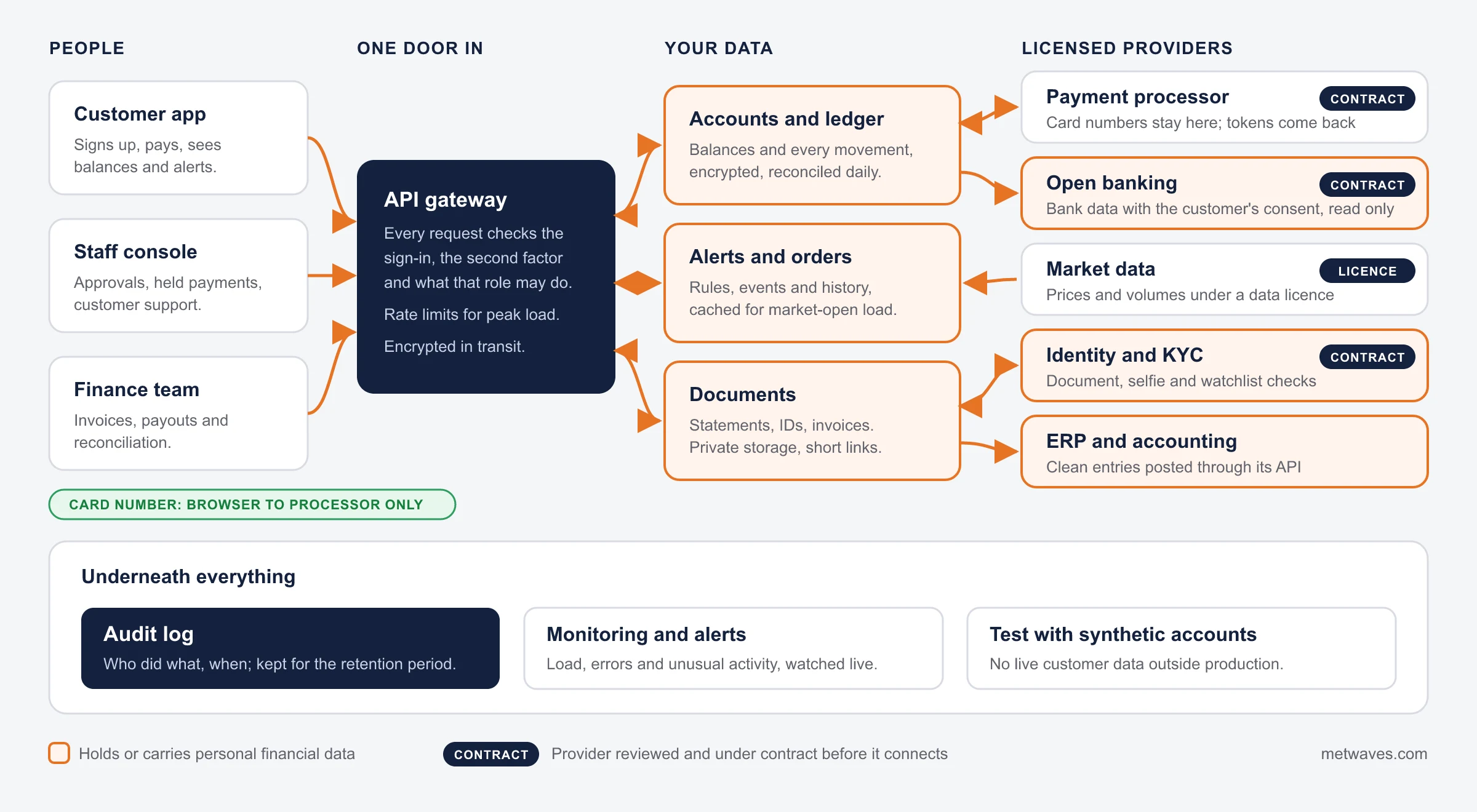
Before any screen is designed, we map where personal financial data lives and what each provider may see.

How money and data move through a fintech app: customer and staff apps reach an API gateway that checks sign-in and roles; core services for accounts, alerts and the ledger hold personal financial data, encrypted; card details go straight to the payment provider and come back as tokens; bank-data, identity and market-data providers each sit behind a contract and a security review; an audit log, monitoring and synthetic test data sit underneath
  • Personal financial data
  • Provider under contract and review
  • No sensitive data
No box on our side holds a card number. Orange boxes hold personal financial data; every navy-tagged provider is reviewed and under contract before it connects.

INTEGRATIONS

Payment, bank-data and identity integrations: Stripe, Plaid, TrueLayer and more

Fintech apps rarely move money or check identity themselves. They connect to licensed providers, and the line between what the provider holds and what your app keeps decides most of your compliance scope.

01

Card and wallet payments

The provider

Takes card details in its own hosted fields, authorises with the card networks and returns a token.

Your app keeps

The token, the order, the amount and the status. Never the card number.

Examples by market

All four markets: Stripe, Adyen and other processors

02

Bank data and pay-by-bank

The provider

Connects to the customer's bank with their consent and returns balances and transactions, or starts a payment.

Your app keeps

The consent record, the account link and only the data your feature needs.

Examples by market

US and Canada: aggregators such as Plaid. UK: open banking providers such as TrueLayer. Australia: accredited CDR providers

03

Identity and KYC

The provider

Checks the document, a selfie and watchlists, and returns a decision with reasons.

Your app keeps

The decision, the reason and the time. No more of the document than your rules require.

Examples by market

Onfido and similar identity providers; credit bureaus for some checks

04

Market data

The provider

Streams prices and volumes from exchanges under a licence that says where you may show them.

Your app keeps

Cached quotes, alert rules and history.

Examples by market

Exchange and market-data vendors; crypto exchange APIs such as Binance, which TradeAlert used

05

Ledger and accounting

The provider

Your ERP or accounting system keeps the company's books.

Your app keeps

A ledger of every movement in your app that reconciles to the bank and to the books.

Examples by market

SAP Business One, Xero, QuickBooks and others through their APIs

Named providers are examples, not partners or past integrations. We build through each provider's own API and sandbox.

Build, buy or white-label

Custom fintech software costs more than a platform subscription. It pays off when your rules, pricing or data are what customers choose you for.

If youWhat usually fitsWhy
You need to take card payments in a standard checkoutA payment provider's hosted checkoutNever handle card numbers yourself. It shrinks how much of PCI DSS applies to you.
You need account data from customers' banksAn aggregator or open banking providerPlaid, TrueLayer or an accredited CDR provider, not screen scraping.
You are launching a standard account or card product in one marketA white-label or banking-as-a-service platformFaster and cheaper to start. We will say so on the first call.
Your pricing, rules or data model are the productCustom software on top of licensed providersYou own the experience and the roadmap; partners carry the licences.
Your finance team is drowning in documentsAutomate the back office firstFewer errors and faster closes before you build anything customer-facing.

What a fintech app costs, and what moves the price

We quote after discovery, because two apps with the same screens can differ by three providers and a real-time feed. These are the factors that move the number most.

high impact

Real-time data and peak load

Streaming prices to many users at once needs caching, queues and load tests.

high impact

Number of providers

Each processor, bank-data, identity or market-data provider is an integration to build and a fee to pay after launch, often per transaction or per check.

high impact

Compliance work

Security review, a third-party penetration test, and support for your SOC 2 or PCI DSS assessment. You choose and pay the assessor.

medium impact

Web, mobile or both

Native iOS and Android apps add design, testing and store review.

medium impact

Back-office automation

The number of document types, layouts and ERP checks sets the size of an automation project.

Provider fees after launch are listed separately in every quote.

How we work with fintech teams

Nothing touches real money or real accounts until the security review is done and the sandboxes pass.

  1. 1

    Discovery call

    Thirty minutes on the money and data your product moves, and from where.

  2. 2

    Discovery

    User flows, a money and data flow map, the providers you need and who owns compliance on your side.

  3. 3

    Build in phases

    One flow at a time. A security review before any real account or real money is touched.

  4. 4

    Test like the market

    Provider sandboxes, load tests at market-open volumes and a third-party penetration test.

  5. 5

    Launch with a plan

    Monitoring, alerting and an incident plan your team has walked through.

  6. 6

    Support and grow

    Patches, provider changes and the next feature, or a clean handover to your team.

How to choose a fintech app development company

Ask these five questions of anyone you shortlist, us included. One we do not win on: we have not built core banking or card-issuing systems. For those, choose a firm that does nothing else.

Question to askA good answerA warning sign
What have you built that handled real money or real market data?A named project with its numbers.Screens from a design portfolio.
How will you keep card data out of our systems?Hosted fields and tokens from the processor.“We'll encrypt the card numbers in our database.”
Who has production access, and is it logged?Named people, by role, with every action logged.Shared admin accounts.
Will you help with our bank partner's security questionnaire?Yes, with the controls documented as we build.“That's your compliance team's job.”
Can you certify our app as PCI compliant?No developer can. Your assessment covers your environment.“We're PCI-certified developers.”

Related services

Engagement models and technology choices are on each service page. TradeAlert ran on React, Node.js, MongoDB, Redis and AWS.

Web application developmentTrading platforms, portals and admin consoles in the browser.
Mobile app developmentCustomer apps for iOS and Android.
Software integrationProcessors, bank data, identity checks and your ERP.
AI agent developmentBack-office agents with checks and a review queue.
Data engineeringReporting and risk data your teams can trust.

QUESTIONS & ANSWERS

Fintech app development: frequently asked questions

Straight answers on PCI DSS, open banking, integrations, cost and crypto. If you don't see an answer to your question, you can send us a message from our contact form.

It depends on real-time data, the number of providers you connect, web or mobile or both, and the compliance work around launch. We price after a short discovery, and list provider fees after launch separately, because they often outlast the build cost.

PCI DSS compliance belongs to the business that handles card data and is confirmed by your own assessment, not by a developer. We design so card numbers go straight to the payment provider and come back as tokens, which keeps most of your system out of scope.

Yes, through each provider's own API and sandbox: card processors, open banking and bank-data aggregators, identity and KYC providers and market-data feeds. Each provider's fees, terms and review process are confirmed in discovery, because they often set the timeline.

The way we built TradeAlert: a Node.js data pipeline, Redis caching to cut calls to the data source and automatic scaling on AWS with CloudWatch monitoring. The case study reports the platform handled up to 10,000 concurrent users. We load-test at your expected volume before launch.

The CFPB's 2024 rule is not being enforced: a federal court enjoined it in October 2025 while the CFPB rewrites it. Build bank-data access through an aggregator or bank APIs, record each customer's consent, and keep a way to revoke access. That holds whatever the final rule says.

TradeAlert included crypto exchange integration with Binance, crypto buy and sell alerts and portfolio tracking. We have not built custody or wallet products. In Canada, a virtual currency dealer registers with FINTRAC as a money services business, so check licensing first.

Ask what they built that handled real money or market data, how they keep card numbers out of your systems and who holds production access. Be wary of anyone selling “PCI-certified” software. One thing we have not built: core banking or card-issuing systems.

INSIGHTS & NEWS

Discover IT Industry Insights and Technology Trends

Nikit Nandan    Nikit Nandan November 17, 2026
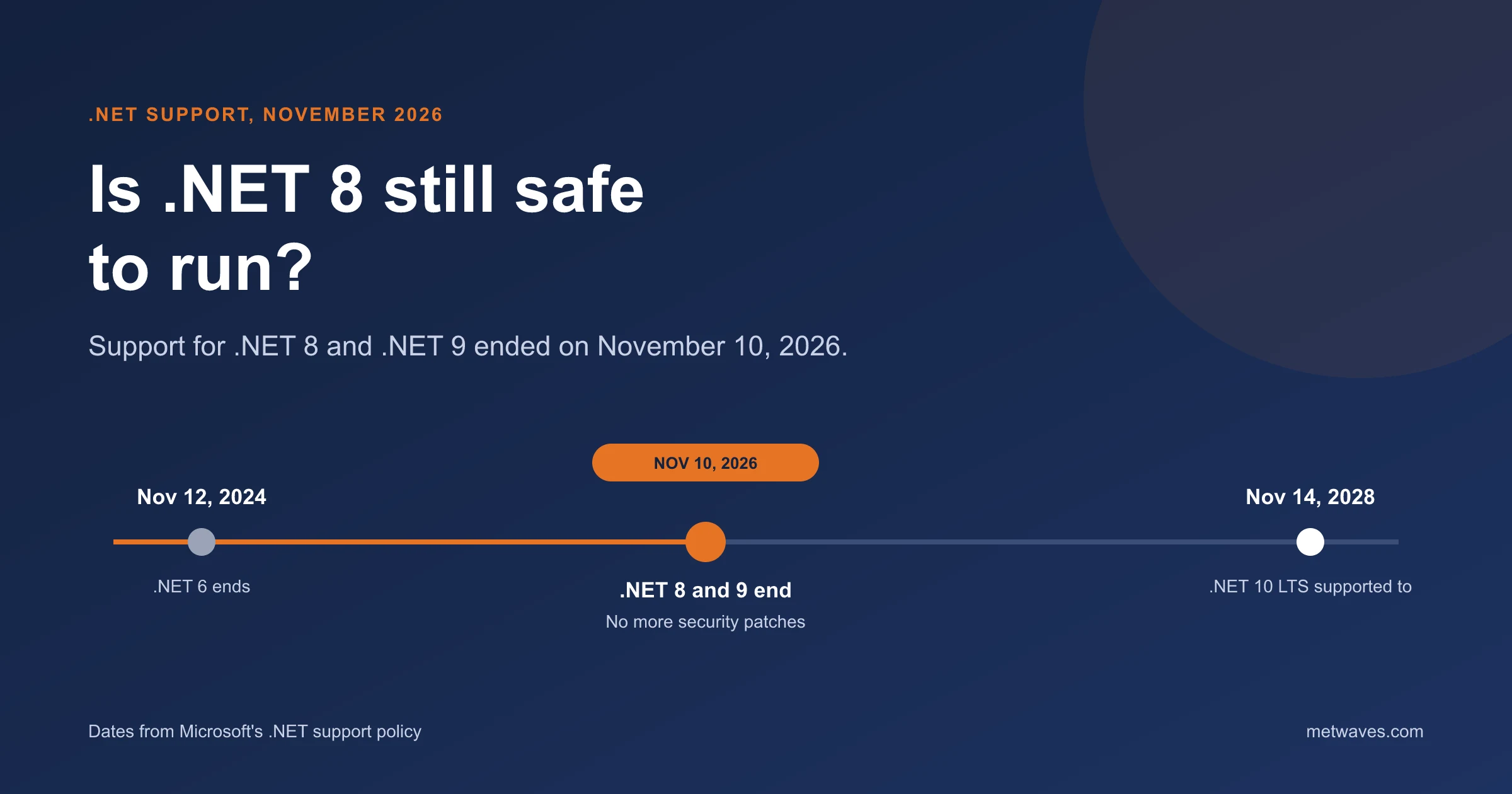
Is .NET 8 Still Safe to Run After November 2026?

Support for .NET 8 and .NET 9 ended on November 10, 2026. What that means for apps still on them, how risky it is, and how to plan the move to .NET 10.

Learn More >
Microsoft Technologies 5 min read
Nikit Nandan    Nikit Nandan November 12, 2026
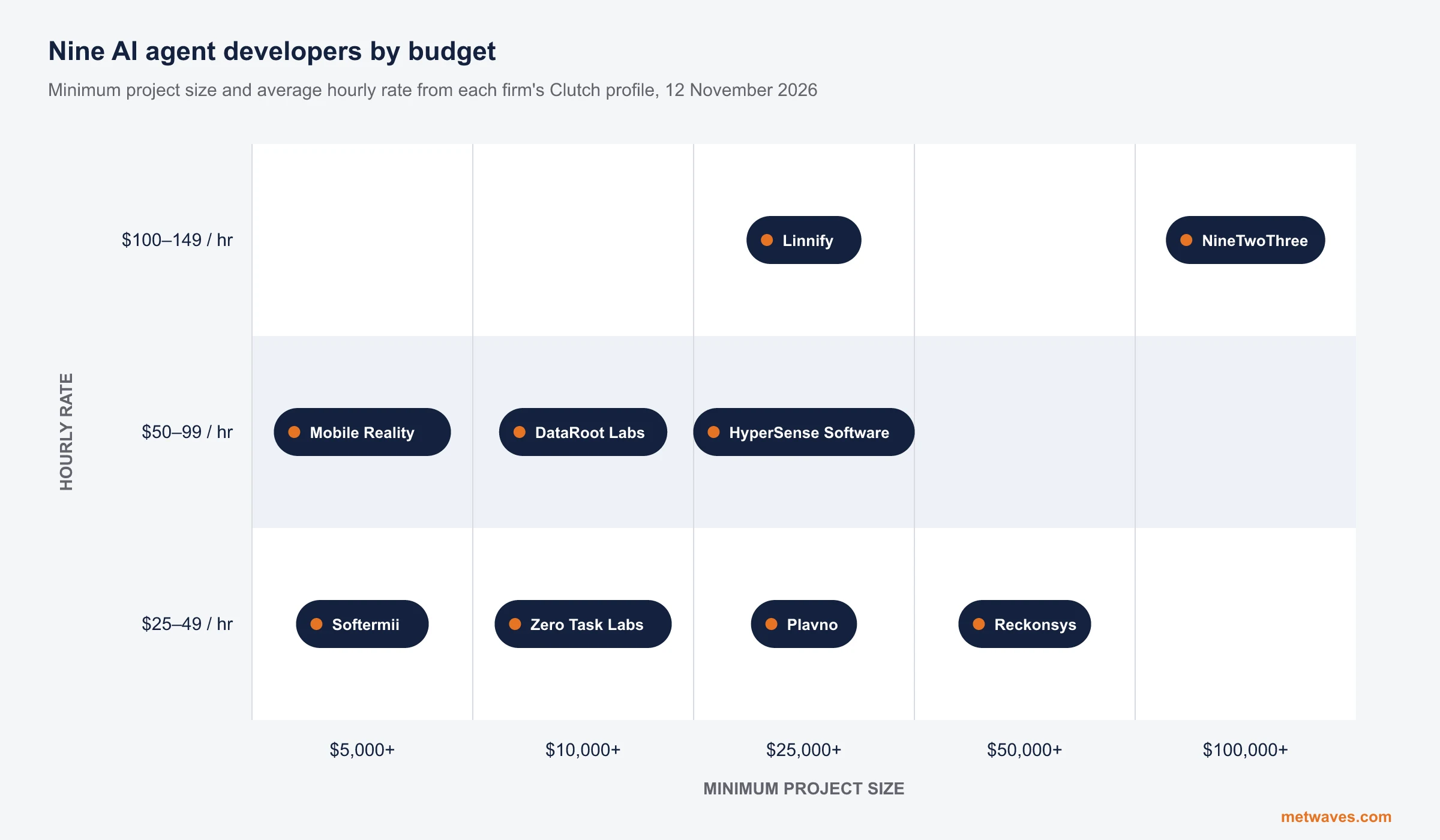
Top AI agent development companies for small and mid-sized businesses (2026)

Nine AI agent development firms a small or mid-sized business can shortlist, with Clutch figures, minimum budgets and the weaknesses their own clients name. Published by Metwaves, which is not ranked.

Learn More >
AI Development 9 min read
Nikit Nandan    Nikit Nandan November 12, 2026
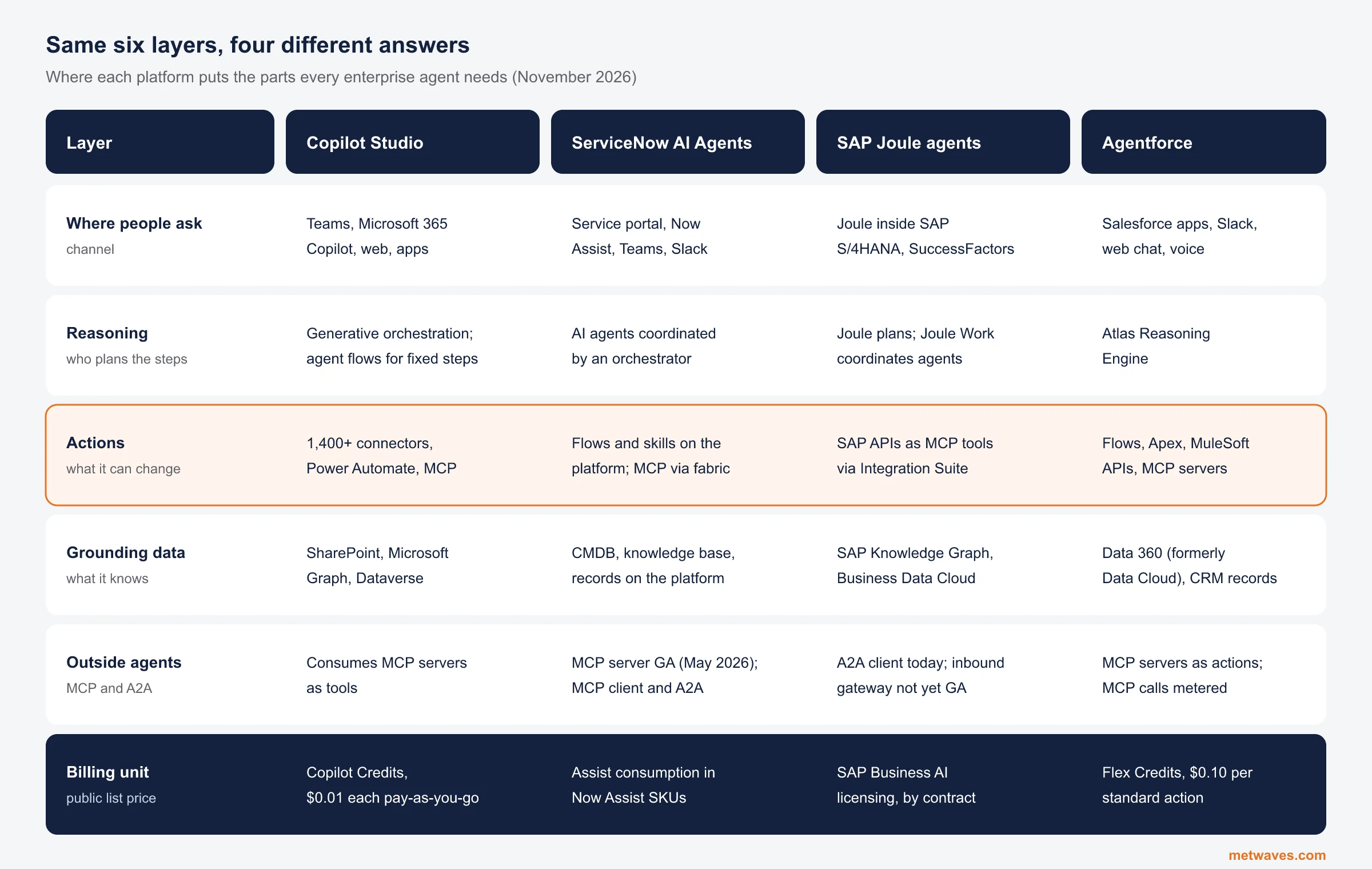
Enterprise AI Agent Platforms Compared (2026)

An architecture review of the four big enterprise AI agent platforms: where each one reasons, acts, finds its data and connects to outside agents, what it costs, and when a custom build is the better choice.

Learn More >
AI Development 9 min read

Let’s build your idea!

Let us help you with free analysis & estimate. Our product expert will contact you within 12 hours.

 All your information is kept confidential and protected by NDA.