Machine learning frameworks and MLOps consulting services

Which kind of model fits your data, which framework to build it in, and how to run it in production without it going stale: experiment tracking, a model registry, drift monitoring and retraining. For businesses with a model to ship, or one already slipping. The code, the models and the data stay in your cloud account.

Trusted by businesses across the world

Logos of Metwaves clients

Rules, classical machine learning, deep learning or generative AI

Four tools for four kinds of problem. The right one depends on the shape of your data and the answer you need; the cheapest one that works usually wins.

  1. Not machine learning

    Rules in code

    The decision can be written down as rules a person can check.

    Needs
    Someone who knows the rules, and the discipline to keep them current.
    Good at
    Cheap to run, predictable, easy to audit.
    Weak at
    Patterns nobody can write down, and rule sets that grow every quarter.
    Typical tools
    Your application's own code or a rules engine.
  2. Most business ML

    Classical machine learning

    A number, a category or a ranking predicted from rows and columns of history.

    Needs
    Structured history with known outcomes: past orders, prices, claims, jobs.
    Good at
    Forecasts, risk scores, churn, pricing, ranking. Trains on ordinary CPUs; results can be explained feature by feature.
    Weak at
    Raw images, audio and free text, unless someone turns them into columns first.
    Typical tools
    scikit-learn, XGBoost, LightGBM.
    Worked example: BioBuild >
  3. Images, sound, sequences

    Deep learning

    Patterns in raw images, audio, sensor streams or text, where nobody can hand-craft the columns.

    Needs
    More labelled examples than a classical model, or a pretrained network to start from.
    Good at
    Spotting defects in photos, reading signals and sequences, adapting a pretrained model to your data.
    Weak at
    Small tables of business data, where a simpler model is usually as accurate and cheaper to run.
    Typical tools
    PyTorch, TensorFlow and Keras, usually trained on GPUs.
  4. Text and answers

    Generative AI

    Drafting, summarising or answering questions from documents in plain language.

    Needs
    Your documents and a hosted large language model; little or no training data of your own.
    Good at
    Language, documents and conversation.
    Weak at
    Exact, repeatable numbers. A forecast from your sales history is a machine learning job.
    Typical tools
    Hosted models such as Azure OpenAI or Gemini, with search over your documents.
    Our generative AI page >

This page covers the middle two and the technology behind them. To have one built for you, from scoping to pilot, see our machine learning development services.

MLOps consulting services we provide

MLOps consulting is outside help to get machine learning models out of notebooks and into production, and to keep them accurate once they are there. It covers the stack (which kind of model, which framework) and the loop around it: experiment tracking, a model registry, a release pipeline, drift monitoring and retraining, set up on the cloud you already use. Metwaves works in your own cloud account, so the code, the models and the training data stay yours.

Machine learning stack and MLOps review

We read how your models are trained, released and watched today, and write down what is fragile: a model nobody can retrain, training code that differs from serving code, no record of which data made which version. Ranked by risk, with a fixed quote for the fixes.

Model and framework choice

Simple first. A scikit-learn or gradient-boosted baseline is scored before any neural network, and you see the results side by side, with the cost to run each, before anything is chosen.

Experiment tracking and a model registry

MLflow, or the registry in your cloud platform, so every training run's data, code, parameters and score are recorded and every model version can be traced and rolled back.

From notebook to production

The model packaged as an API or a scheduled batch job and deployed through a pipeline, with the same feature code used in training and in production.

Drift monitoring and retraining

Alerts when live data stops looking like the training data, outcomes captured as they arrive, and retraining on a schedule or a trigger. Our BioBuild model is retrained every quarter.

Cost-to-run review

Endpoints running with no traffic, GPU training where CPUs would do, retraining more often than the data changes. We show the monthly saving for each change before we make it.

Machine learning frameworks: how to choose

Each framework described in its own documentation's words, then when we would pick it and when we would not. Most business problems need only the first three.

scikit-learn

Classical ML
Simple and efficient tools for predictive data analysis.

Pick it whenYour data is a table and you need a strong baseline: regression, classification, clustering, with preprocessing and cross-validation in the same library. Every more complex model should have to beat it.

Look elsewhere whenYou need deep learning or GPU training. Its own FAQ says deep learning is out of scope and points to TensorFlow, Keras and PyTorch.

XGBoost

Gradient boosting
An optimized distributed gradient boosting library designed to be highly efficient, flexible and portable.

Pick it whenTabular data where accuracy matters: risk scores, demand, pricing. Its docs also cover learning to rank, monotonic constraints and distributed training on Spark, Dask, Ray or Kubernetes.

Look elsewhere whenYour data is images, audio or long text, or a linear model is already good enough and easier to explain.

LightGBM

Gradient boosting
A gradient boosting framework that uses tree based learning algorithms.

Pick it whenLarge tables where training time or memory is the limit. Its docs list faster training, lower memory use, and parallel, distributed and GPU learning.

Look elsewhere whenThe same limits as XGBoost: it is built for tables. On a small dataset the choice between the two rarely decides the result.

PyTorch

Deep learning
An optimized tensor library for deep learning using GPUs and CPUs.

Pick it whenImages, audio, sequences or adapting a pretrained network, where you need GPU training and full control of the model code.

Look elsewhere whenYour data is a table of business history. A gradient-boosted model is cheaper to train and to run.

TensorFlow

Deep learning
TensorFlow has always provided a direct path to production.

Pick it whenYou want one framework from training to serving: Keras to build, TensorFlow Serving on servers, TensorFlow Lite on phones and edge devices, TensorFlow.js in the browser. Our BioBuild model was trained on it.

Look elsewhere whenYour team already works in PyTorch. Switching frameworks rarely pays for itself.

Prebuilt cloud models

No training
You can use prebuilt models to add intelligent document processing to your apps and flows without having to train and build your own models.

Pick it whenThe task is common to many businesses: reading invoices and forms, speech to text, translation. Our invoice agent reads documents with Azure Document Intelligence instead of a model we trained.

Look elsewhere whenThe decision is specific to your business and your history: which material, which customer, which price.

A model that works in a notebook but nobody trusts in production? Start with an MLOps review.

The five parts of MLOps, and what breaks without each

MLOps is the work around the model: knowing how each version was made, releasing it safely, and noticing when it stops being right.

  1. 01

    Experiment tracking

    Every training run records its data, code version, parameters and score. MLflow Tracking does this, and Azure Machine Learning workspaces accept the same MLflow calls.

    Without it: nobody can say which run produced the model in production, or reproduce it.

  2. 02

    Model registry

    One place for every model version, the run that produced it and who approved it. MLflow, SageMaker AI and Vertex AI each have one; MLflow's lets an alias such as @champion point at the live version.

    Without it: models sit in a shared folder as model_final_v3, and rolling back means guessing.

  3. 03

    Release pipeline

    A new version goes live only if it beats the current one on the metric agreed at the start, as an API or a scheduled batch job, through the same pipeline as the rest of your software.

    Without it: someone copies a file to a server, and the training and serving code drift apart.

  4. 04

    Drift monitoring

    Live inputs are compared with the training data, and predictions with real outcomes once they are known. An alert reaches a person when a threshold is crossed.

    Without it: the model gets quietly worse and the business notices first.

  5. 05

    Retraining

    On a schedule, or when monitoring says so, with corrections from the people using the model fed back in. BioBuild writes back actual material cost and performance after each project and retrains every quarter.

    Without it: a model trained on last year's prices keeps recommending last year's choices.

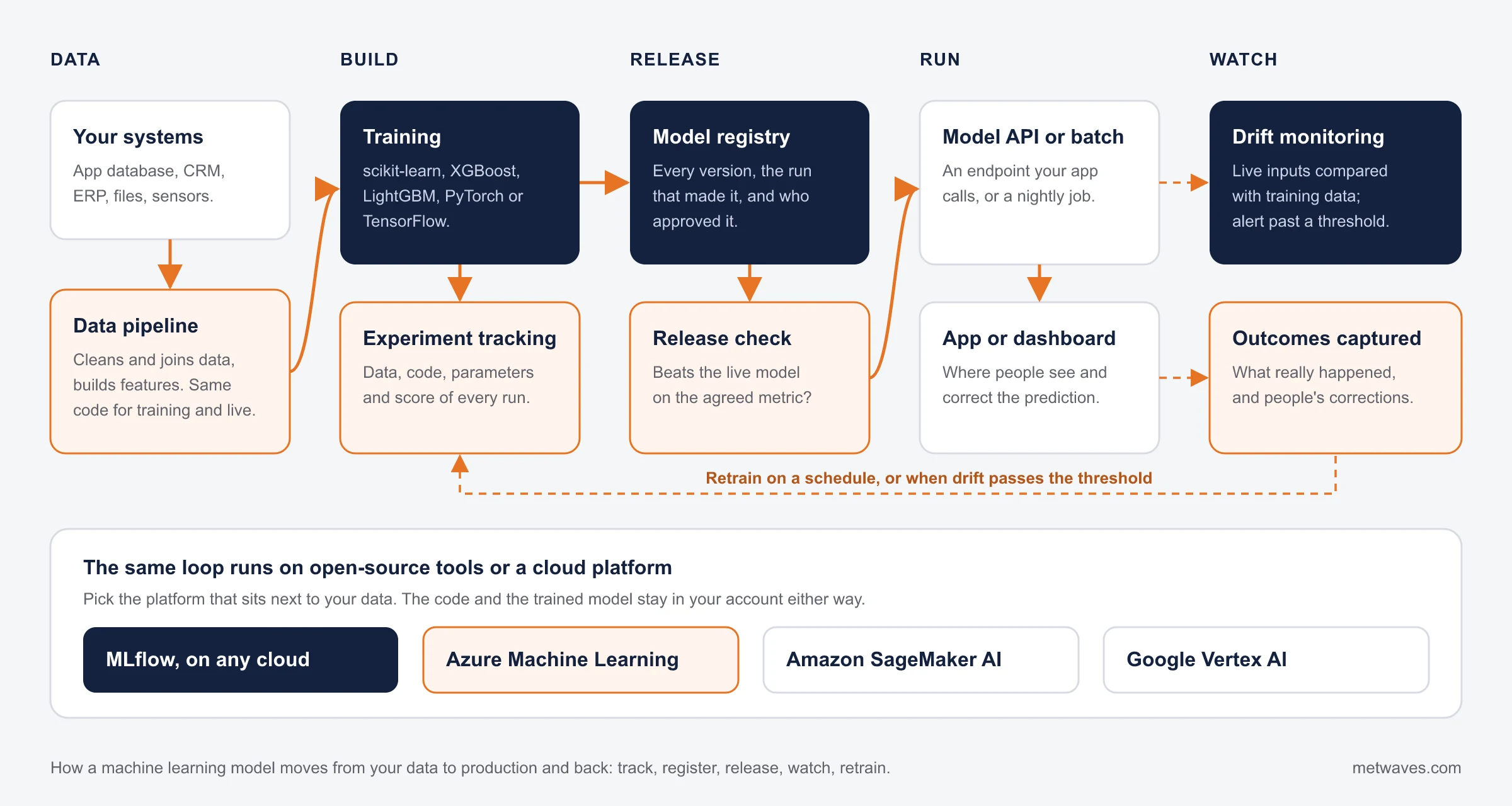
How a model runs in production, and comes back

The same loop whichever framework trained the model and whichever cloud runs it. What changes between platforms is who runs each box.

How a machine learning model runs in production: data from your systems passes through a pipeline into training with scikit-learn, XGBoost, LightGBM, PyTorch or TensorFlow; every run is tracked; versions go into a model registry and are released only if they beat the live model; the model serves your app as an API or batch job; drift monitoring and captured outcomes trigger retraining. The loop runs on MLflow, Azure Machine Learning, Amazon SageMaker AI or Google Vertex AI
Track, register, release, watch, retrain: the same loop on any of the four platforms.

MLflow, Azure Machine Learning, SageMaker AI and Vertex AI compared

Each platform described from its own documentation. The best one is usually the one next to your data and your team's existing cloud account.

PlatformWhat its docs say it isTracking and registryDrift monitoringFits when
MLflowOpen source. For machine learning models it provides “experiment tracking, model evaluation capabilities, a production model registry, and model deployment tools”.Tracking server, and a Model Registry with versions, aliases and lineage back to the run.Its machine learning docs centre on tracking, evaluation, registry and deployment. For drift on a classical model we add a scheduled check.You want to stay portable between clouds. Azure Machine Learning and SageMaker AI both work with MLflow.
Azure Machine Learning“A cloud service that accelerates and manages the machine learning (ML) project lifecycle”, for models built in it or in PyTorch, TensorFlow or scikit-learn.Workspaces are MLflow-compatible: point MLflow at the workspace and it becomes the tracking server.Built-in signals such as data drift, with thresholds that raise alerts through Azure Machine Learning or Azure Event Grid.You run on Microsoft 365 and Azure. Our BioBuild model is hosted on Azure.
Amazon SageMaker AI“A fully managed machine learning (ML) service” to build, train and deploy models. Renamed from Amazon SageMaker on December 3, 2024.SageMaker Model Registry for versions, approval status and lineage; managed MLflow is also offered.AWS says Model Monitor is no longer open to new customers, and points them to its open-source monitoring solutions with CloudWatch and QuickSight.Your product already runs on AWS.
Google Vertex AITools “to build, train, and manage machine learning (ML) models at scale”, with AutoML or custom training in PyTorch, TensorFlow, scikit-learn and XGBoost. Google now presents it as Gemini Enterprise Agent Platform.Model Registry for versions and deployment; it can register BigQuery ML models without exporting them.Model Monitoring v1 is generally available for models on its endpoints; v2 is in Preview.Your data is in BigQuery, or you run on Google Cloud.

Sources, read in November 2026: MLflow, Azure Machine Learning, Azure and MLflow, Azure monitoring, SageMaker AI, Model Monitor change, Vertex AI, Vertex AI monitoring.

Before you pick a framework

What your data needs for machine learning

History that covers the decision

Enough past cases to learn from, including the rare ones you care about most, such as fraud, failures or customers who left.

Known outcomes, or a way to build them

BioBuild had no dataset of “right” material choices. Its training set was built from supplier price lists with history, embodied-carbon indexes and its own past projects.

One pipeline for training and live data

Features must be calculated the same way when the model is used as when it was trained, or accuracy drops on day one.

The right to use it

Personal data used for training falls under privacy law in each market: UK GDPR, Canada's PIPEDA, Australia's Privacy Act 1988 and US state privacy laws. Check before you collect.

A way to capture what happened

Without outcomes coming back after launch, nobody can measure the model, and it cannot be retrained.

Data spread across systems? See our data engineering services >

Two colleagues reviewing a chart on a glass wall

CASE STUDY: PYTHON AND TENSORFLOW

A TensorFlow model in production since January 2025

BioBuild, a Swedish construction firm that builds energy-efficient buildings, chose materials by hand: quantities exported from the BIM model, supplier prices compared in spreadsheets, carbon data looked up separately. Every design change restarted the loop.

We built a recommendation engine in Python. Random Forests predict suitable materials, k-means groups similar ones, and a genetic algorithm balances cost, carbon and structural fit. The model is trained on TensorFlow and hosted on Azure; the BIM model is projected into Neo4j so the engine reads the building as a graph.

Read the BioBuild case study >

  • ClientBioBuild, Sweden: architecture, engineering and construction
  • Built withPython, TensorFlow, Azure, Neo4j
  • Selection timeDown 40%, timed before and after
  • Material cost and timelinesCost down 20%, timelines 20% shorter
  • RetrainingQuarterly, on real outcomes

The BioBuild model, stage by stage

The MLOps loop on a real project: data, pilot, release, outcomes and retraining.

  1. August 2024

    Data collection

    Supplier price history, carbon indexes and past BIM projects pulled into one training set.

  2. Pilot

    One live project

    Architects and engineers reviewed every recommendation; their corrections went back into the model.

  3. January 2025

    Live in the workflow

    Recommendations update in a web dashboard beside the modelling tool when the design changes.

  4. Every project and quarter

    Retrained on outcomes

    Actual material cost and performance are written back after each project; the model retrains quarterly.

  5. Today

    In daily use

    More than six projects since January 2025, used daily by more than ten architects and engineers.

What machine learning costs to run

Build work is quoted after discovery. Running a model is a separate monthly bill, paid to your cloud provider. These are the things that move it.

high impact

Endpoints that never sleep

A real-time endpoint is billed while it is deployed. For AutoML models, Google's Vertex AI pricing says you pay for each deployed model “even if no prediction is made”. If predictions are needed once a day, a batch job is usually cheaper.

high impact

Training on GPUs

Deep learning usually needs GPUs; classical models on tables usually do not. Choosing a classical model where it scores as well avoids that cost altogether.

medium impact

How often you retrain

Retrain when the data has changed, not on a timer that runs whether or not it has. BioBuild retrains quarterly on outcomes written back after each project.

medium impact

Monitoring jobs and stored predictions

Drift checks run as scheduled jobs and keep a copy of live inputs and outputs. Sample what you keep and set retention.

medium impact

Feature pipelines

The jobs that prepare data for the model run on every refresh. Their compute and storage sit on the same bill as the model.

low impact

The platform's pricing model

Azure Machine Learning bills compute by the second on pay as you go. SageMaker AI's on-demand pricing has no minimum fees, and Serverless Inference is billed by the millisecond of requests processed.

Prices change; check each provider's pricing page. We show the expected monthly running cost before anything is built.

Ways to work with us on machine learning

Start with a review, or bring a model you already have and take it to production.

MLOps review

A written review of how your models are trained, released and watched, ranked by risk. A fixed price, agreed before we start.

Notebook to production

One model taken from a notebook to a monitored API or batch job, with tracking and a registry. A fixed scope.

Dedicated ML team

Engineers who build and run models alongside your team for months, not weeks.

Monitoring and retraining

Drift checks, scheduled retraining and a monthly report. Time and materials, billed monthly.

How to choose an MLOps consulting company

Whoever you shortlist among MLOps consulting companies, us included, these answers show whether you will be able to run the model without them.

A good partnerA warning sign
They show you a model in production and explain how it is retrained.They show notebooks and accuracy scores, and nothing that runs.
They start with the simplest model that could work and show it beside the complex one.Every problem gets a deep learning model and a GPU bill.
The code, the models, the registry and the training data sit in your cloud account.Models are hosted on their platform, under their account.
They tell you what the model will cost to run each month before it is built.Nobody can say what the endpoint, the retraining and the monitoring will cost.
They say which tools they have shipped and which they would be using for the first time.Every platform logo is on their website, with no project behind it.

Need a model built first, from scoping to pilot? That is our machine learning development service.

Our machine learning tech stack

Python, TensorFlow and Azure run in our shipped machine learning work. The rest we choose per project, and the proposal says which we have used before.

Python
Python
NumPy
NumPy
pandas
pandas
TensorFlow
TensorFlow
Keras
Keras
PyTorch
PyTorch
OpenCV
OpenCV
Microsoft Azure
Microsoft Azure
AWS
AWS
Kubernetes
Kubernetes
GitHub
GitHub
.NET
.NET
Node.js
Node.js
SQL databases
SQL databases

Frequently asked questions

Straight answers on frameworks, MLOps platforms, data, cost and ownership.

A review of how your models are trained, released and watched; the choice of model and framework; experiment tracking and a model registry; a pipeline that takes a model from a notebook to an API or batch job; drift monitoring; and retraining. Most engagements start with the review, so you know what is fragile before anything changes.

For a table of business history, start with scikit-learn and then try XGBoost or LightGBM. For images, audio or sequences, use PyTorch or TensorFlow; if your team already knows one, that usually decides it. If a prebuilt cloud model already does the job, use it.

Machine learning predicts a number, a category or a ranking from your own history, and gives the same answer for the same input. Generative AI writes and answers in language from documents, using a large hosted model. See our generative AI page; to have a model built for you, see our machine learning development services.

Not always. Azure Machine Learning workspaces accept MLflow calls and SageMaker AI offers managed MLflow, so MLflow code keeps training portable on either. Vertex AI has its own Model Registry.

It depends on the decision, not on a fixed number. What matters is history that covers the cases you care about, known outcomes or a way to build them, and a way to capture outcomes after launch. BioBuild built its training data from supplier price history, carbon indexes and its own past projects.

The running cost is paid to your cloud provider and depends on how the model is served, whether training needs GPUs, how often it retrains and how much monitoring data you keep. Our build work is quoted after discovery, and we show the expected monthly running cost before anything is built.

Not in our published work, which runs on Azure in Python and TensorFlow. SageMaker AI and Vertex AI are described here from their own documentation. If you need a firm with many deployments on one platform, shortlist that cloud's partners too.

You do: the training code, the trained models, the registry, the pipelines and the data, in your own cloud account. We sign an NDA before you share details of your systems.

INSIGHTS & NEWS

Discover IT Industry Insights and Technology Trends

Nikit Nandan    Nikit Nandan November 17, 2026
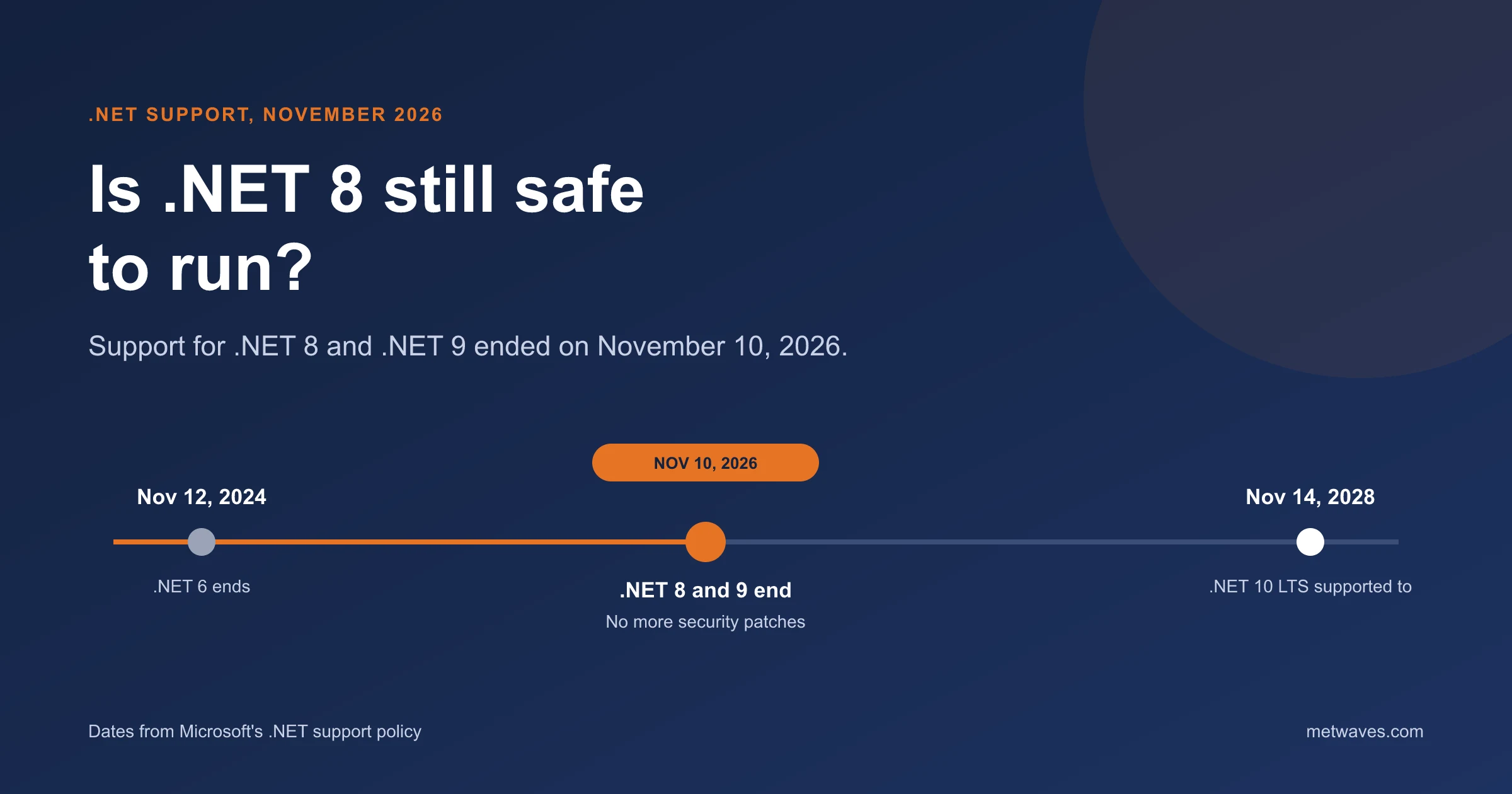
Is .NET 8 Still Safe to Run After November 2026?

Support for .NET 8 and .NET 9 ended on November 10, 2026. What that means for apps still on them, how risky it is, and how to plan the move to .NET 10.

Learn More >
Microsoft Technologies 5 min read
Nikit Nandan    Nikit Nandan November 12, 2026
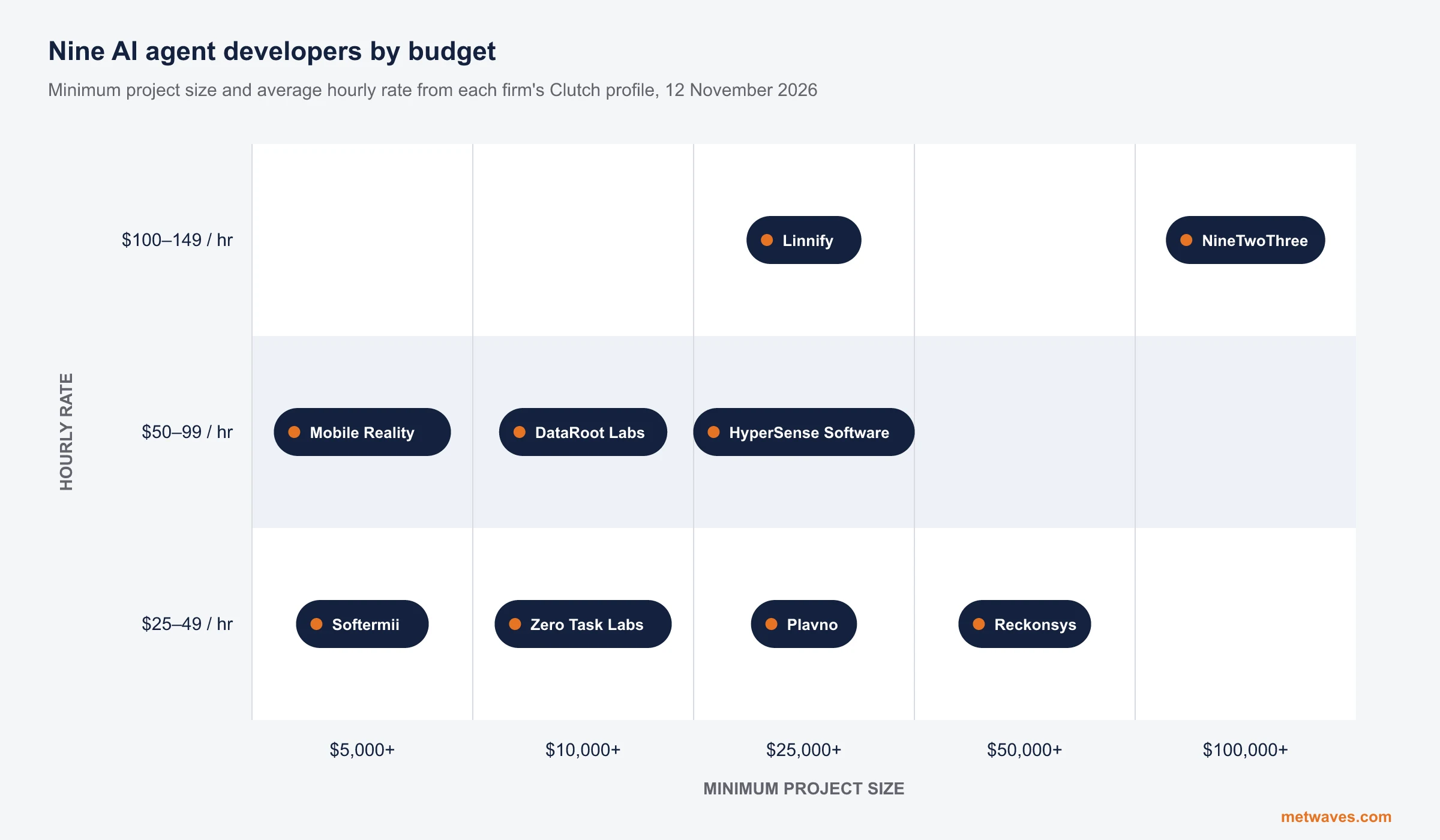
Top AI agent development companies for small and mid-sized businesses (2026)

Nine AI agent development firms a small or mid-sized business can shortlist, with Clutch figures, minimum budgets and the weaknesses their own clients name. Published by Metwaves, which is not ranked.

Learn More >
AI Development 9 min read
Nikit Nandan    Nikit Nandan November 12, 2026
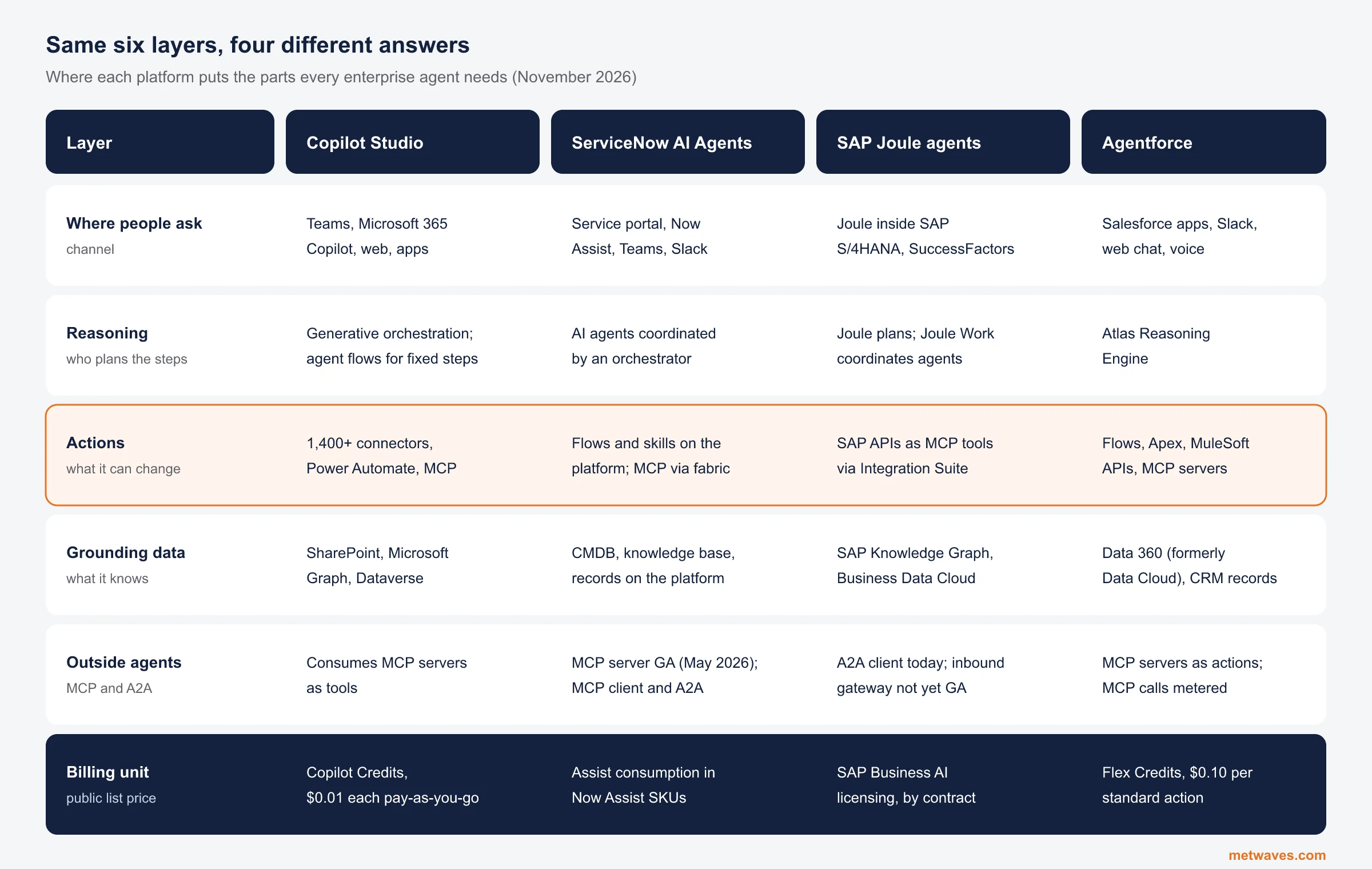
Enterprise AI Agent Platforms Compared (2026)

An architecture review of the four big enterprise AI agent platforms: where each one reasons, acts, finds its data and connects to outside agents, what it costs, and when a custom build is the better choice.

Learn More >
AI Development 9 min read

Let’s build your idea!

Let us help you with free analysis & estimate. Our product expert will contact you within 12 hours.

 All your information is kept confidential and protected by NDA.