Student and applicant helpdesk
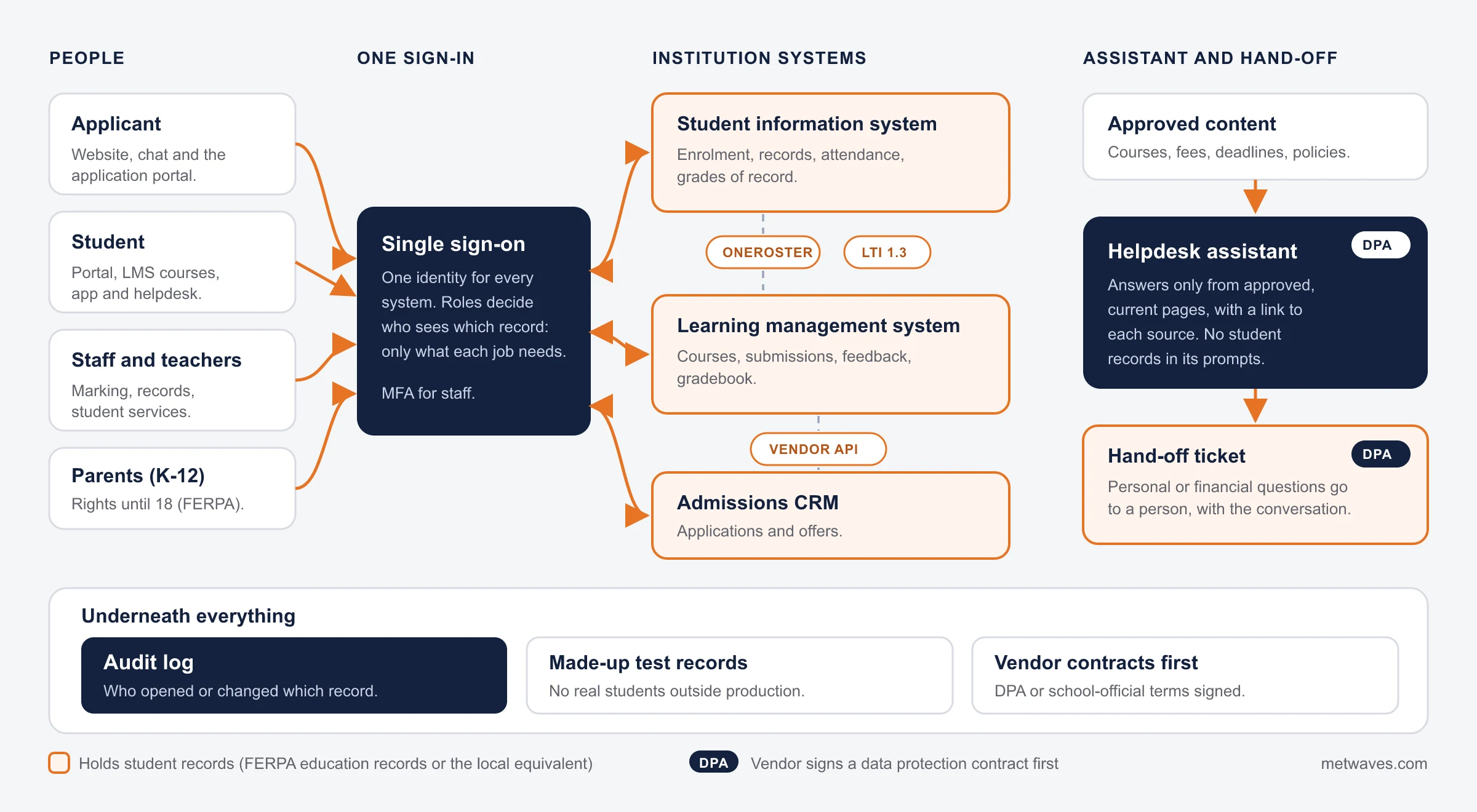
Answers questions about courses, fees and deadlines from approved pages, with a link to each source.
Built on public content, so privacy risk is low. Tell users they are talking to an assistant.
Schools, colleges, universities and course providers run on software that students judge in seconds and regulators judge in detail. Our edtech software development covers student and applicant helpdesks, learning platforms, and the integrations between your LMS, student information system and CRM, for education teams and edtech companies in the US, UK, Canada and Australia.
Our own university helpdesk demo · The same pattern live in Teams for a UK professional services firm
THE EDUCATION INDUSTRY
The education industry is every organisation that teaches, assesses or supports learners: public and private schools, colleges and universities, vocational and corporate training providers, and the edtech companies that sell software to all of them. Most of it is publicly funded or publicly regulated, and that shapes how it buys software: by term, with privacy and accessibility checks first.
Public schools are paid for by government in all four markets we serve, through school districts and boards in the US and Canada, local authorities and academy trusts in England, and state education departments in Australia. Universities rely more on tuition fees, international students and research funding.
Under all of it sits a common stack: a student information system (SIS) for enrolment and records, a learning management system (LMS) such as Canvas, Moodle, Blackboard or Brightspace for courses, a CRM for admissions, and single sign-on. EdTech software development mostly happens in the gaps between those systems, and in the student-facing apps and assistants on top of them.
Public and private schools, districts, boards and academy trusts
Universities and colleges, home and international students
Vocational colleges, apprenticeships and professional bodies
Start-ups and scale-ups selling to schools, universities or learners
Education departments, exam boards and regulators
CHALLENGES
Six problems schools, universities and edtech companies bring to software teams, and where software helps.
Admissions and student services answer the same questions about fees, deadlines, visas and accommodation each term, and the queue peaks when staff are busiest.
An assistant that answers from approved pages, shows its sources, and passes everything else to a person with the conversation attached.
Course, fee and deadline details live on department sites, PDFs and portals, and older versions stay online, so answers contradict each other.
One source for course and fee data, published to the website, the portal and the assistant from the same place, with superseded pages taken out.
The LMS, SIS and CRM each hold part of the student, so staff re-key enrolments, class lists and grades, and the mistakes surface at census dates or exam boards.
Integration through LTI 1.3, OneRoster or vendor APIs, so a student is created once and flows to every system that needs them.
Rolling start dates, apprenticeships, competency assessments or certificates do not map onto a standard LMS, so staff run them in spreadsheets beside it.
Extend the LMS with a tool for the part that is different. Build a custom platform only when the learning model is the product.
Every new tool needs a privacy review before it reaches students, public institutions face web accessibility rules, and many edtech products stall at procurement.
WCAG 2.1 or 2.2 AA and privacy by design from the first screen, with the documents reviewers ask for ready before procurement.
Schools and many colleges have fixed budgets and few developers, so tools that need constant attention end up unused.
Small releases on platforms the institution already licenses, with running costs stated up front.
AI IN EDUCATION
AI is most useful where questions repeat and nothing is decided about a student. The further a use moves towards grades and support decisions, the more review and paperwork it needs.
Answers questions about courses, fees and deadlines from approved pages, with a link to each source.
Built on public content, so privacy risk is low. Tell users they are talking to an assistant.
Answers policy, leave and IT questions in Teams from approved documents, and opens a ticket when it cannot help.
Respect document permissions, so staff only see what they are allowed to open.
Drafts quizzes, summaries and revision material from the course's own content for teachers to edit.
Check copyright on the source material and the AI provider's terms on training with your content.
Suggests the next activity and gives hints based on a learner's work, so practice fits the student.
Student data reaches the model. In England, the DfE's generative AI product safety standards cover products used in schools and colleges.
Drafts feedback on written work against the course rubric, for the marker to accept, change or discard.
A grade is a decision about a student. Keep AI to drafts and record who approved each result.
Flags students who may need support, from attendance, LMS activity and grades.
This is profiling. The DfE says profiling pupils usually needs a data protection impact assessment.
STUDENT PRIVACY IN THE US
Education software holds student records and often serves minors, so privacy and accessibility come first. In the US that means five sets of rules, and each reaches different organisations.
Protects students' education records at schools and colleges that receive US Department of Education funds. Parents hold the rights until the student turns 18 or enters a college or university.
Covers online services aimed at children under 13, or that know they collect data from them. The FTC's amendments took effect on June 23, 2025.
Schools and libraries that receive E-rate discounts for internet access must filter harmful content for minors and adopt an internet safety policy.
Operators of sites and apps designed and marketed for K-12 school purposes face limits on how they use student data. Other states have their own versions.
State and local government entities, which include public school districts, colleges and universities, must make web content and mobile apps meet WCAG 2.1 Level AA.
Three have passed and now apply. Three are coming, and a product planned today will be live for them.
Published by the FTC on April 22, 2025.
New standards on cognitive development, mental health and manipulation.
Separate consent for third-party sharing, a retention policy and a security programme.
The OAIC must register it by this date; the draft was consulted on until June 2026.
WCAG 2.1 AA for those serving 50,000 people or more, after a one-year extension.
Public entities under 50,000 people and special district governments.
OTHER MARKETS
The laws differ, but they ask software for the same things: know where student data lives, let only the right people see it, keep it out of advertising, and make every page usable by every student.
| Requirement | USUnited States | UKUnited Kingdom | CACanada | AUAustralia |
|---|---|---|---|---|
| Student records | FERPA for education records, plus state laws such as California's SOPIPA | UK GDPR and the Data Protection Act 2018; the school is usually the controller | Provincial public-sector laws, such as Ontario's MFIPPA for school boards | State privacy laws for government schools, such as Victoria's Privacy and Data Protection Act 2014; the Privacy Act 1988 for companies |
| Children online | COPPA for under-13s; amended rule applies from April 22, 2026 | The ICO's Age Appropriate Design Code (Children's code), 15 standards | PIPEDA for companies, or the private-sector laws of Alberta, British Columbia and Quebec | Children's Online Privacy Code, in draft, due to be registered by December 10, 2026 |
| Vendors | A “school official” under the school's direct control, with no re-disclosure | A contract or data processing agreement; a DPIA before high-risk processing | PIPEDA applies to commercial vendors; schools follow their provincial law | Contracts and privacy impact assessments; Victoria recommends a PIA for software that stores personal information |
| Accessibility | ADA Title II: WCAG 2.1 AA for public institutions from April 26, 2027 or 2028 | Public Sector Bodies Accessibility Regulations 2018: WCAG 2.2 AA; schools partly exempt | Ontario's AODA: WCAG 2.0 AA for public sector organisations and businesses with 50 or more employees | Disability Standards for Education 2005, made under the Disability Discrimination Act 1992 |
| Guidance for suppliers | US Department of Education student privacy guidance | DfE guidance on data protection in schools, edtech procurement and generative AI product safety | Ontario IPC's guide to privacy and access in schools | State education department rules, such as Victoria's for school software |
| Regulator | FTC (COPPA), US Department of Education (FERPA), Department of Justice (ADA) | Information Commissioner's Office (ICO) | Office of the Privacy Commissioner of Canada and provincial commissioners | Office of the Australian Information Commissioner (OAIC) and state commissioners |
A summary for planning, not legal advice. Confirm the details for your institution with your data protection or privacy adviser.

That is the industry. Here is where Metwaves fits: education teams and edtech companies that need student-facing tools and integrations built around their own systems and calendar.
OUR WORK
Test something real rather than read a claim. Each piece of work is labelled for exactly what it is.
Built on a UK university's public website, it answers questions about courses, admissions, fees, accommodation and deadlines in conversation, on Google Cloud. It is a demo we built to show the pattern, not a project for that university.
Built for a UK professional services firm. It answers from SharePoint and the policy library, links every answer to its source, respects document permissions and hands off to the service desk with the conversation attached. A university IT desk or student services team has the same shape of problem.
We have not yet shipped a project for a school, college or university. When we do, it will be on this page.
Six kinds of system, each linked to the service page that explains how we build it.
Assistants that answer questions about courses, admissions, fees, accommodation and deadlines from your approved pages, show the source, and hand the rest to student services with the conversation attached. Our university helpdesk demo shows the pattern.
An assistant in Microsoft Teams or the intranet that answers staff questions about IT, leave and policy from SharePoint and your policy library, respects document permissions and opens a ticket when it cannot help.
Custom learning platforms, course apps and student portals, for when an off-the-shelf LMS cannot run your course model: monthly cohorts, competency-based assessment, certificates or a learner experience that is your product. If a standard LMS fits, we will say so.
Connections that create a student once and keep the LMS, SIS, CRM and identity provider in step, using LTI 1.3 for tools inside the LMS, OneRoster for rosters and grades, or each vendor's own API.
Tools that draft quizzes, summaries and practice from your course material, and suggest the next activity for each learner, with a teacher reviewing what students see. Our post on how AI shapes a custom learning journey covers the ideas.
One reporting store fed by the SIS, LMS and CRM, so leaders see applications, enrolment and progress in one place.
Before any screen is designed, we map where student records live, who can see them and which outside services touch them. This is a typical university setup.
Most institutions should not build an LMS. The useful question is which part of the student journey your current tools cannot handle, and what the smallest fix is.
| If you… | What usually fits | Why |
|---|---|---|
| Standard courses, quizzes and assignments | An off-the-shelf LMS: Canvas, Moodle, Blackboard or Brightspace | Cheaper, proven and familiar to staff. We will tell you so on the first call. |
| The LMS fits, but staff re-key enrolments and grades | Integration through LTI 1.3, OneRoster or APIs | Connecting what you already license removes the re-keying without replacing anything. |
| Students ask the same questions every intake | A helpdesk assistant on your approved content | Answers at any hour, with sources, and frees staff for the cases that need a person. |
| Your course model or learner experience is the product | A custom learning platform | Cohorts, assessment and certificates work the way you teach, and you own the roadmap. |
| You sell software to schools or universities | Custom, built for their privacy and accessibility reviews | A data map, DPIA support and WCAG testing from the first release make procurement shorter. |
INTEGRATION
Most edtech work touches the LMS or the SIS. There are three routes, and the systems you already license decide which are open.
The 1EdTech standard for launching an outside tool from inside the LMS, with the student and course passed securely, and grades returned to the gradebook.
The 1EdTech standard for moving rosters, enrolments and results between the SIS and other systems, as CSV files or through an API.
Every major LMS, SIS and admissions CRM has its own API, often wider than the standards but different for each product.
We confirm the route with your LMS and SIS administrators before we quote.
We quote after discovery, because two student portals with the same screens can differ by an integration.
Each system the software talks to (LMS, SIS, CRM, identity) adds build, testing and coordination with its vendor.
iOS and Android apps cost more to build and maintain than a responsive web app. Many student tools do not need them.
Students, parents, teachers and administrators each need their own screens and permissions.
WCAG testing, DPIAs and security questionnaires are part of the build, not an extra at the end.
The number of pages, documents and languages it answers from, and how often they change.
Running costs such as hosting, AI model usage and LMS or SIS vendor fees are listed separately in every quote.
TIMING
The worst time to launch a helpdesk or a new portal is the week it is needed most, so we work back from your intake dates.
A planning guide: your own intake and exam dates set the real windows.
Start with something you can test, pilot in a quiet term, and review what students asked every term after launch.
Ask the university demo the questions your team answers most.
Thirty minutes on your systems, your intake calendar and what fills your inbox.
Content audit, systems map, privacy and accessibility needs, and a costed plan.
Made-up student records only, with accessibility checks every release.
One faculty, year group or service first, in a quieter term.
Unanswered questions and hand-offs reviewed every term.
Ask these five questions of anyone you shortlist, us included. One place we may not win: we have not built a full LMS for an institution. If that is what you need, choose a firm that has.
| Question to ask | A good answer | A warning sign |
|---|---|---|
| Can we try something you built that students would use? | Yes, here is a working demo. | Slides and mock-ups only. |
| What happens when your assistant does not know the answer? | It says so and hands over to a person, with the conversation. | It always has an answer. |
| Which LMS and SIS have you integrated? | Named systems, or a straight “not yet” and how they would do it. | A logo wall with no detail. |
| How do you meet WCAG 2.1 or 2.2 AA? | Automated and manual testing every release, including a screen reader. | An overlay plug-in. |
| Who owns student data, logs and code? | You do, from day one, in your own cloud account. | Data held in the vendor's account. |
Engagement models and technology choices are on each service page.
QUESTIONS & ANSWERS
Straight answers on cost, building an LMS, chatbots, integrations, FERPA, COPPA and accessibility. If you don't see an answer to your question, you can send us a message from our contact form.
It depends on the integrations (LMS, SIS, CRM, identity), the user roles, native apps or web, and the accessibility and privacy work. A helpdesk assistant on public pages is far smaller than a learning platform with assessments and payments. We price after a short discovery, with running costs listed separately.
Usually not. Canvas, Moodle, Blackboard and Brightspace already run standard courses well. Buy one and build around it. Build a custom platform when your course model or learner experience is the product you sell.
Yes, if it answers only from approved, current pages, shows the source for each answer, says when it does not know, and hands personal or financial questions to staff. You can test this on our university helpdesk demo before you speak to us.
We would use LTI 1.3 for tools inside the LMS, OneRoster for rosters and grades, or the vendor's own API, depending on what each system supports. We have not yet shipped an LMS or SIS integration for an education client, so we scope it in discovery and test against the vendor's sandbox first.
FERPA protects education records at US schools and colleges that receive federal education funds; a vendor sees them only as a school official under the school's direct control. COPPA requires verifiable parental consent for services aimed at children under 13. Many K-12 products must meet both.
The FTC's amended rule took effect on June 23, 2025, with a compliance date of April 22, 2026. Operators now need separate parental consent before sharing a child's data with third parties, including for targeted ads, a written data retention policy and a written information security programme. Biometric identifiers now count as personal information. The FTC did not adopt its proposed rule for school-authorised edtech.
In the US, the Department of Justice's 2024 ADA Title II rule requires WCAG 2.1 AA from public schools, colleges and universities, by April 26, 2027 for large entities and April 26, 2028 for smaller ones. In the UK, public sector bodies work to WCAG 2.2 AA, with schools partly exempt.
Not for an education client yet, and we say so. We built a university helpdesk demo you can try, and a staff helpdesk in Teams for a UK professional services firm that resolves 30 to 50% of staff requests without a person.
Discover IT Industry Insights and Technology Trends
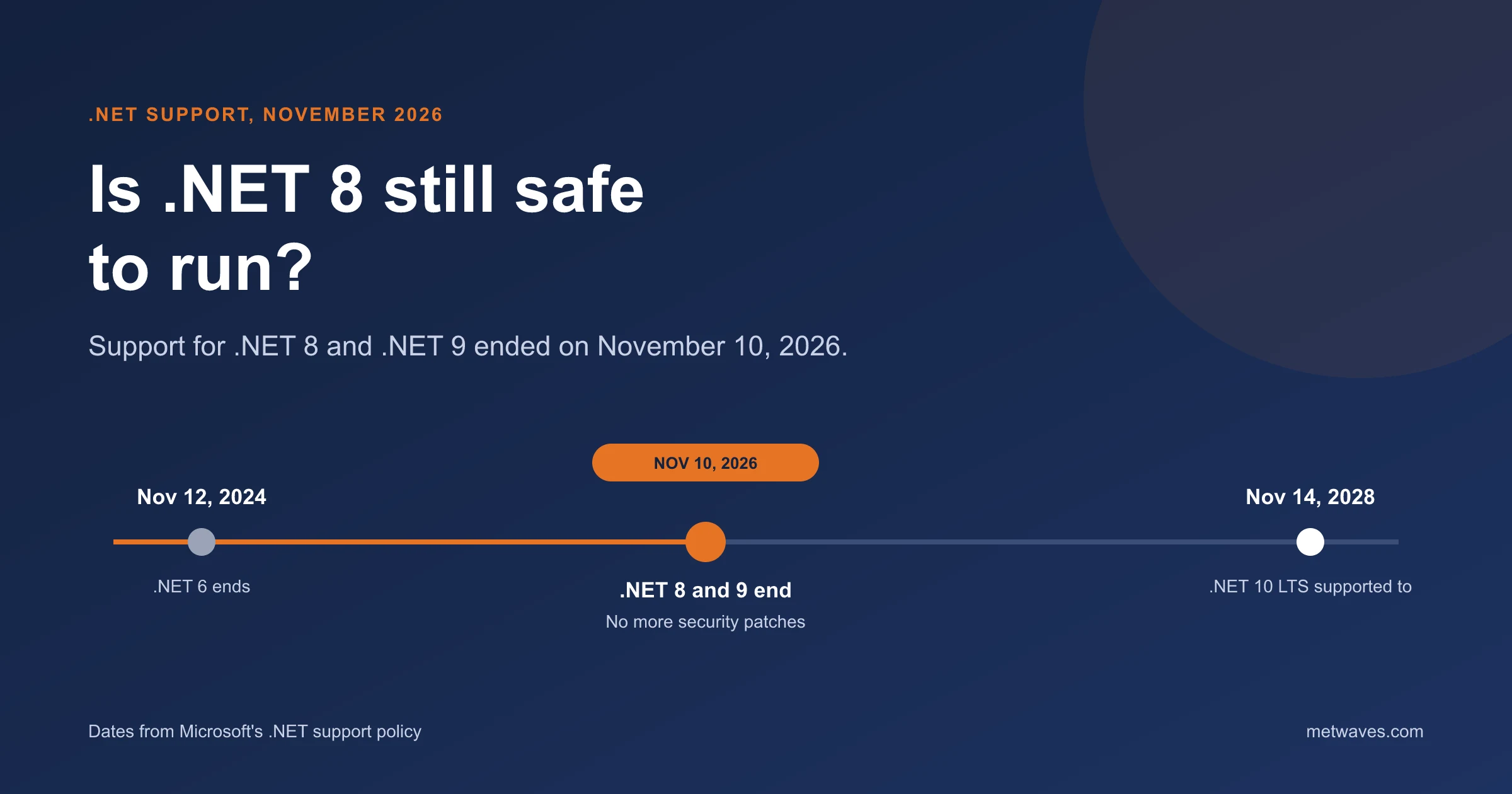
Support for .NET 8 and .NET 9 ended on November 10, 2026. What that means for apps still on them, how risky it is, and how to plan the move to .NET 10.
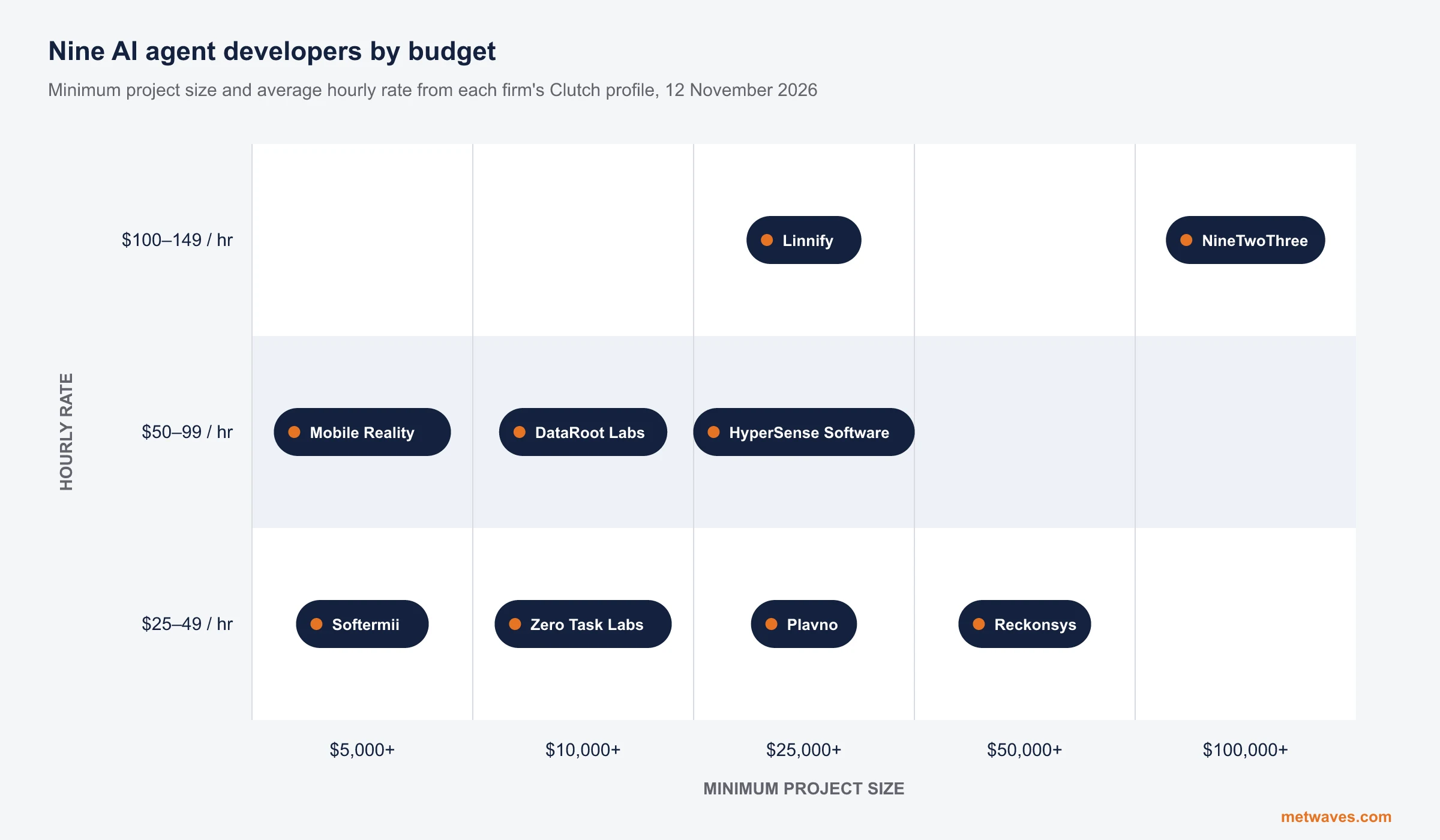
Learn More >Nine AI agent development firms a small or mid-sized business can shortlist, with Clutch figures, minimum budgets and the weaknesses their own clients name. Published by Metwaves, which is not ranked.
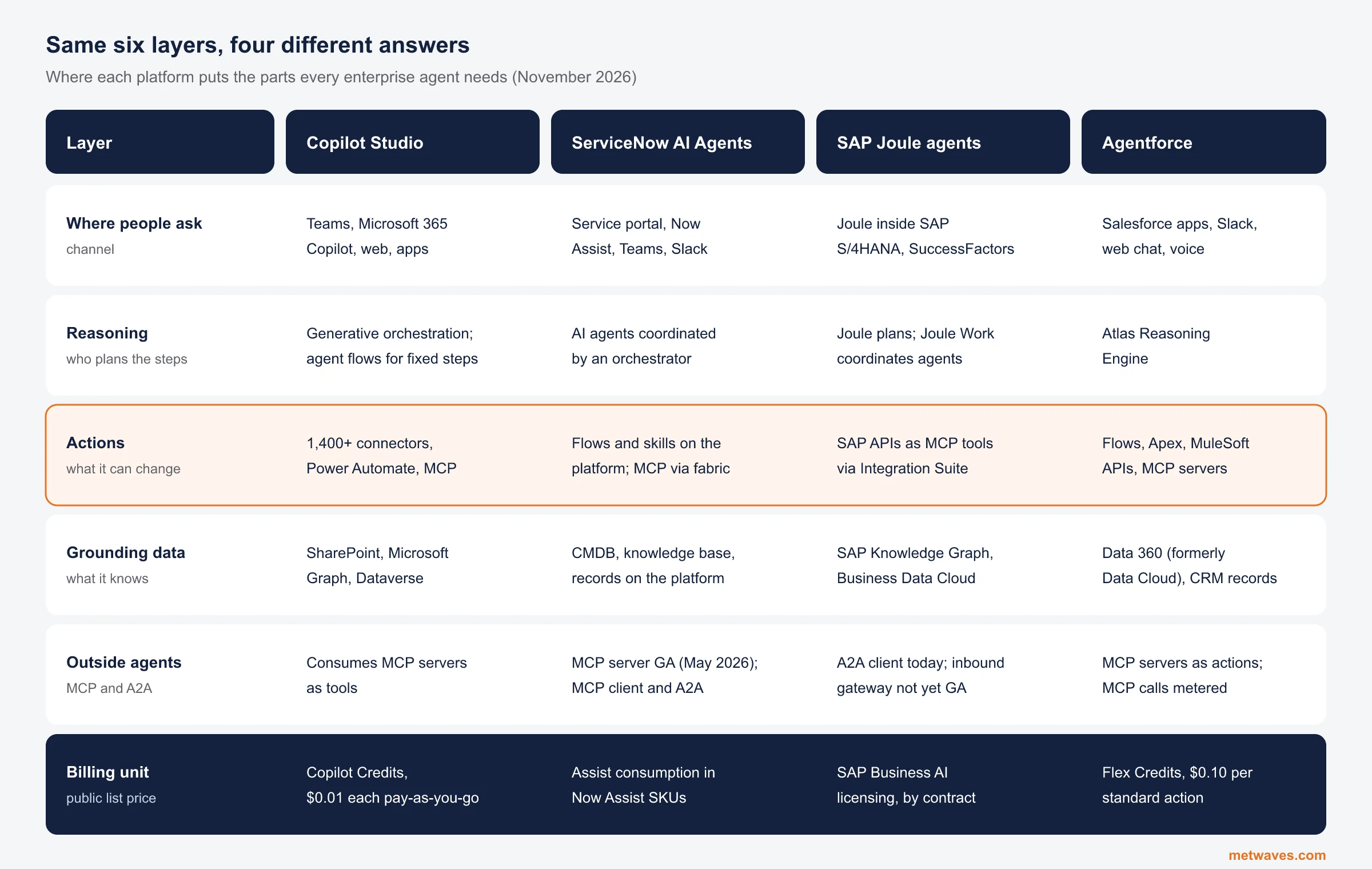
Learn More >An architecture review of the four big enterprise AI agent platforms: where each one reasons, acts, finds its data and connects to outside agents, what it costs, and when a custom build is the better choice.
Learn More >
Let us help you with free analysis & estimate.
Our product expert will contact you within 12 hours.