
Food Delivery and Restaurant App Development

Choosing a food delivery app development company starts with what you really need, and often that is not a new app but one order queue. We build ordering apps and sites, driver apps with live tracking, loyalty, and the POS and marketplace integrations behind them, for restaurant groups, dark kitchens, grocers and delivery start-ups in the US, UK, Canada and Australia. We have not shipped a restaurant app yet, so this page is the guide we would give you on the first call.

Real-time alerts at 10,000 concurrent users (fintech) · supplier invoice agent (finance) · not yet a restaurant client

THE RESTAURANT INDUSTRY

What the restaurant and food delivery industry is

The restaurant and food service industry is every business that cooks food for someone else to eat now: full-service restaurants, quick-service and fast-casual chains, cafés, caterers and the dark kitchens that exist only for delivery. Around them sits a newer layer of delivery marketplaces, courier networks, grocery delivery and meal kits.

Money moves in small amounts many times a day. A restaurant's profit is what is left after food, labour and rent, and delivery adds a marketplace commission on top, which is why some cities now cap what the apps can charge. The point of sale (POS) system is usually the system of record: menus, prices, orders, payments and kitchen screens hang off it.

Restaurant software development fills the gaps around the POS: orders arriving on separate tablets, menus edited in four places, drivers without an app, and loyalty that does not know what anyone ordered.

$1.55 trillionUS restaurant and foodservice sales projected for 2026National Restaurant Association, February 2026
15.8 millionUS restaurant and foodservice jobs projected for 2026National Restaurant Association, February 2026
42%of US operators said their restaurant was not profitable in 2025National Restaurant Association, February 2026

Full-service restaurants

Table service, single sites and groups

  • Reservations
  • Table ordering
  • Loyalty

Quick service and fast casual

Counter, drive-thru and app orders

  • Mobile ordering
  • Kiosks
  • Kitchen screens

Dark kitchens

Delivery-only kitchens and virtual brands

  • Marketplace orders
  • Multi-brand menus
  • One queue

Delivery platforms

Marketplaces and courier networks

  • Customer app
  • Driver app
  • Dispatch

Grocery and meal kits

Baskets, slots and subscriptions

  • Delivery slots
  • Subscriptions
  • Picking

WHAT GETS IN THE WAY

The challenges restaurants and delivery businesses face

Six problems restaurant teams describe in their own words, each with what it costs and where software helps.

01

“Three tablets on the counter, and someone keys every order into the POS.”

Every re-keyed order is a chance to get it wrong at the busiest hour. An order aggregator or direct integration puts every channel in one queue.

02

“Marketplace commission takes the margin on our regulars.”

Regulars who order through a marketplace earn you less than if they ordered direct. A direct ordering app with loyalty gives them a reason to switch.

03

“The menu is different on our site, our app and three marketplaces.”

One menu source published to every channel, so a sold-out item disappears everywhere at once.

04

“Our drivers have no app, and customers call to ask where the food is.”

A driver app with live tracking cuts the calls and shows you real delivery times by area and hour.

05

“Loyalty lives on paper cards, or in a tool that doesn't know what people ordered.”

Loyalty tied to order history lets you reward what people actually buy, and tells you who stopped coming.

06

“Supplier invoices are typed in by hand at the end of the week.”

Document automation reads invoices into accounting and flags price changes before anyone pays them.

AI IN RESTAURANTS

How AI can help restaurants, and where a person signs off

The safest AI in a restaurant works behind the counter: forecasts, prep lists and invoices. Anything that talks to guests about food needs a person behind it, because an allergy answer has to be right.

01Check the rules

Ordering and booking assistant

Takes orders and table bookings by chat from your own menu and opening hours, and answers the questions that tie up the phone.

Signs offStaff confirm anything unusual, and every allergy question goes to a person.

Allergen answers must come from your recorded ingredients, never the model's guess. In the UK, allergen information is expected before an order is placed and again at delivery.

02Light rules

Demand forecasting and prep lists

Forecasts covers and orders by hour from sales history, weather and local events, and turns them into prep lists and supplier orders.

Signs offThe kitchen manager approves prep and every supplier order.

Little direct regulation. The risk is waste or running out.

03Check the rules

Menu and price analysis

Shows which dishes earn their place on the menu and suggests price or portion changes by location.

Signs offThe owner decides every price change.

The price on the menu must be the price paid. Drip pricing rules apply in the UK and Canada, and in Australia from July 2027.

04Check the rules

Delivery dispatch and arrival times

Assigns orders to drivers, batches nearby drops and gives customers honest arrival times.

Signs offA dispatcher can override any assignment.

Driver pay and working rules vary by city and country. Take advice before software decides who works.

05Light rules

Supplier invoice reading

Reads supplier invoices and credit notes into accounting and flags price changes against the last order.

Signs offSomeone approves before anything is paid.

Finance controls rather than food law.

06Strict rules

Review replies and marketing

Drafts replies to reviews and writes offers for customers who have agreed to hear from you.

Signs offA manager approves every reply and every campaign.

Marketing texts and emails need consent (TCPA, PECR, CASL, the Spam Act), and fake reviews are banned in the US and UK.

Rules for any AI near food

  • Allergen answers come only from recorded recipes
  • If it is unsure about an allergy, it hands over to a person
  • Prices come from the POS, never from the model
  • Marketing goes only to customers who agreed
  • Every order it places is read back to the customer
  • A log shows what it said and who approved it

FOOD RULES

Allergen, calorie and menu rules restaurant software has to follow

Food law is about what is on the menu as much as what is on the plate, and an ordering app is a menu. Each market has its own allergen list and its own calorie rules, so the app should store allergens per ingredient and show them the way each market asks.

US

United States

9 major allergens (FDA)

  • Milk
  • Eggs
  • Fish
  • Crustacean shellfish
  • Tree nuts
  • Peanuts
  • Wheat
  • Soybeans
  • Sesame
Calories on menus
Chains with 20 or more locations: calories on menus and menu boards, a 2,000-calorie statement and full nutrition on request (FDA, since May 2018)
Packed on site
Allergen labelling covers food packaged and labelled before sale, not food wrapped after the customer orders
Sesame
The ninth major allergen since January 1, 2023
UK

United Kingdom

14 allergens (FSA)

  • Celery
  • Cereals with gluten
  • Crustaceans
  • Eggs
  • Fish
  • Lupin
  • Milk
  • Molluscs
  • Mustard
  • Peanuts
  • Sesame
  • Soybeans
  • Sulphites
  • Tree nuts
Prepacked for direct sale
Natasha's Law, since October 1, 2021: name and full ingredients with allergens emphasised. Scotland has its own guidance
Calories
England, businesses with 250 or more employees, since April 6, 2022: kcal at the point of choice, online and on delivery apps too
Ordering online
Allergen information before the order is complete and again at delivery
CA

Canada

Priority allergens (Health Canada)

  • Eggs
  • Milk
  • Mustard
  • Peanuts
  • Crustaceans and molluscs
  • Fish
  • Sesame
  • Soy
  • Sulphites
  • Tree nuts
  • Wheat and triticale
Calories
Ontario: chains with 20 or more locations in Ontario, since January 1, 2017, with a daily-calorie statement
Packaged food
Most prepackaged foods carry a label naming priority allergens
AU

Australia

Declared allergens (FSANZ)

  • Wheat
  • Fish
  • Crustacean
  • Mollusc
  • Egg
  • Milk
  • Lupin
  • Peanut
  • Soy
  • Sesame
  • Tree nuts, named
  • Barley, oats, rye
  • Sulphites
Labelled food
Plain English Allergen Labelling required since February 25, 2024
Unpackaged food
Allergen information shown with the food, or given when the customer asks
Kilojoules
No national rule; check your state's food authority
Payments

PCI DSS at the counter and online

Card terminals and hosted payment pages keep card numbers out of your systems. Online ordering pages follow the same payment page rules as any online store since March 31, 2025.

Delivery

Some cities cap delivery app fees

New York City caps what delivery apps charge restaurants: 15% for delivery, 5% for basic services and 3% for payment processing, with 20% allowed for enhanced services only alongside a 5% basic tier.

Prices

The menu price has to be the real price

Canada's Competition Bureau sued DoorDash in June 2025, alleging drip pricing (the case is undecided). The UK bans drip pricing, and Australia's rules on hidden fees start on July 1, 2027.

A summary for planning, not legal or food safety advice. Check the details with your local authority.

FOUR MARKETS

Privacy, marketing, payments and fees, side by side

Beyond the food itself, restaurant software handles card payments, customer data and marketing consent. These are the rules in each of our four markets.

RequirementUSUnited StatesUKUnited KingdomCACanadaAUAustralia
Food regulatorFDA, with state and local health departmentsFood Standards Agency and local authorities; Food Standards ScotlandHealth Canada and the CFIA, with provincial and local health unitsFSANZ writes the Food Standards Code; states and territories enforce it
Privacy lawNo single federal law; state privacy laws such as California'sUK GDPR and the Data Protection Act 2018, regulated by the ICOPIPEDA; Alberta, British Columbia and Quebec have their own private-sector lawsPrivacy Act 1988, for businesses over $3 million turnover and some others
Marketing texts and emailPrior express written consent for marketing texts sent by automated tools (TCPA); CAN-SPAM for emailPECR: consent, or the soft opt-in for existing customersCASL: consent, sender identification, opt-outs honoured within 10 business daysSpam Act 2003: consent, opt-outs within 5 working days; branded SMS sender IDs registered
AccessibilityADA Title III: a federal appeals court applied it to Domino's website and app (2019)Equality Act 2010Ontario's AODA: WCAG 2.0 AA for organisations with 50 or more employeesDisability Discrimination Act 1992
Prices and delivery feesCity caps on delivery app fees, such as New York City'sDrip pricing banned under the DMCC Act 2024A price made unattainable by fixed mandatory fees is misleadingAustralian Consumer Law; unfair trading and hidden-fee rules from July 1, 2027
Card paymentsPCI DSS v4.0.1, through your acquirerPCI DSS v4.0.1, through your acquirerPCI DSS v4.0.1, through your acquirerPCI DSS v4.0.1, through your acquirer

A summary for planning, not legal advice. Confirm the details for your business with your adviser.

That is the industry. Here is where Metwaves fits: restaurant groups and delivery businesses that need every order in one queue, with these rules built in from the first release.

Restaurant and food delivery software we build

Six kinds of system. None is marked as shipped for a restaurant, because none has been yet; each links to the service page that explains how we build it.

SystemWhat it doesUsually bought byHow we build it
Ordering apps and websitesMenu, ordering for pickup and delivery, payments and reorders, posting straight to your POSRestaurant groups with regularsMobile app development
Delivery and driver appsDispatch, live tracking for customers, proof of delivery and driver recordsGroups and grocers with their own driversCross-platform app development
POS and marketplace integrationOne menu published everywhere and every order in one queueBusy kitchens with tablets on the counterSoftware integration
Loyalty and customer dataPerks tied to what people order, with marketing consent recorded per customerGroups with repeat customersWeb application development
Multi-location reportingSales, waste and delivery times per site in one viewMulti-site operatorsData engineering
Ordering and reservation chatAnswers menu, hours and booking questions, and hands allergy questions to staffRestaurants with busy phonesAI chatbot development

INTEGRATIONS

POS and delivery integration: three routes

Most of the cost of restaurant software sits in the connections, not the screens. These are the three you will meet.

POS vendor API

Most current POS systems, such as Toast, Square, Clover and Lightspeed, offer APIs or partner programmes for menus, orders and payments.

Suits
Ordering apps and loyalty that post orders straight to the kitchen
Who approves
The POS vendor's developer or partner programme
Watch for
Rate limits, partner fees, and which sites run which POS

Order aggregator

A service that pulls marketplace orders from apps such as Uber Eats, DoorDash, Deliveroo, Just Eat and Menulog into the POS, and pushes one menu out to all of them.

Suits
Kitchens taking orders from several marketplaces
Who approves
Each marketplace, through the aggregator
Watch for
Per-order or monthly fees, and menu mapping for every brand

On-demand delivery API

Courier networks you call from your own app to deliver an order you took directly, so you do not need your own drivers.

Suits
Restaurants with direct orders but no drivers
Who approves
The delivery provider's business account
Watch for
Cost per delivery, delivery zones, and what happens when no courier accepts

We confirm each route with the vendor before we quote. The vendors named are examples of the market, not integrations we have shipped.

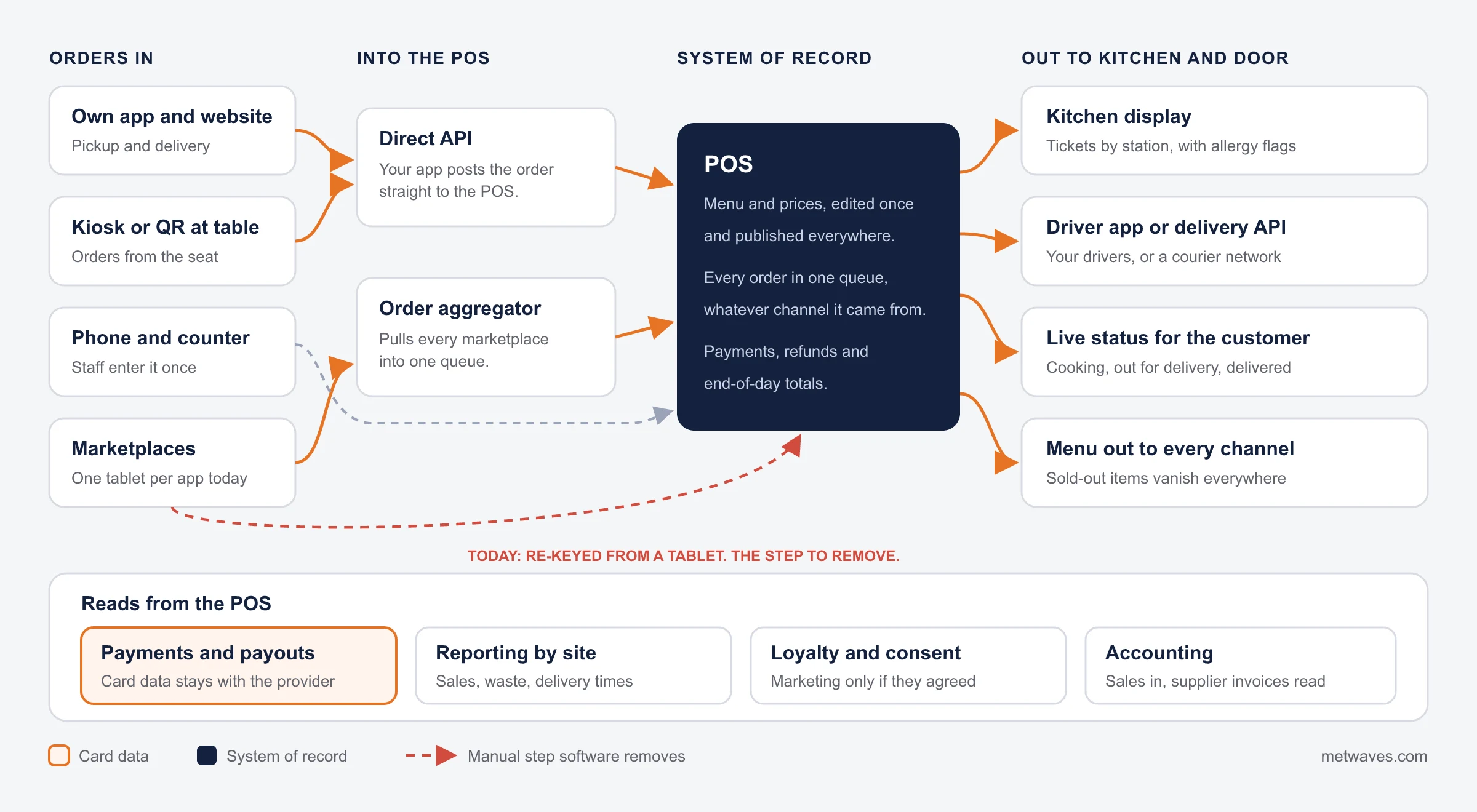
How an order moves from tap to doorstep

The POS stays the system of record. Everything else either sends orders into it or reads from it.

How an order moves through restaurant software: own app, website, marketplaces, phone and kiosk orders reach the POS through a direct API or an order aggregator; the POS sends tickets to the kitchen display; a driver app or delivery API takes the order out; the customer sees live status; payments, payouts and reporting read from the POS. Marketplace tablets re-keyed by staff are marked as the step to remove
    Today, marketplace orders are often re-keyed from a tablet. The orange path removes that step.

    OUR WORK

    No restaurant client yet. Work that transfers.

    Real-time stock and crypto alert platform screensFINTECH PROJECT

    Built for a stock trader, not a restaurant

    Real-time alerts at 10,000 concurrent users

    A web platform that sends stock and crypto alerts by email, SMS and app notification the moment prices move, built on React, Node.js, AWS and MongoDB to handle up to 10,000 concurrent users. Order status and driver tracking are the same pattern: many small events, delivered to the right phone at once.

    • 10,000concurrent users
    • 85%positive beta feedback

    Read the TradeAlert case study >

    Supplier invoice processing agentFINANCE PROJECT

    Built for an Australian accounts payable team

    Supplier invoices read and posted automatically

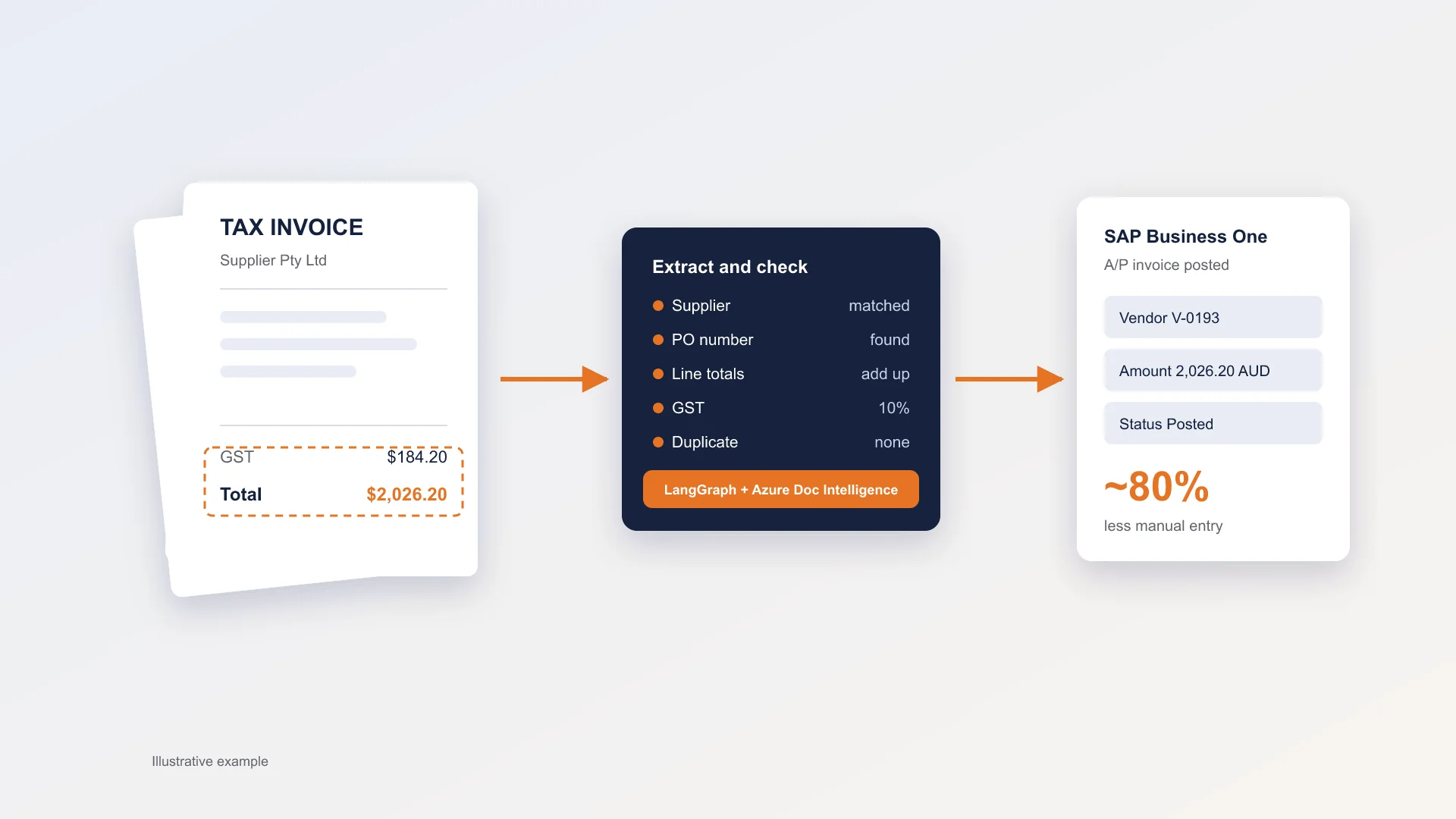
    An agent that reads about 1,000 supplier documents a month, checks each against SAP Business One and posts it, sending exceptions to a person with the reason. Food-supplier invoices with changing prices are the same shape of work.

    • ~1,000documents a month
    • ~80%less manual data entry
    • 8 to 12weeks to go live

    Read the invoice agent case study >

    DEMOAI assistant demosOur own demos, not restaurant systems: assistants that answer questions and take bookings

    Build, buy or extend: what usually fits

    Many restaurants do not need a custom app. This is the advice we give on the first call.

    If you...What usually fitsWhy
    Run one or two locationsThe online ordering built into your POSCheaper and already connected to the kitchen. We will tell you so on the first call.
    Want your own branded app as a groupA white-label ordering product firstCustom only when it cannot run your loyalty, menu or pricing rules.
    Take orders from several marketplacesAn order aggregator into the POSOne queue and one menu without building a new app.
    Employ your own driversA driver app on the POS APIOr an on-demand delivery API if you would rather not employ drivers.
    Are building a delivery marketplace as the businessA custom build, starting in one areaCustomer, restaurant and driver apps plus an admin panel, proven in one area before the next.

    What drives the cost of a food delivery app

    Integrations and the number of apps set the cost. A marketplace needs three apps plus an admin panel; a restaurant group usually needs one.

    DriverWhy it costs
    Number of appsA marketplace needs customer, restaurant and driver apps plus an admin panel; a single restaurant needs one ordering app.
    POS and marketplace integrationsEach POS or aggregator has its own API, approval and test process.
    Live tracking and mapsLocation updates, routing and map usage fees grow with every delivery.
    Payments, tips and payoutsSplitting a payment between restaurant, driver and platform needs a marketplace payments set-up with its own onboarding checks.
    Loyalty rulesPoints, tiers and offers tied to order history take careful testing.
    Locations and menusEvery site, brand and menu variation multiplies the data to keep in sync.

    How we would start with your restaurant

    We start with one real order and the people who touch it, because the fix is often an integration rather than a new app.

    1. 1

      Discovery call

      Thirty minutes on how orders reach you today and what slows the kitchen down.

    2. 2

      Follow one order

      From tap to doorstep with your staff, at a busy hour if you will let us.

    3. 3

      Count the tablets

      Every device, system and person who re-keys an order, written down.

    4. 4

      Costed plan

      Build, buy or integrate for each piece, with running costs per month.

    5. 5

      Pilot at one site

      Live at one location first, tested through a full weekend rush.

    6. 6

      Roll out and support

      Site by site, then hand over or keep it running and improving.

    How to choose a food delivery app development company

    Ask these five questions of anyone you shortlist, us included. Where we do not win today: restaurant history. If named POS integrations matter most, ask for them.

    Question to askA good answerA warning sign
    Which POS systems and marketplaces have you integrated?Named systems and a client you can call. (Ours: none yet, in this industry.)A list of logos with no project behind it.
    Who owns the customer data and the app store listings?You do, in your own accounts.Listings published under the agency's account.
    How does the app behave at the dinner rush?Load tests at your peak orders per minute, before launch.“It's on the cloud, it scales.”
    What will it cost to run each month?Hosting, maps, SMS, aggregator and app store fees, listed.Only a build price.
    Would you tell us to use our POS's ordering instead?Yes, when it fits.Every answer is a custom app.

    Related services

    Each service page explains how we work and what it costs to run.

    Mobile app developmentOrdering and driver apps for iOS and Android.
    Web application developmentOrdering sites, admin panels and loyalty.
    Software integrationPOS, marketplace and accounting connections.
    AI chatbot developmentOrdering and booking assistants.
    Software prototypingTest a delivery idea in one area before building it all.

    QUESTIONS & ANSWERS

    Food delivery and restaurant apps: frequently asked questions

    Straight answers on cost, POS integration, allergens, calories and timelines. If you don't see an answer to your question, you can send us a message from our contact form.

    It depends most on how many apps you need and what they connect to. A single restaurant's ordering app on its POS is a fraction of a marketplace, which needs customer, restaurant and driver apps, an admin panel, payouts and live tracking. We price after a short discovery, with monthly running costs listed separately.

    We can build a marketplace's three apps and admin panel. Most businesses should start with one area and one app, and many do not need a marketplace at all: an ordering app on their POS and an order aggregator do the job.

    Usually, through the POS vendor's API or partner programme. We check which programme your POS offers, what it allows and what it costs before we quote. We have not yet integrated a restaurant POS, and we will not pretend otherwise.

    Marketplaces bring new customers; your own app keeps the regulars without paying commission on every order. Most groups need both, with every order landing in one queue.

    Not yet. What transfers: real-time alerts we built for a trading platform that handles up to 10,000 concurrent users, and an agent that reads about 1,000 supplier documents a month into SAP Business One. As a restaurant app development company we are new; as software engineers, the patterns are familiar.

    Allergen information from recorded recipes, shown before the customer orders. In the UK the Food Standards Agency expects it before the order is complete and again at delivery, using the 14 allergens. The US, Canada and Australia each have their own allergen lists, so the app should store allergens per ingredient, not per market.

    In the US, chains with 20 or more locations must show calories on menus. In England, businesses with 250 or more employees must show them at the point of choice, including online and on delivery apps. Ontario requires them for chains with 20 or more locations in the province.

    Our integration projects in other industries have gone live in 8 to 12 weeks. A restaurant timeline depends on your POS vendor's approval process and how many locations and menus you run; we give a date after discovery.

    INSIGHTS & NEWS

    Discover IT Industry Insights and Technology Trends

    Nikit Nandan    Nikit Nandan November 17, 2026
    Is .NET 8 Still Safe to Run After November 2026?

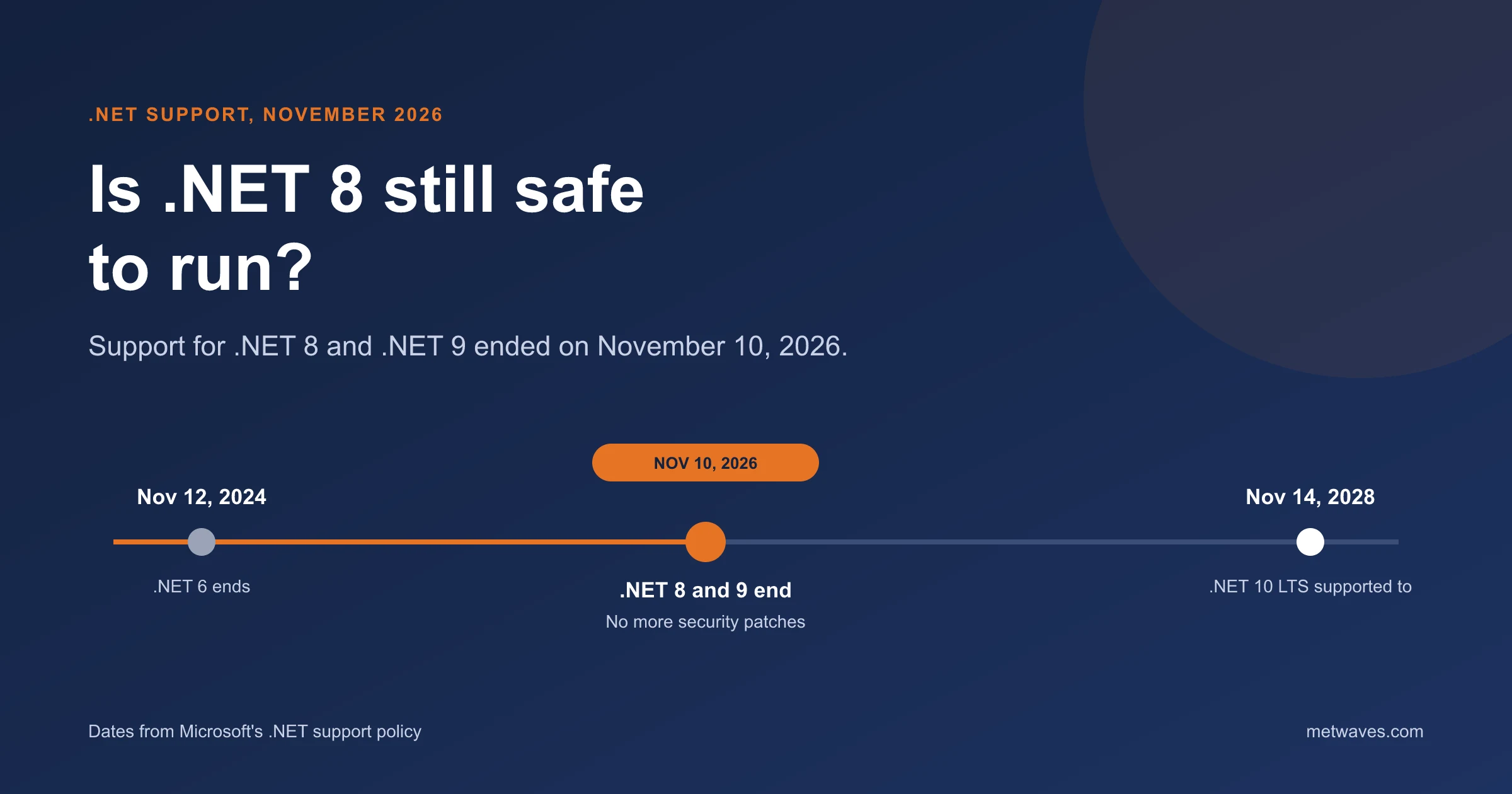
    Support for .NET 8 and .NET 9 ended on November 10, 2026. What that means for apps still on them, how risky it is, and how to plan the move to .NET 10.

    Learn More >
    Microsoft Technologies 5 min read
    Nikit Nandan    Nikit Nandan November 12, 2026
    Top AI agent development companies for small and mid-sized businesses (2026)

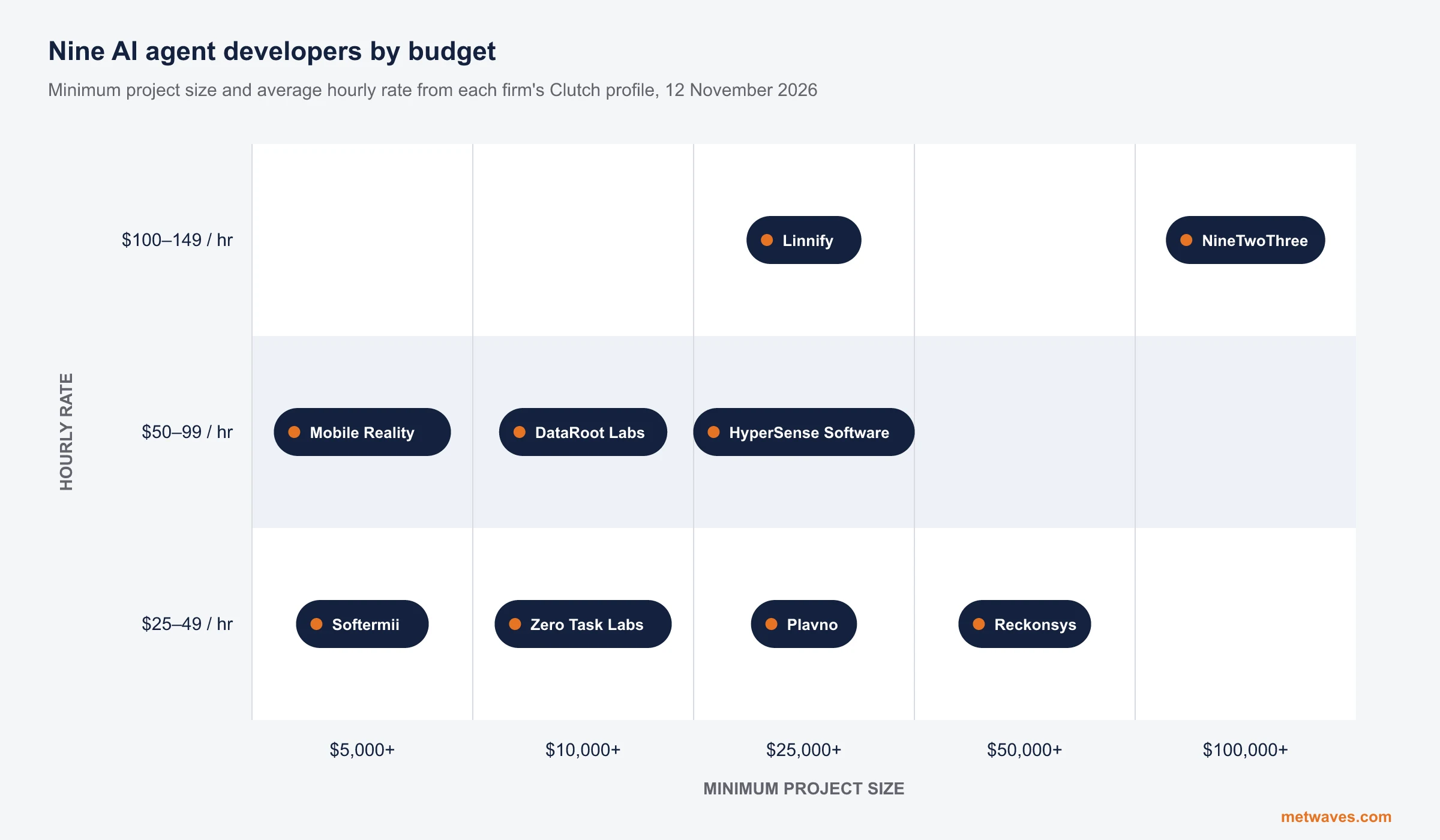
    Nine AI agent development firms a small or mid-sized business can shortlist, with Clutch figures, minimum budgets and the weaknesses their own clients name. Published by Metwaves, which is not ranked.

    Learn More >
    AI Development 9 min read
    Nikit Nandan    Nikit Nandan November 12, 2026
    Enterprise AI Agent Platforms Compared (2026)

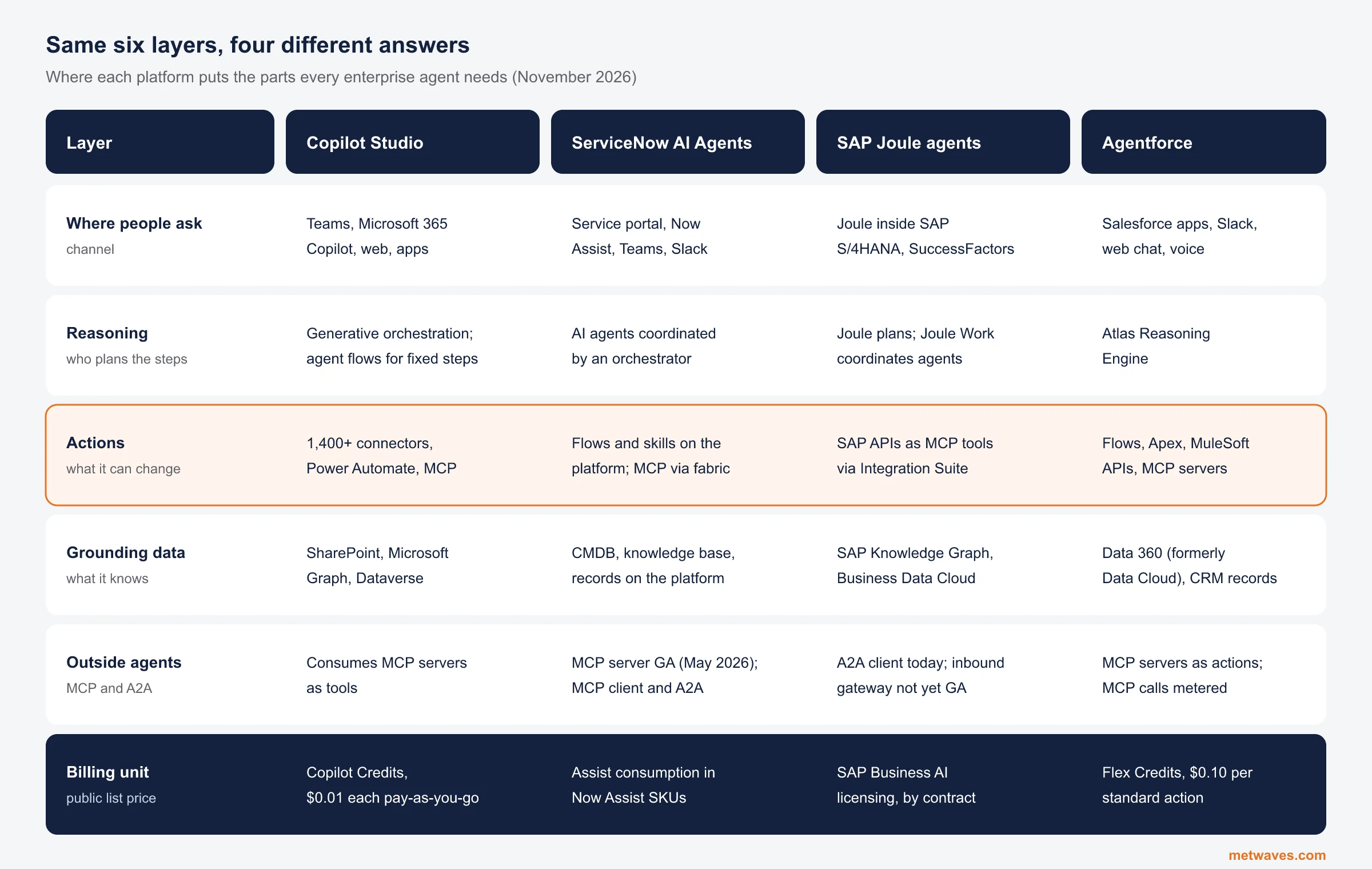
    An architecture review of the four big enterprise AI agent platforms: where each one reasons, acts, finds its data and connects to outside agents, what it costs, and when a custom build is the better choice.

    Learn More >
    AI Development 9 min read

    Let’s build your idea!

    Let us help you with free analysis & estimate. Our product expert will contact you within 12 hours.

     All your information is kept confidential and protected by NDA.